Bundi doesn't appear on most Rajasthan itineraries. No massive tourism infrastructure, no crowds competing for photo angles, no Instagram checklist mentality. Just extraordinary 17th-century architecture and some of India's finest frescoes.
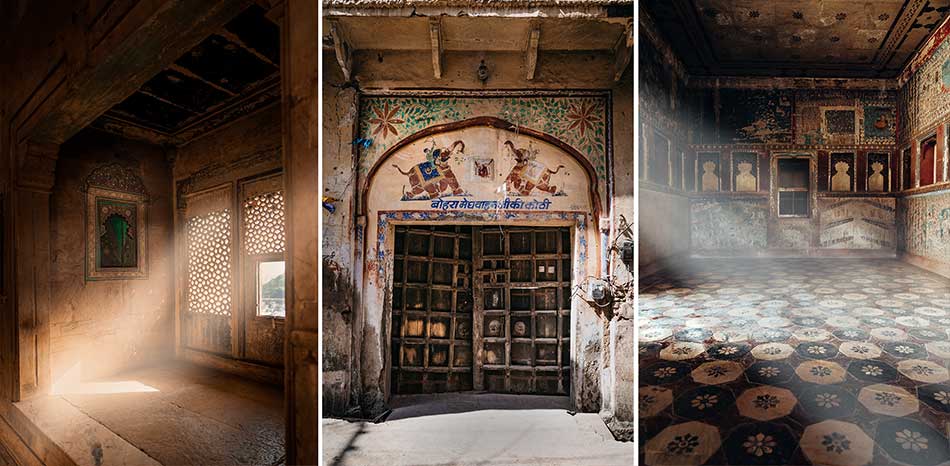
Left & Right: Bundi Palace interiors - natural light through jali screens, weathered frescoes, original floor tiles.
Center: Haveli doorway in old city streets near palace entrance. Faded wall paintings above door - typical architectural details found throughout the residential areas.
Why Bundi Deserves Attention
The Chitrashala frescoes in Bundi Palace rival anything in Rajasthan. Intricate turquoise and blue paintings covering walls and ceilings, depicting mythological scenes in the distinctive Bundi School style - characterized by dramatic compositions, rich colors, and exceptional detail work.
Raniji ki Baori, a 46-meter deep stepwell from 1699, demonstrates medieval engineering that still impresses. The carved pillars, the geometric precision, the sheer scale of descending levels - it's architectural ambition realized in stone.
Taragarh Fort looms above the city, offering perspective on Bundi's layout and the surrounding landscape. The palace complex sprawls across the hillside, its weathered facade and multiple levels revealing centuries of construction and modification.
The havelis throughout the old city showcase traditional Rajasthani architecture with detailed paintings, carved doorways, and ornate balconies - many still occupied, relatively undisturbed by tourism.
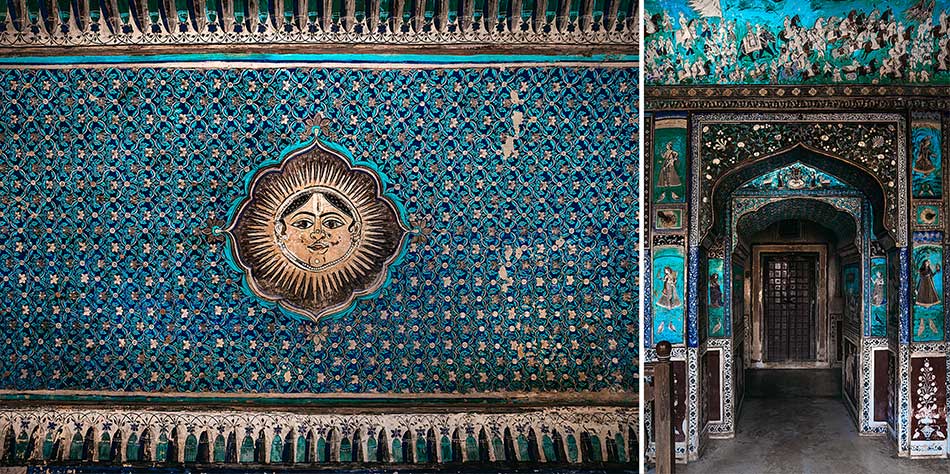
Chitrashala frescoes: Left - Turquoise geometric patterns with central sun motif, repetitive floral designs. Right - Layered archway with figurative paintings on side panels, battle scenes on upper frieze. Both show the signature turquoise and blue tones of Bundi School painting.
What Photographs Well
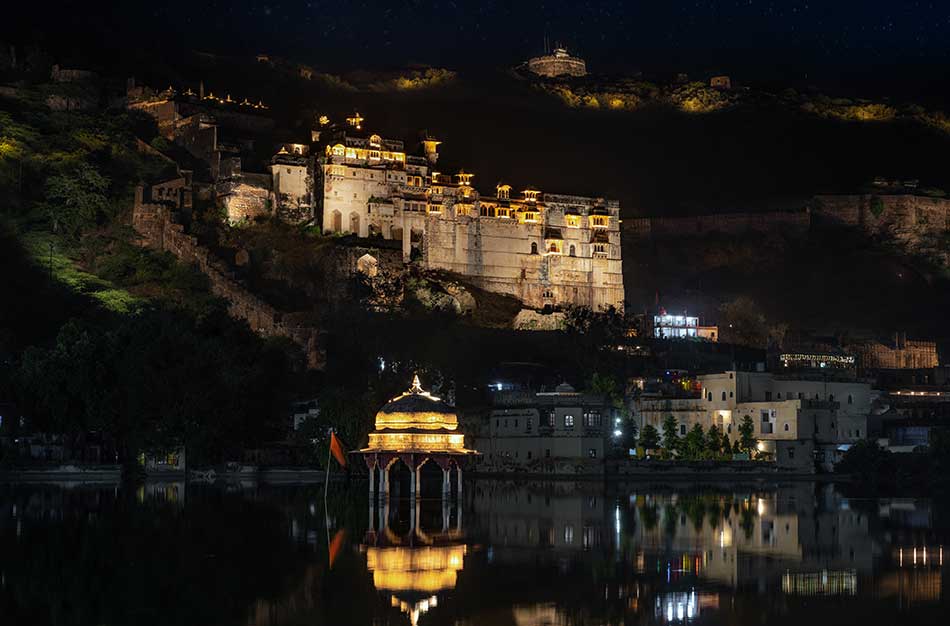
Bundi Palace and Taragarh Fort illuminated at night, viewed from Nawal Sagar lake. The pavilion in the foreground reflects in the water. Best shot from lakeside after dark - tripod required for long exposure to capture reflections and city lights.
The Reality Check
Here's what you need to understand about Bundi: it hasn't hit the tourist circuit. That's both its appeal and its challenge.
I traveled there with two others (one male, two female) plus my dog, and faced unwanted attention all three days. Since posting about this experience, I've heard mixed reports. Women in larger groups generally had positive visits. Solo female travelers and smaller groups? Several reported uncomfortable encounters.
This isn't about condemning Bundi - the architecture is too significant for that. But adjust your expectations. The casual street wandering you'd do in Jaipur or Jodhpur? Not recommended here. Come with friends, hire a guide for exploring monuments, or join an organized group.
The monuments themselves are safe to visit with guides. Extended solo exploration of streets? Skip that approach.
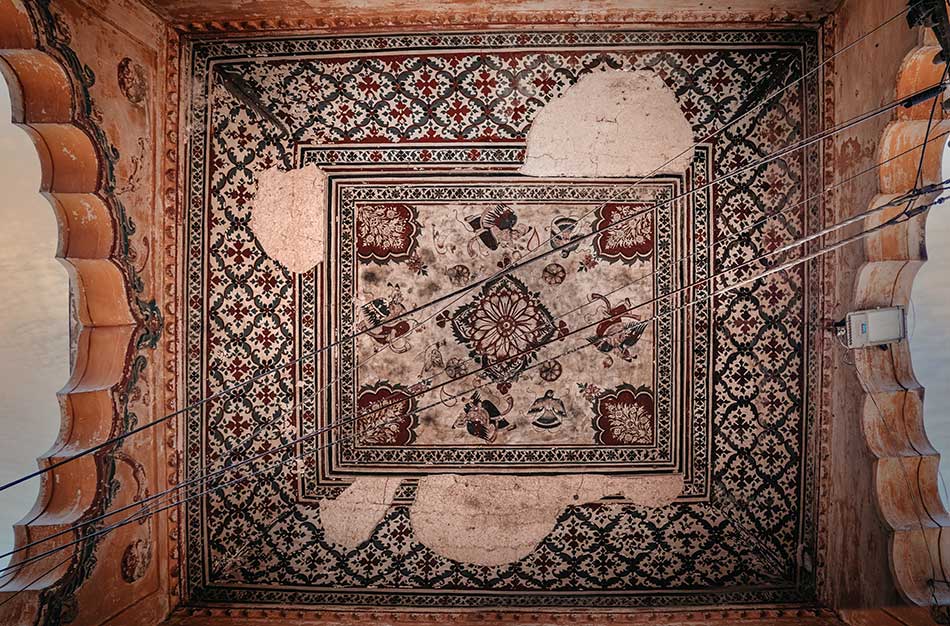
Painted ceiling at one of Bundi's city gates - intricate geometric patterns with central figurative scene.
Getting Around
The town is generally walkable - stepwells and most attractions are easily accessible on foot. The palace and fort climb is a different story: steep, uneven terrain that requires decent fitness and careful footing. Plan time and energy accordingly.
Heritage properties offer atmospheric accommodation options, often converted havelis with traditional architecture and character. These provide a more immersive experience than standard hotels.
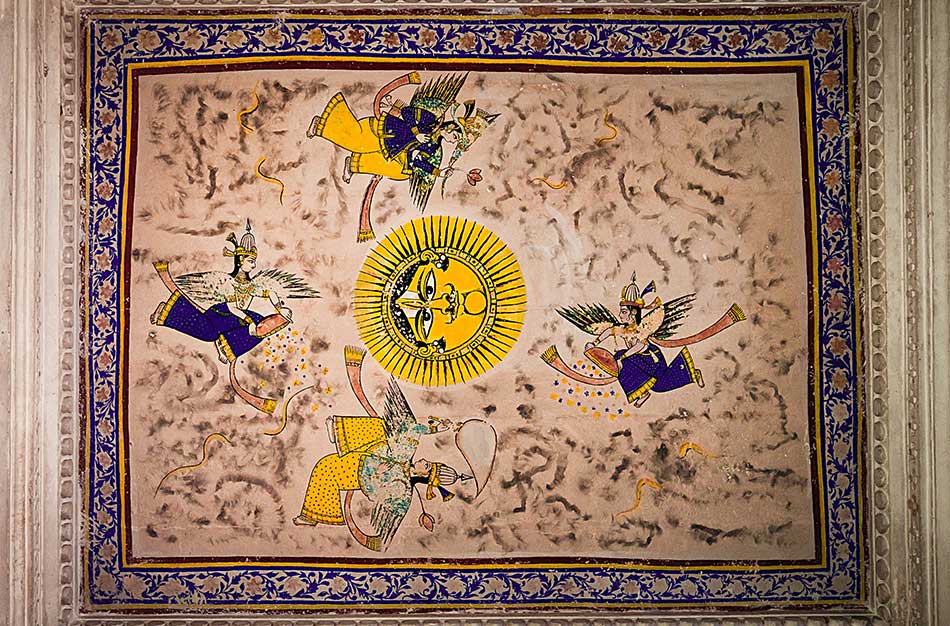
Ceiling fresco - winged celestial figures surrounding a central sun motif.
Infrastructure
Bundi lacks the cafe and restaurant density of Pushkar or Jaisalmer. You'll find Krishnas Chai (genuinely exceptional - possibly the best chai in Rajasthan), but dining options are limited. Plan accordingly.
Practical Details
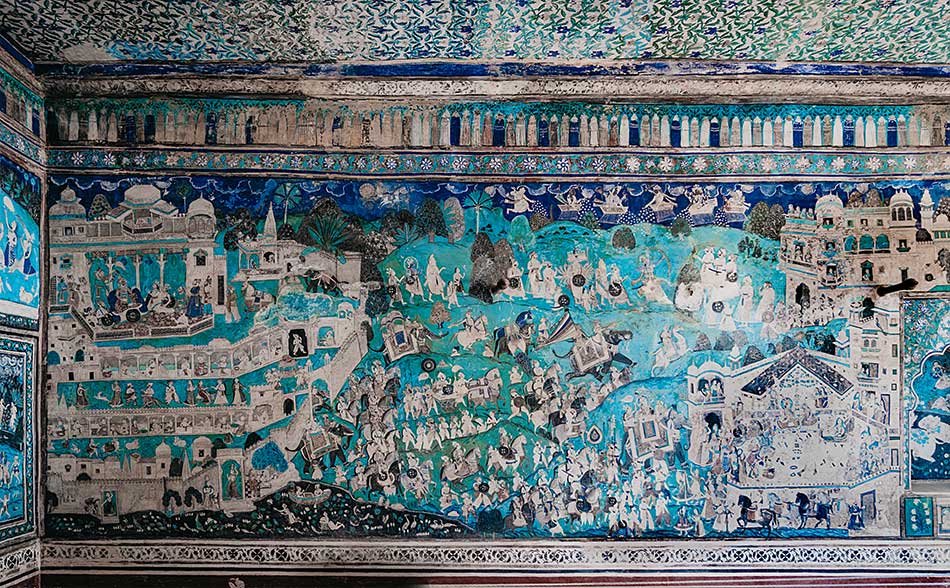
Chitrashala wall fresco - expansive narrative scene with palace architecture, processions, and daily life depicted across multiple levels.
Cultural Significance
Bundi was where Rudyard Kipling wrote parts of "Kim" and where Rabindranath Tagore spent time. The Bundi School of miniature painting influenced Rajasthani art for centuries, known for its dramatic night skies, distinctive turquoise and blue tones, and unexpected incorporation of Chinese artistic elements including dragons and celestial figures.
My Honest Rating
I don't believe in sugar-coating travel experiences or overselling destinations. Bundi presents a complicated reality - exceptional architecture coupled with challenging social dynamics. You deserve to know both sides.
Consider this assessment based on actual experience, not tourism promotion.
BUNDI RATINGS
★★★★★ Photography Opportunities Extraordinary frescoes, stepwell geometry, palace architecture, and details most tourists never see. Architecturally, this is five-star Rajasthan.
★★★ Vibe & Atmosphere Authentic and untouristy, but that cuts both ways. Locals aren't accustomed to foreign visitors. Mixed experiences reported depending on group size and composition.
★★★ Accessibility Town is walkable, stepwells and most sites easily reached on foot. Palace and fort require steep climbing on uneven terrain - physically demanding but doable for most. Limited English spoken.
★★★ Safety & Hospitality Based on personal experience and reports from other travelers: highly variable. Women in larger groups typically report positive visits. Solo female travelers and smaller groups have faced unwanted attention. I encountered issues daily during a three-day visit despite traveling with two others and my dog. Monument sites with guides are fine. Extended street wandering not recommended for women traveling alone or in small groups.
★★★★ Budget Very affordable. Many monuments free or low-cost entry. Heritage properties are reasonably priced compared to tourist-heavy towns.
Best For: Architecture and art history enthusiasts willing to navigate an untouristy environment. Groups with guides. Anyone who prioritizes cultural significance over comfort and convenience.
Not Recommended For: Solo female travelers seeking relaxed exploration on their own.
Experience It Yourself
We organize small group photography tours across Rajasthan, including destinations like Bundi where local guidance and group travel make the difference between frustration and rewarding cultural access.
These aren't standard packages - they're guided by people who know these places intimately and can navigate both the extraordinary architecture and the practical realities of visiting lesser-known sites.
Group sizes stay small (maximum 6 photographers), itineraries prioritize authentic access with appropriate guidance, and the approach respects both the monuments and the complexities of visiting places off the standard tourist circuit.
For information about upcoming Rajasthan photography experiences or to discuss custom itineraries, reach out through the contact page.
About the Author:
Runa Isabel Lindberg is a travel enthusiast who has been sharing her personal journeys through India, Sri Lanka, and Nepal for 17 years. On this website, Beyond Taj Tours, she writes about her favorite travel experiences and the beautiful places she has visited over the years.
This blog is a private collection of personal memories, including photos taken through her own lens and reviews of heritage hotels she has stayed at. Through her stories, she shares her deep love for the region.
Text and photography: © 2026 Credio Digital Media. All rights reserved. No part of this article or images may be reproduced without express written permission. For licensing inquiries, please contact through Beyond Taj Tours.
09 Oct 2026
28 Sep 2026
17 Sep 2026

05 Sep 2026
31 Aug 2026
15 Aug 2026
15 Jul 2026
19 Mar 2026
12 Feb 2026
15 Jan 2026
28 Dec 2025
01 Dec 2025
13 Nov 2025