If you've ever seen Steve McCurry's iconic images of color-drenched faces, warriors in turbans covered in vibrant powder, or massive crowds erupting in clouds of pink and yellow, you've glimpsed India's most spectacular photography opportunity: the festival season that transforms North India into a living canvas each Spring.
For photographers, these aren't just festivals; they're once-in-a-lifetime chances to capture raw human emotion, ancient traditions, and visual chaos that defies description. But here's what most don't realize: Holi isn't a single event. It's a constellation of distinct celebrations, each offering completely different photographic opportunities.
This guide covers the three most photographically significant festivals: the week-long Holi celebrations in Braj, the wild Dauji Huranga finale, and the warrior spectacle of Hola Mohalla. Together, they create the most comprehensive color festival experience in India - and some of the most challenging, rewarding photography you'll ever attempt.
Why These Festivals Matter for Photographers
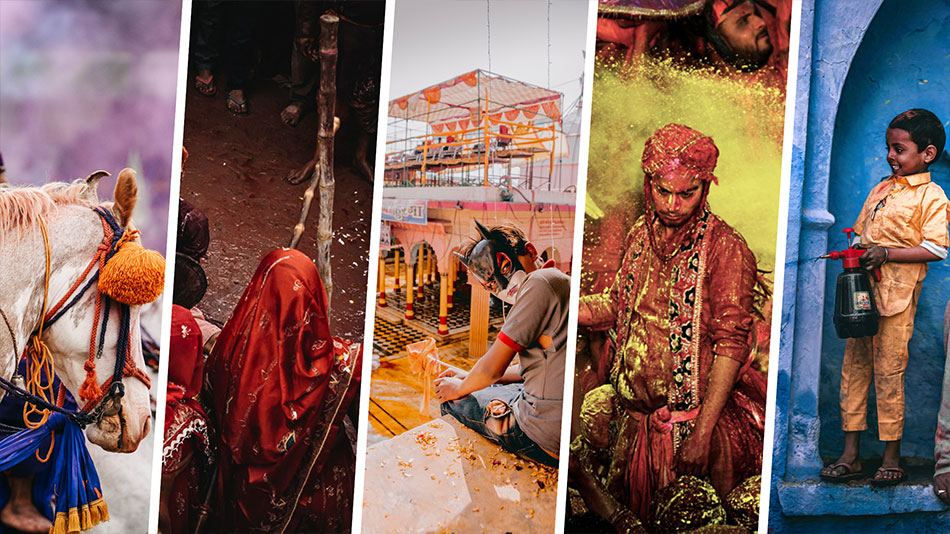
Most photography tours focus solely on Holi's main day – Dhulandi - when the entire country erupts in color. They miss the nuance. The real magic happens in the week leading up to it, in the small towns and villages of Braj where Krishna and Radha's love story unfolded. It continues in Punjab, where Sikh warriors transform the festival into displays of martial prowess.
Each festival demands different techniques, presents unique challenges, and rewards you with completely distinct imagery:
Festival 1: Holi in Braj (Barsana, Nandgaon, Vrindavan & Mathura)
The Photography Opportunity
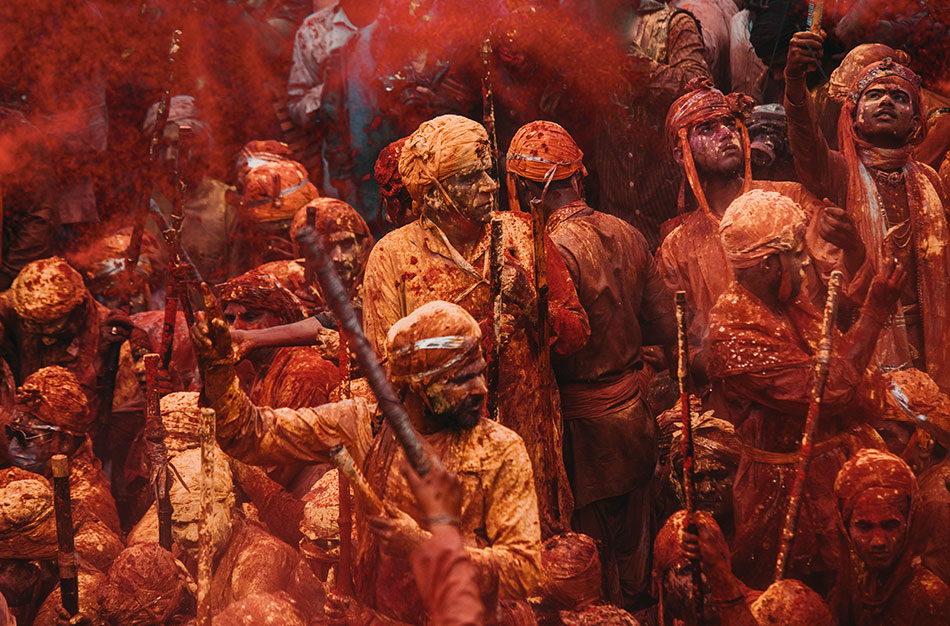
Braj is where Holi was born. This region- comprising Barsana, Nandgaon, Vrindavan, and Mathura - celebrates for an entire week before the rest of India even begins. Each town offers distinct visual opportunities that you simply won't find anywhere else.
What makes it photographically special: Unlike the scattered street celebrations in cities like Delhi or Mumbai, Braj's Holi is deeply ritualistic and concentrated in specific locations. You're not wandering aimlessly hoping for good shots - you're positioned at temples, ghats, and ceremonial spaces where centuries-old traditions unfold with photographic precision.
The Different Celebrations
Laddu Mar Holi - Barsana (morning till afternoon, February 24, 2026)
The opening ceremony. Instead of colored powder, devotees throw laddus (traditional sweets) at each other at Shri Radha Rani Temple. It's chaotic, sweet, and sets the tone for the week. Photographically, you're looking for flying sweets, crushed confections creating unexpected textures, and the joy on faces covered in sugar instead of powder.
Lathmar Holi - Barsana (morning till afternoon, February 25, 2026)
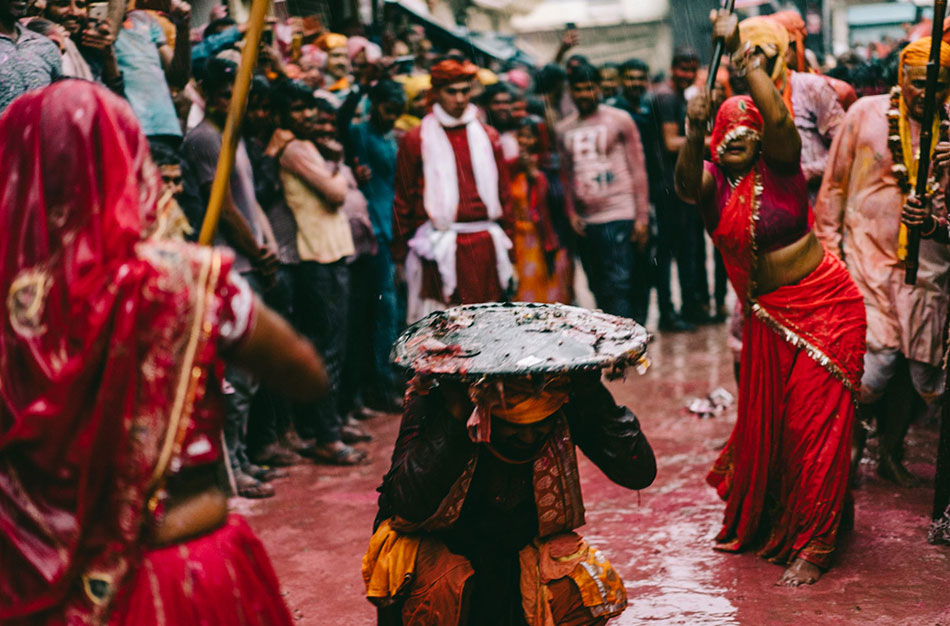
This is the big one—the world-famous "stick-beating Holi." Men from Nandgaon travel to Barsana to hoist a flag at Radha Rani Temple. Women defend with bamboo sticks (lathis) while everyone's drenched in color. Action photography at its finest.
Lathmar Holi - Nandgaon (morning till afternoon, February 26, 2026)
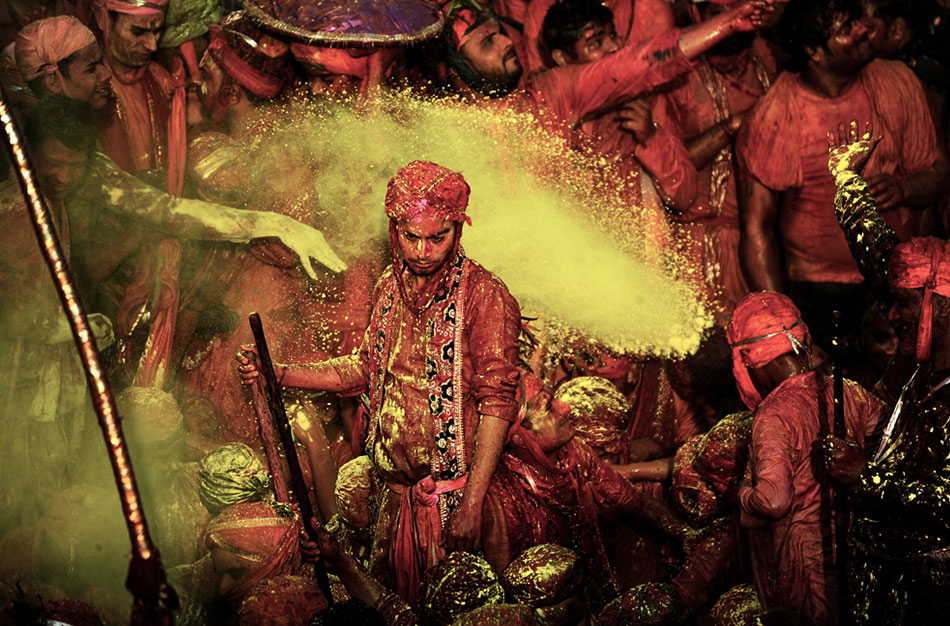
The roles reverse. Barsana men visit Nandgaon, where Nandgaon women await with their sticks. Same energy, different location, new compositions. The processions between villages offer street photography gold as color-covered groups move through narrow lanes singing traditional songs. The main attraction happens inside the Nand Bawan Temple.
Phoolon Wali ki Holi - Vrindavan (afternoon, February 27, 2026)
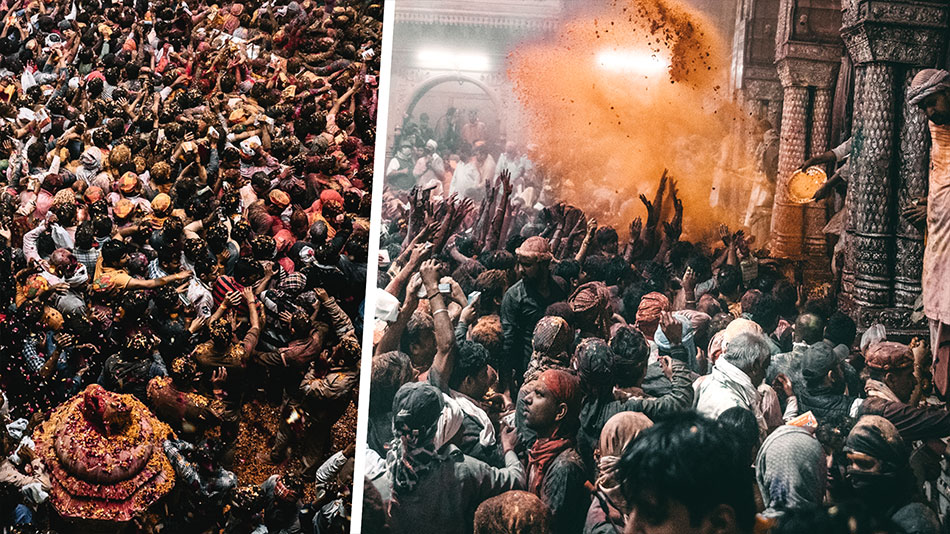
After three days of chaos, Banke Bihari Temple offers something different: flower Holi. Cascades of fresh flower petals shower devotees for around an hour, after that the ceremony continues with gulal.
Professional Cameras are normally forbidden/restricted during temple celebrations. Without insider connections and permissions, you're locked outside while the most beautiful moments happen within.
Chhadi Mar Holi - Gokul & Raman Reti (March 1, 2026)
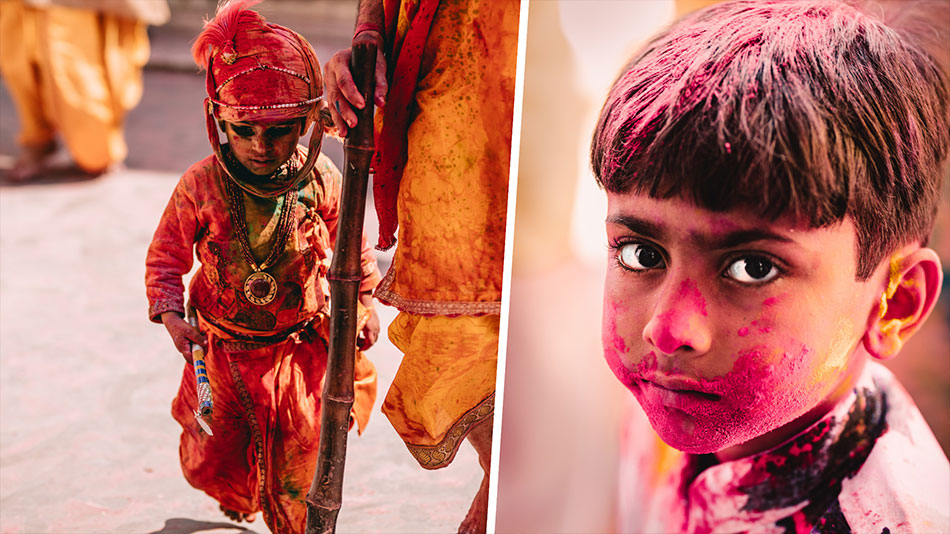
Gokul's version of Lathmar Holi uses smaller sticks (chhadi instead of lathi)—inspired by stories of young Krishna being immune to the Gopis' playful attacks. Women follow Krishna's palanquin through the village, wielding their sticks while colors fly. After the morning celebrations, visit nearby Raman Reti, the sandy banks where Krishna played as a child, for quieter photography and portraits of devotees.
Widows Holi - Gopinath Temple (Pagal Baba Ashram) , Vrindavan (noon, March 2nd, 2026)
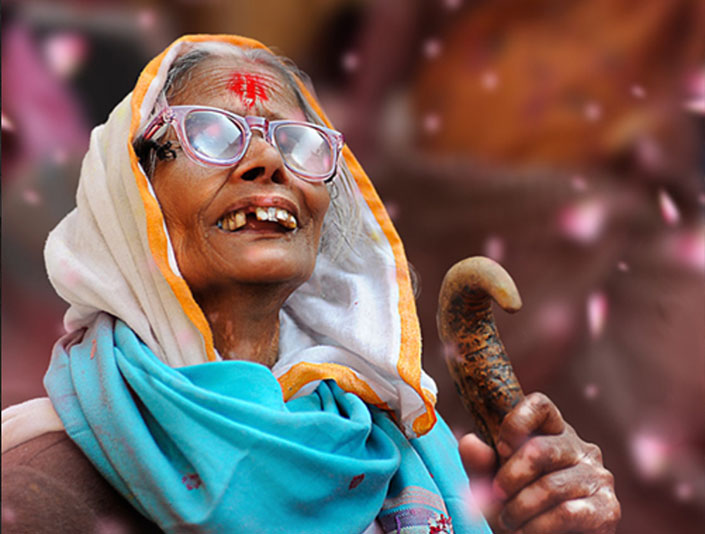
Widows were historically forbidden from playing Holi. That changed recently. Now, once a year at Gopinath Temple (Pagal Baba Ashram), these women celebrate in colors like everyone else. Photographically, it's deeply moving:elderly women in white saris gradually covered in powder, their faces transforming from solemnity to pure joy. This is Holi's redemptive power captured in a single afternoon.
Street Holi & Temple Celebrations - Mathura & Vrindavan (during day and evening of March 2, 2026)
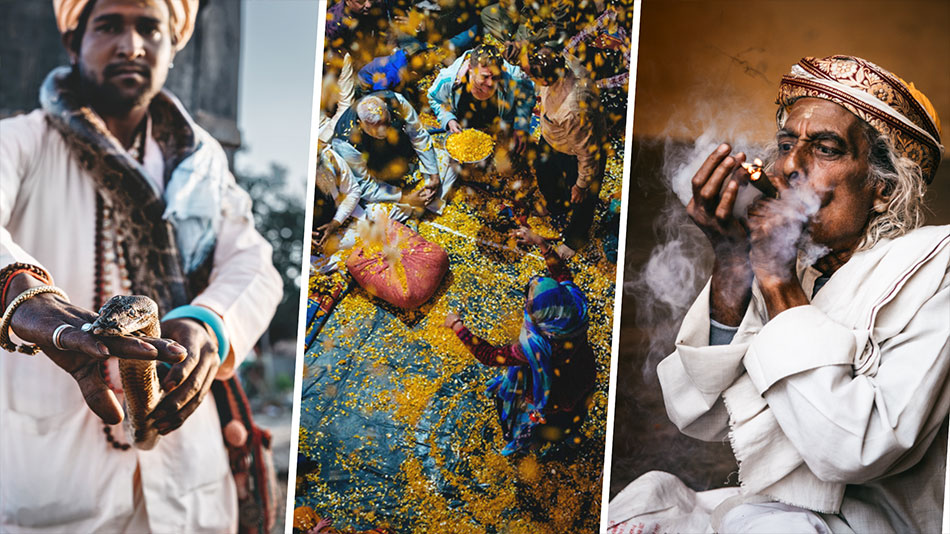
The days leading to Dhulandi see celebrations at multiple temples, street processions, and spontaneous color fights. Mathura's ancient ghats along the Yamuna Riveroften called "Little Varanasi"host evening aartis where fire ceremonies blend with Holi preparations. The ghats provide architectural elements absent in village celebrations, adding compositional depth. You will also find musicians, snake charmers and Sadhus at the Ghats.
HolikaDahan - Throughout Braj (night of March 3, 2026)
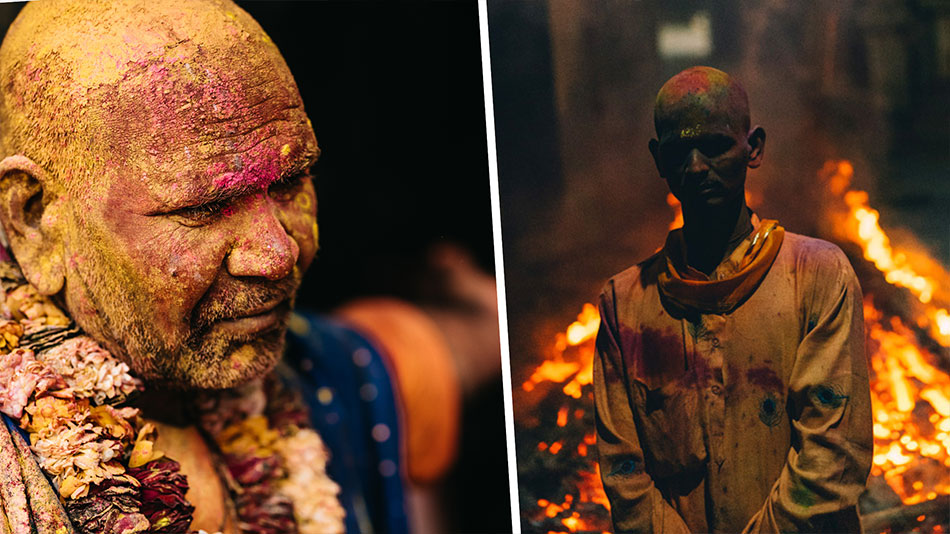
The night before Dhulandi, massive bonfires are lit across the region. This is your chance for dramatic fire photography: silhouettes against flames, the solemnity of ritual, and the anticipation building toward tomorrow's explosion.
Dhulandi - Main Holi Day (moring till night, March 4, 2026)
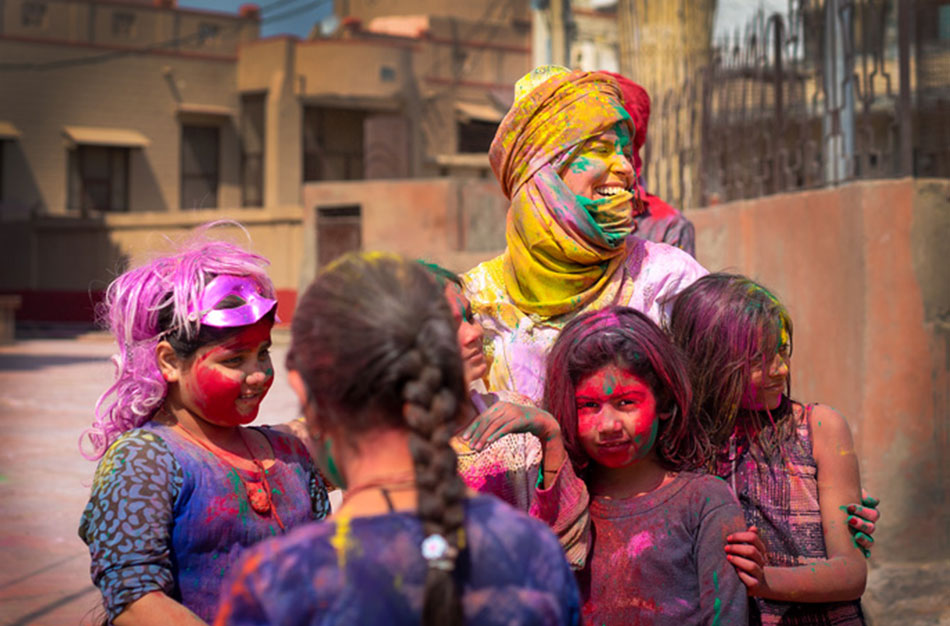
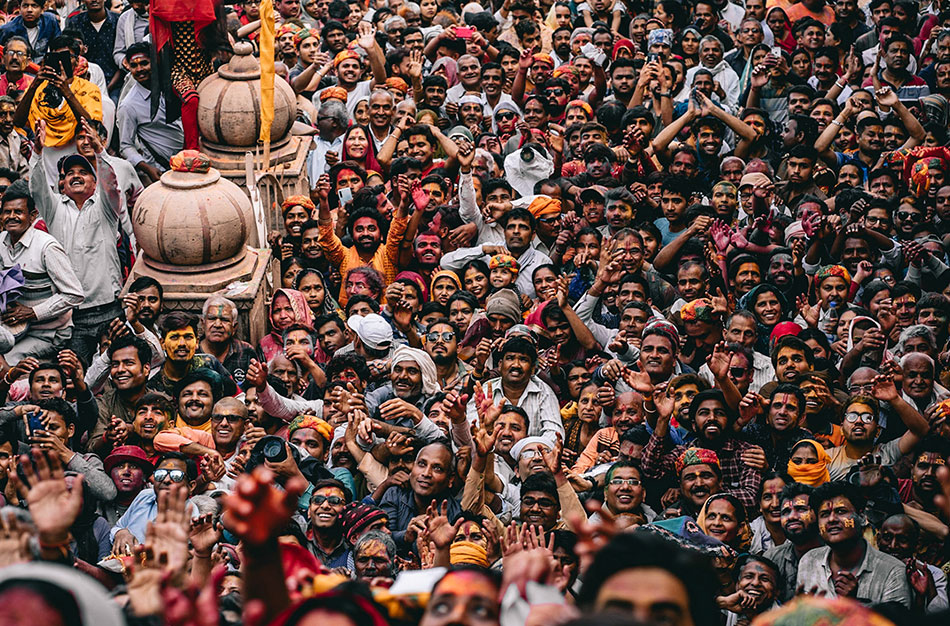
The culmination. Every street, every temple, every corner erupts simultaneously. From dawn processions to afternoon celebrations, this is Holi at its absolute peak. The challenge isn't finding moments to photograph—it's choosing which to focus on when everything around you demands attention.
2026 Dates Summary
Photography Safety Tips for Braj Holi
Camera Protection is Non-Negotiable
This isn't optional. Colored powder is fine and penetrates everywhere. It will destroy your camera if you're not prepared. Use:
Festival 2: Dauji Huranga (morning, March 5, 2026)
The Photography Opportunity
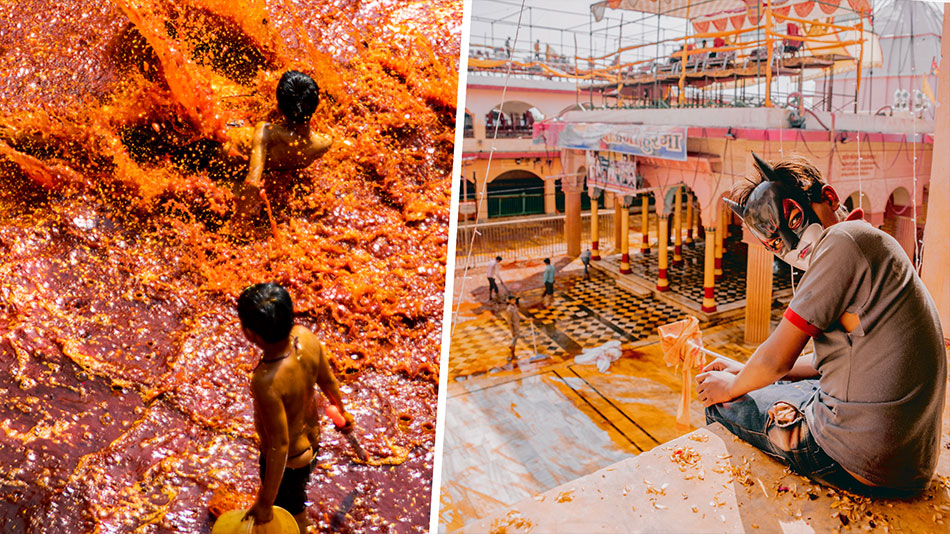
If Holi is chaos, Dauji Huranga is pure, unfiltered mayhem. Held at Dauji Temple in Baldeo (near Mathura) on the day after Dhulandi, this lesser-known festival represents Holi season's wildest finale.
What makes it special: No holds barred. No tourist crowds. Just raw festival energy where locals celebrate with an intensity that makes the previous week look tame. Men rip women's saris during the celebrations, get beaten up in return and drowned in the flooded courtyard of the temple (yes, really - it's tradition).Colors fly with aggressive abandon, and the entire atmosphere feels like controlled madness about to tip over the edge.
2026 Date: March 5, early moring
Why Photographers Often Skip It
Most tours end after Dhulandi. Participants are exhausted, covered in colors that won't wash out, and ready to collapse. Dauji Huranga happens when everyone else has gone home.
But this is exactly why it's photographically valuable. Without tour groups, you're documenting something authentic. The images you capture here will look nothing like anyone else's Holi photos. The energy is different - fiercer, more local, less performative. But have in mind this is a religious gathering, keep distance and do not disturb the locals as they might show no mercy on intruders.
Festival 3: Hola Mohalla - Anandpur Sahib, Punjab (4th - 6th March 2026)
The Photography Opportunity
After Holi's rainbow explosions, Hola Mohalla doesn't abandon the colors - it transforms them. Founded by Guru Gobind Singh in 1701 as a gathering for Sikhs to demonstrate martial skills, this three-day festival combines the warrior tradition with Holi's chromatic chaos in a way you won't see anywhere else.
What makes it photographically special:
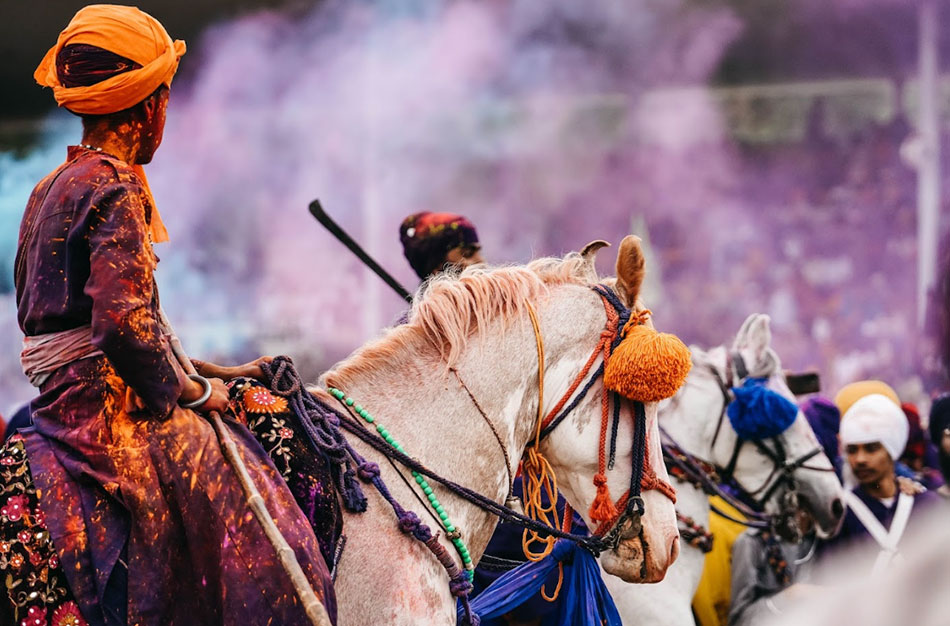
Imagine Nihang warriors covered head to toe in colored powder, their blue robes and towering turbans streaked with pink, yellow, and red. War horses thundering past in clouds of color. Combat elephants (yes, elephants!) and camels painted in vibrant hues. Sword fights where every clash sends powder exploding into the air. This is Holi meeting martial tradition - discipline and devotion expressed through both steel and color.
The visual language shifts from Holi's playful chaos to something more structured yet equally vibrant: warriors performing gatka (Sikh martial arts) while drenched in powder, horseback archery competitions leaving rainbow trails, and massive processions where the colors serve both celebration and tradition. It's the perfect photographic counterpoint to Braj - same colors, completely different energy.
2026 Dates: March 4-6
The Different Elements
Day 1 (March 4th )
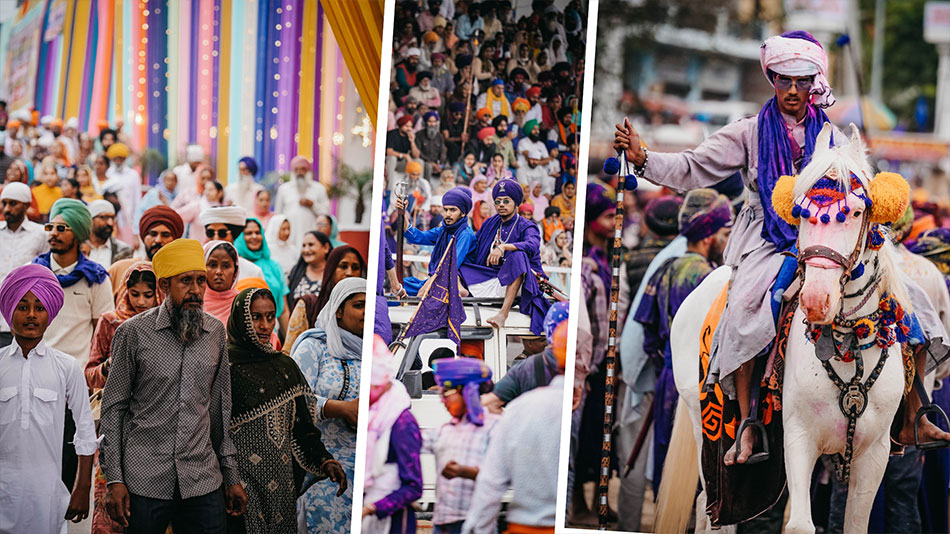
Processions begin. Nihangs in full regalia parade through Anandpur Sahib displaying weapons and martial prowess. You're shooting movement, tradition, and the pride in maintaining warrior heritage.
Day 2 (March 5th):
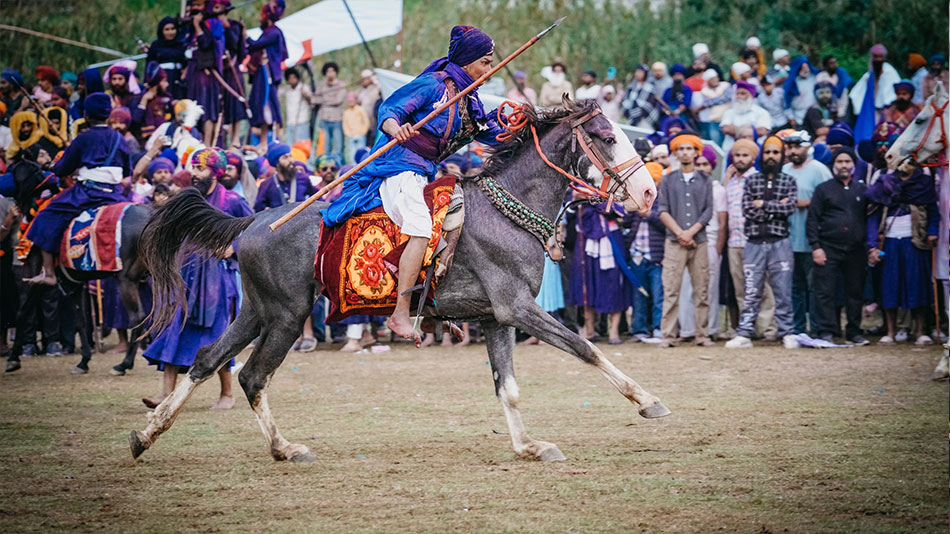
Martial demonstrations intensify. Gatka exhibitions, horseback displays, archery competitions. This is action photography, but slower and more deliberate than Holi. You have time to compose, to anticipate the action, to capture the moment a sword connects with a shield.
Day 3 (March 6th)
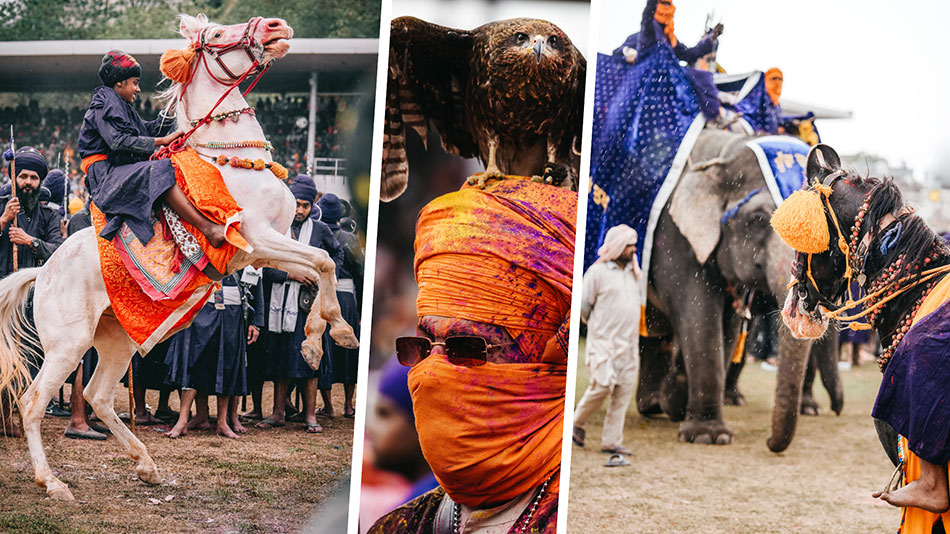
The grand procession - hundrets of Nihangs moving through the town in a massive display that concludes the festival. The scale is overwhelming. Your challenge is finding intimate moments within the enormity.
Photography Tips for Hola Mohalla
Longer Lenses Work Here
Unlike Holi where you're in the thick of it, Hola Mohalla allows for distance. A 70-200mm or longer lets you isolate warriors, capture martial displays from safe vantage points, and create portraits without disrupting ceremonies und keeps you in safe distance from weapons, horses, and elephants.
Focus on Faces and Details
The Nihang turbans alone are photographic subjects - massive structures adorned with metal symbols. The weathered faces of older warriors, the intensity of younger ones, the craftsmanship of traditional weapons. These details tell the story.
Respect is Crucial
This is a sacred occasion for the Sikh community. Unlike Holi's playful energy, Hola Mohalla demands respectful distance. Ask before photographing individuals, don't intrude on ceremonies, and understand that you're documenting someone else's tradition, cover your head and act accordingly.
Practical Guide: Photographing All Three Festivals
The Ideal Timeline
To experience all three festivals properly, you need approximately 12-15 days:
Yes, there's overlap between Dhulandi and Hola Mohalla's start. Focus on Holi through Dhulandi, then immediately head to Punjab for Hola Mohalla's second and third days.
What to Bring
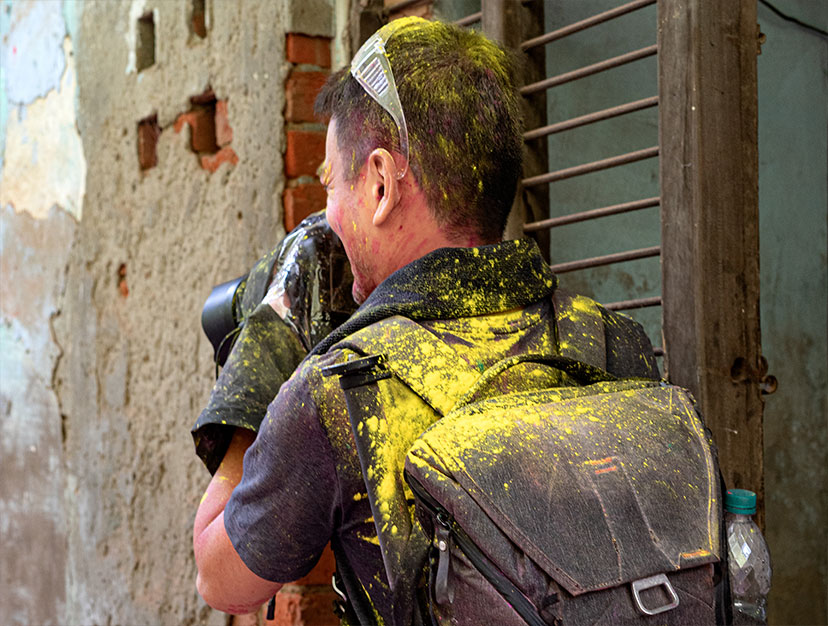
Critical Gear Recommendation: Omax Camera Care, Delhi
If you're starting your journey in Delhi, make Omax Camera Care your first stop. I've been their customer for years, and thanks to their expert advice on protection gear, I've never - not once - had to write off a camera or lens due to colored water or powder damage during Holi.
Omax Camera Care (KC Enterprises)
G.41, Ansal Classic Tower, Rajouri Garden
New Delhi - 110027, India
Tel: +91-011-45684118 | WhatsApp: +91-9899965587
Email: enquiry@omaxphoto.com
Website: https://omaxphoto.com
They'll outfit you with reliable camera protection specifically designed for India's color festivals. Even better: the shop is run by Sikhs who are incredibly knowledgeable about Hola Mohalla and happy to share insights about photographing the festival.
After your tour, return to Omax for professional equipment cleaning. This is not optional - color powder infiltrates every microscopic gap in your camera and lenses. If it stays there, it will destroy your gear over time. Professional cleaning is the difference between equipment that lasts another decade and equipment you're replacing soon.
Beyond the Festivals: What Makes This Journey Worthwhile
The photography is incredible. But what stays with you - years later - isn't just the images.
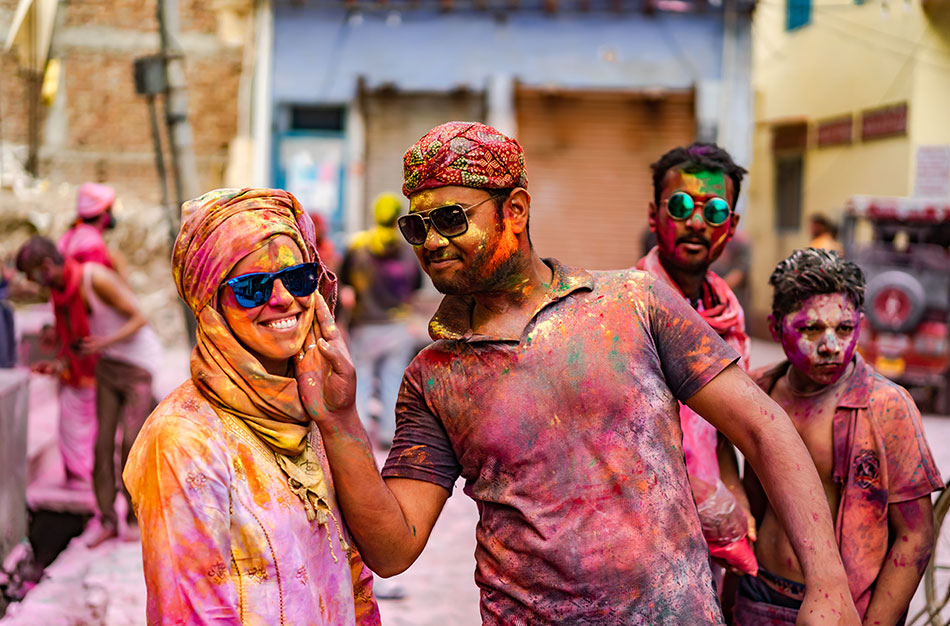
It's chai with other photographers, comparing whose camera survived the previous day better. It's the moment you capture someone's pure joy and they beam at you through color-covered faces. It's sharing meals with locals who invite you into their homes. It's the widow who plays Holi for the first time in decades, breaking centuries of tradition, and you're there to witness it.
It's experiencing India at its most vibrant, most chaotic, most beautiful; not as a tourist passing through, but as someone who committed two weeks to understanding these festivals from the inside.
Join Our 2027 Photography Tour
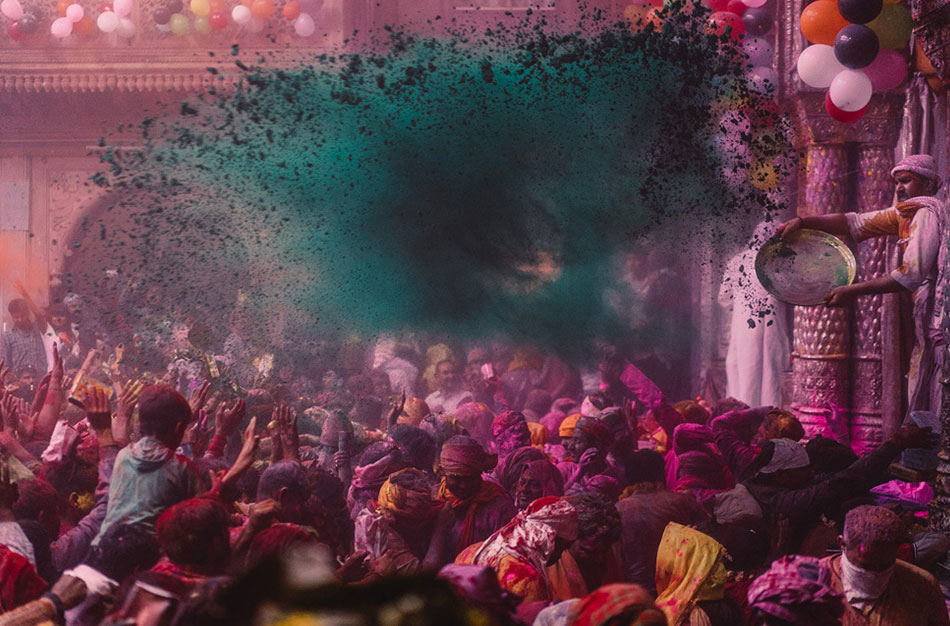
After years of photographing these festivals, we've learned what works: small groups (maximum 6 photographers), local guides who secure exclusive access, experienced photography mentors who've shot Holi dozens of times, and a complete itinerary covering all three festivals + exclusive access to temples and locations who normaly remain closed to the crowds.
Our 2027 tour (March 15th-25th, 2027) includes:
We've been leading this tour since 2018, building relationships that grant access tourists simply don't get: private rooftop positions during Lathmar Holi, early temple entry before crowds arrive, connections with local communities who share their traditions rather than performing for cameras.
Learn more about our → Holi & Hola Mohalla Photography Tour 2027
Final Thoughts
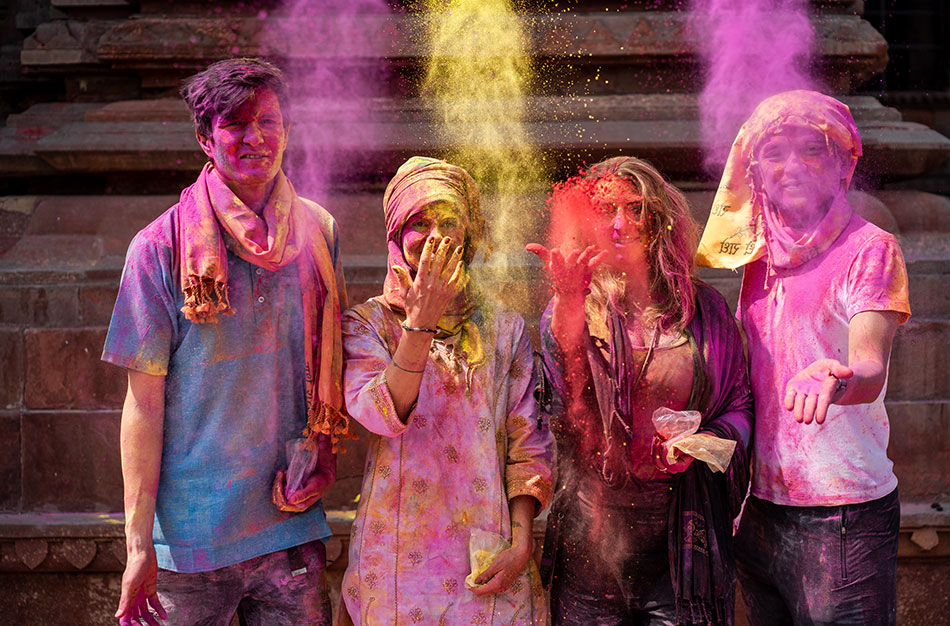
Photographing India's color festivals isn't easy. Your gear will suffer. You'll be exhausted. Colors won't wash out of your clothes (or hair) for weeks.
And you'll come home with images unlike anything else in your portfolio - pictures that capture human joy, ancient tradition, and visual chaos in ways that feel almost unreal. More importantly, you'll have experienced something that changes how you see both photography and India.
The festivals happen every year. The question is whether you'll be there with your camera when they do.
Have questions about photographing these festivals? Contact us directly. We're happy to share insights from years of documenting Holi and Hola Mohalla across North India.
About the Author:
Runa Isabel Lindberg is a travel enthusiast who has been sharing her personal journeys through India, Sri Lanka, and Nepal for 17 years. On this website, Beyond Taj Tours, she writes about her favorite travel experiences and the beautiful places she has visited over the years.
This blog is a private collection of personal memories, including photos taken through her own lens and reviews of heritage hotels she has stayed at. Through her stories, she shares her deep love for the region.
Text and photography: © 2026 Credio Digital Media. All rights reserved. No part of this article or images may be reproduced without express written permission. For licensing inquiries, please contact through Beyond Taj Tours.
09 Oct 2026
28 Sep 2026
17 Sep 2026

05 Sep 2026
31 Aug 2026
15 Aug 2026
15 Jul 2026
19 Mar 2026
12 Feb 2026
15 Jan 2026
28 Dec 2025
01 Dec 2025
13 Nov 2025