Early Bird Discount:
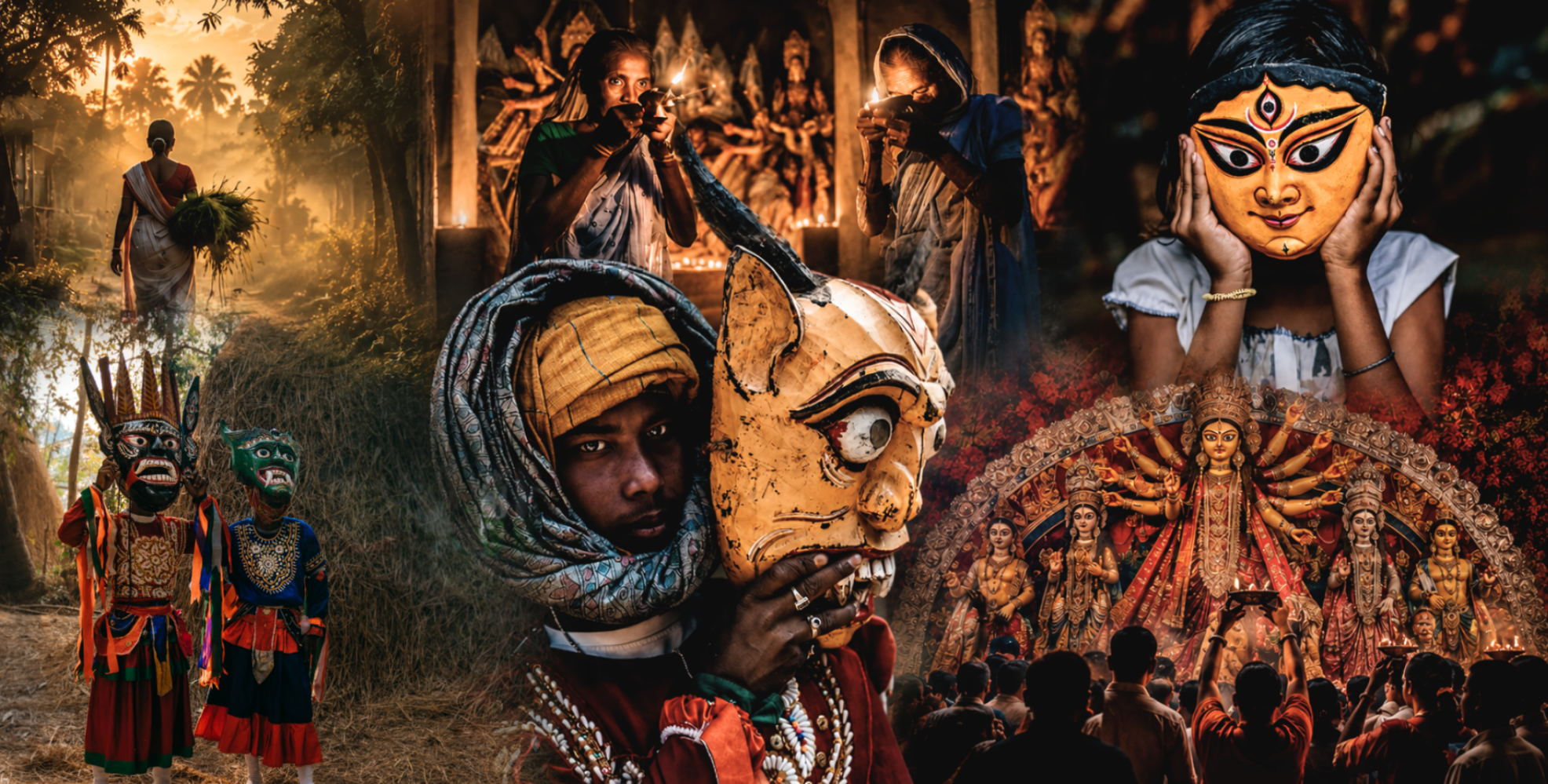
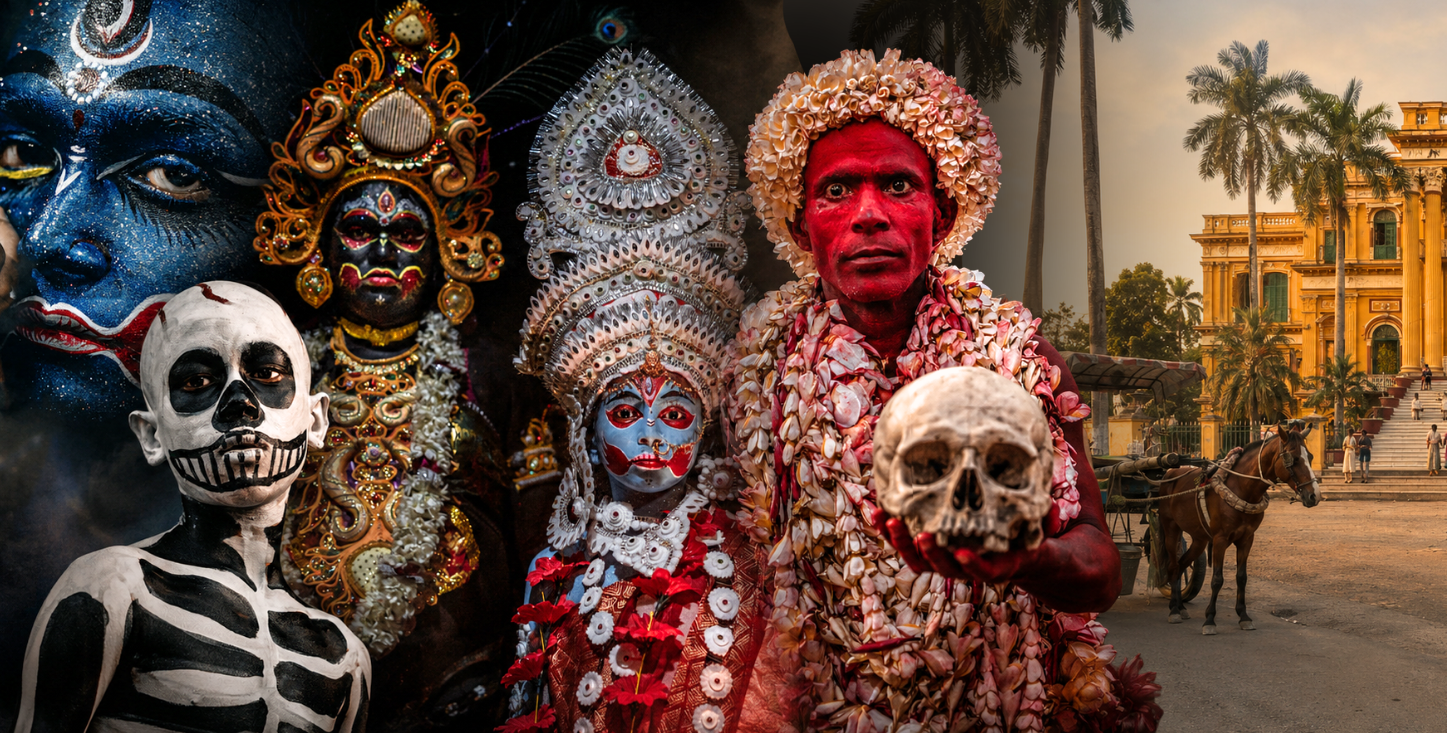
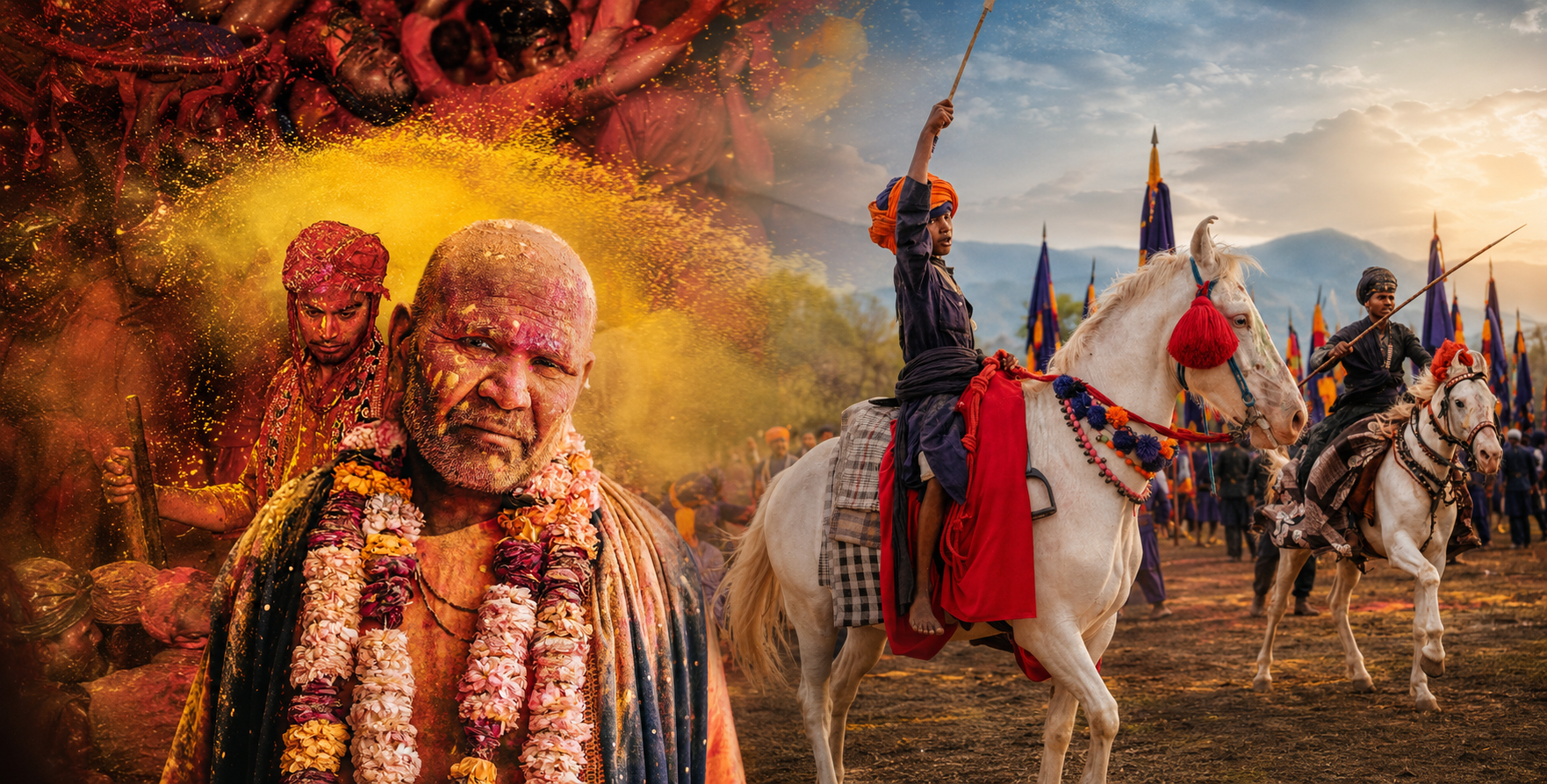
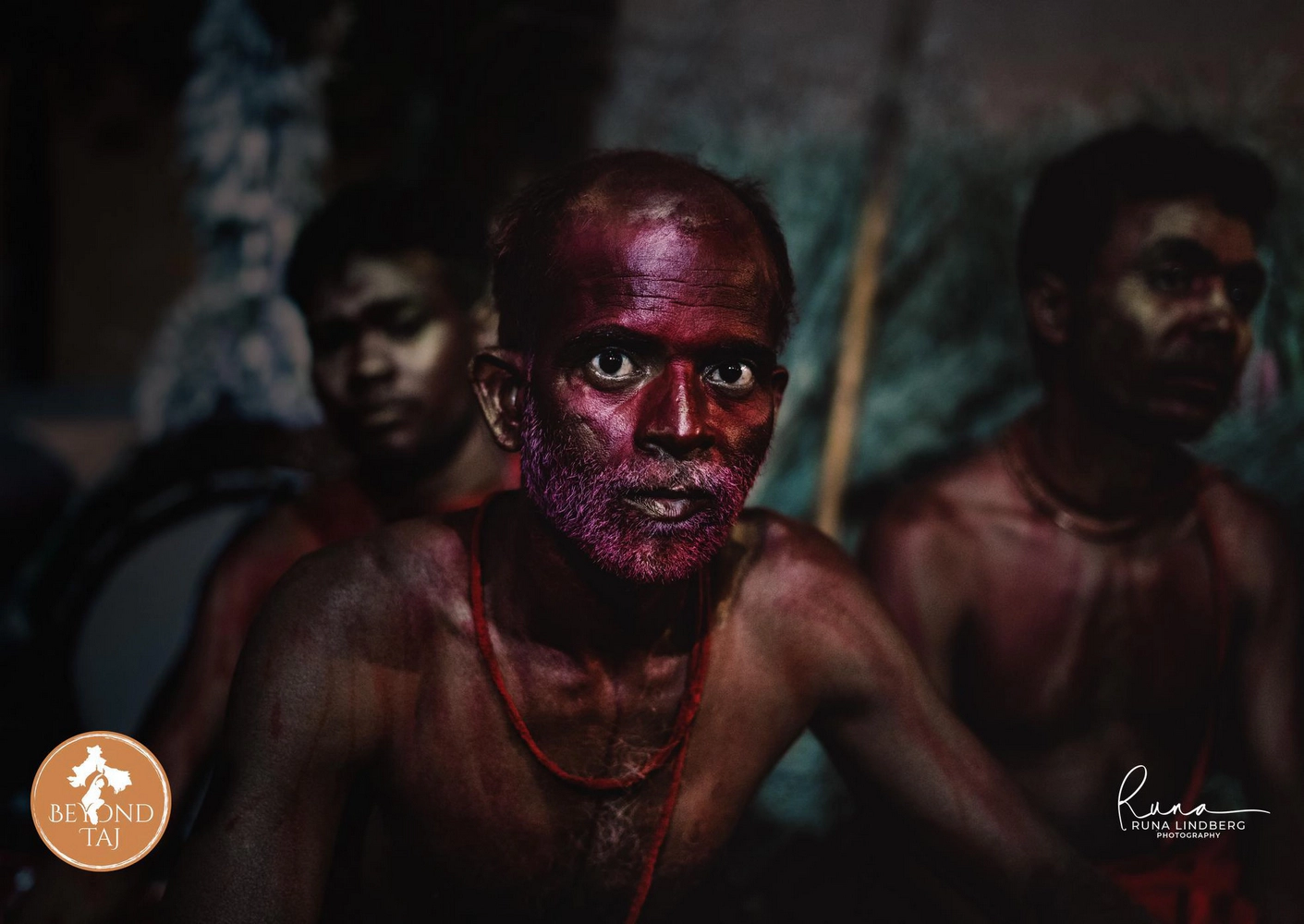
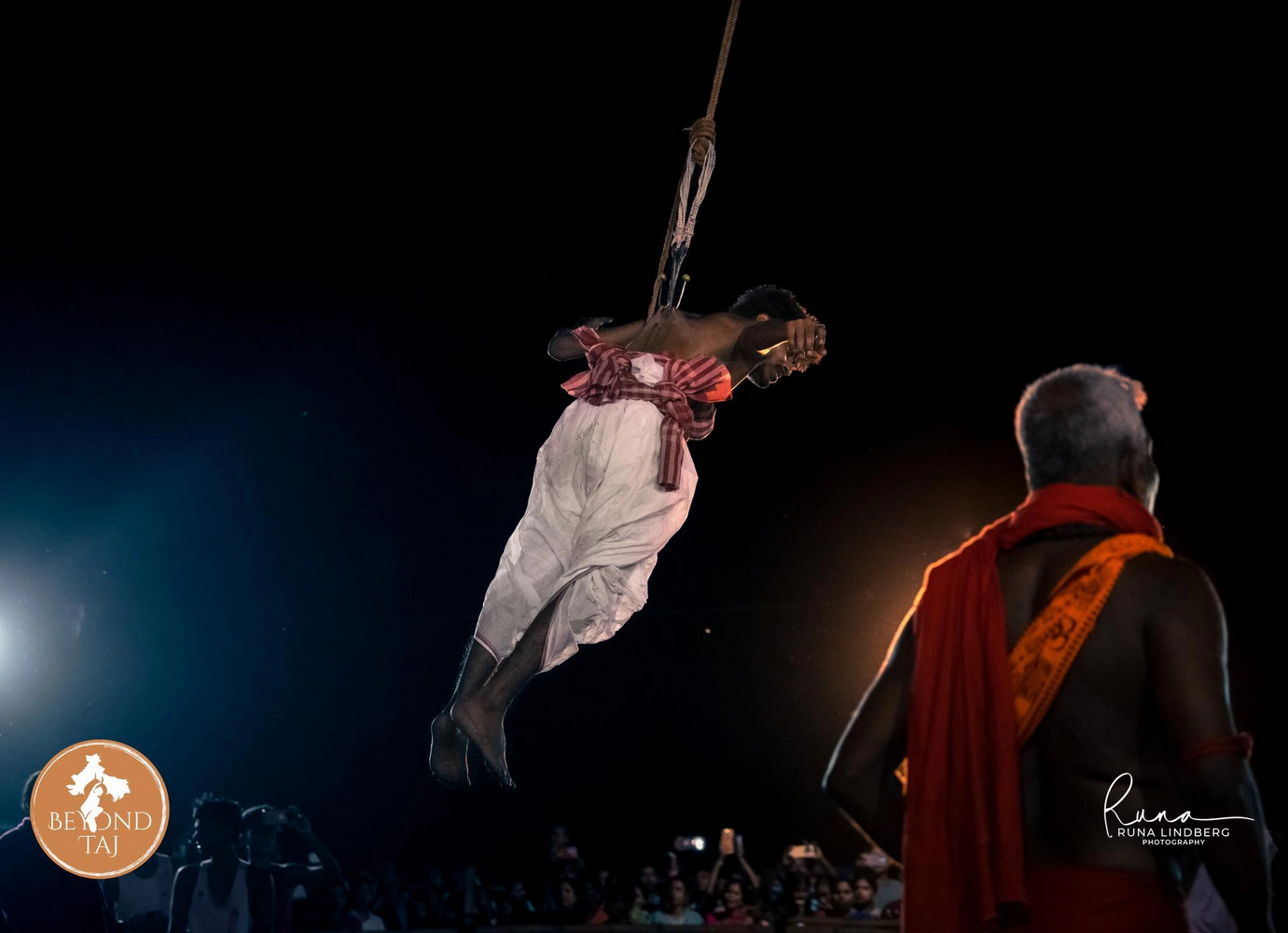
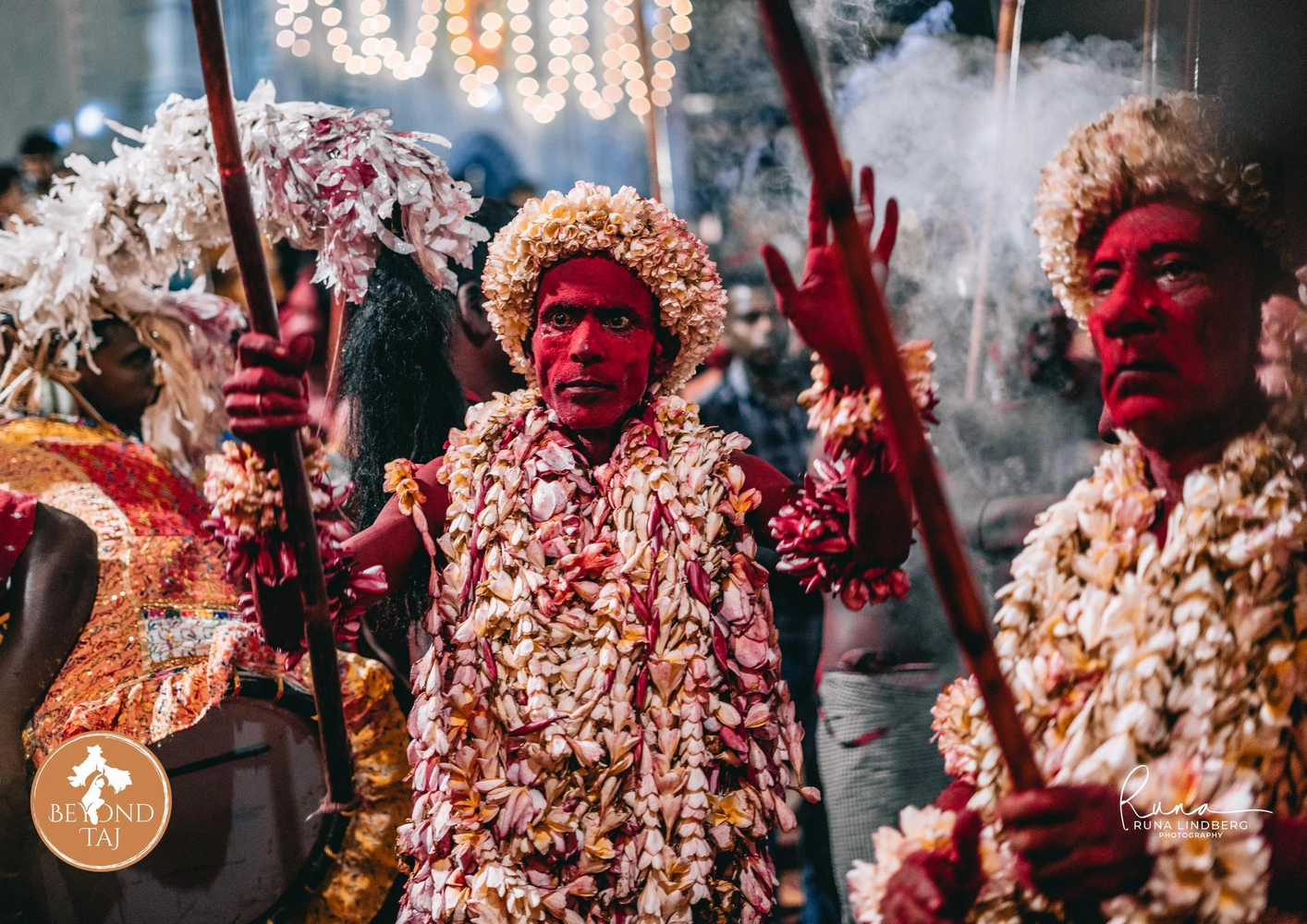
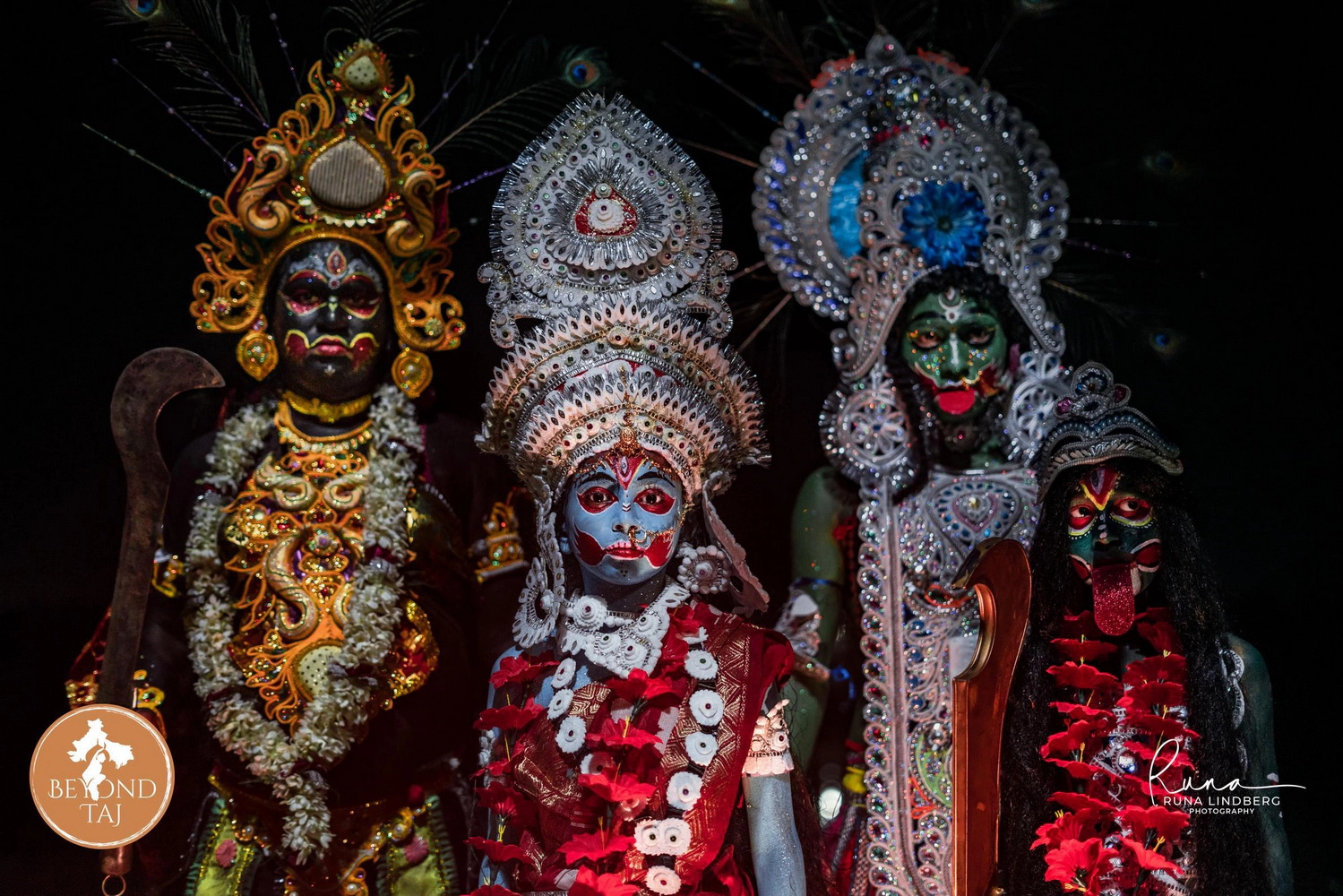
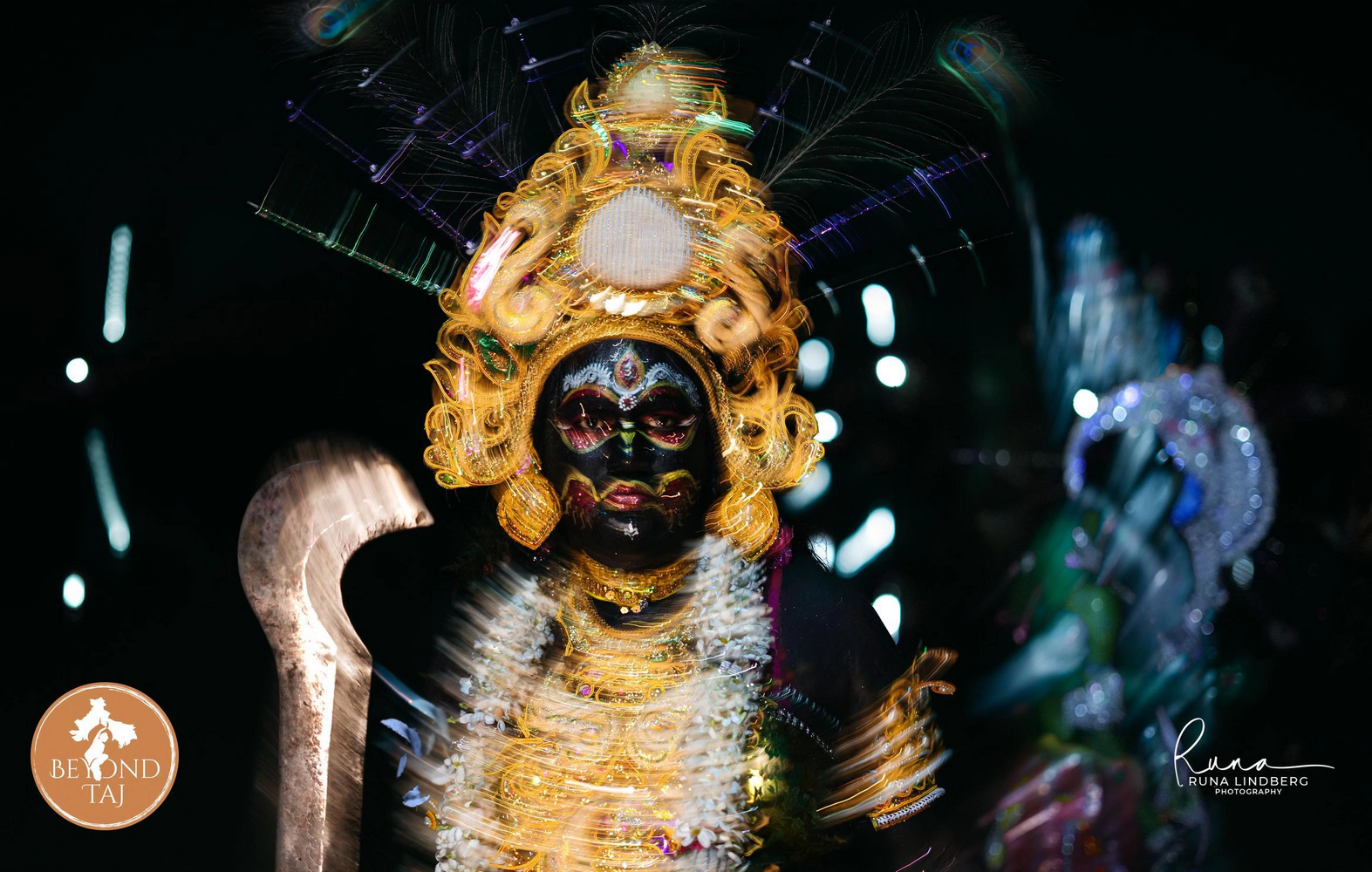
Blood & Bones takes photographers deep into rural West Bengal, where two ancient Hindu rituals still play out as they have for centuries: Gajan and Charak Puja. As the Bengali year closes, devotees drive hooks through their skin and are hoisted skyward, walk barefoot across beds of fire, dance in trance clutching human skulls, and paint their bodies until they become living gods & ghosts.
The tour opens in Kolkata, threading crumbling merchant mansions, mud wrestlers under Howrah Bridge, and the book stalls of College Street, before ending in Cossimbazar, where the Charak finale erupts. Four nights unfold at Cossimbazar Rajbari, a 300-year-old palace, close enough to slip back between rituals.
When farmers become gods and demons.
The journey begins at Kolkata Airport (CCU), where the group is met by private vehicle and photography mentors. After checking in and a short pause to settle, the first session leads into North Kolkata's tangle of old merchant mansions, peeling facades and narrow lanes glowing in the soft afternoon light. At Prinsep Ghat, cameras turn to the Hooghly riverfront for long exposures of the illuminated Vidyasagar Setu, before the day closes with a welcome dinner and briefing.
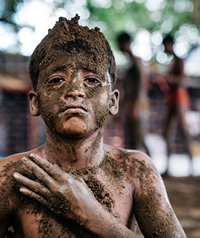
Before dawn, we photograph the wrestlers of Mullick Ghat, training in red clay beneath the looming Howrah Bridge, while the neighbouring flower market stirs into motion, marigolds piling up amid porters and river traffic. Later, the group crosses the Maidan as Kolkata wakes: cricket matches, mounted police horses, the Victoria Memorial dissolving into the morning haze. The afternoon belongs to College Street, the city's sprawling secondhand book market, and the storied Indian Coffee House.
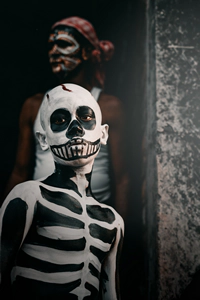
We leave Kolkata before dawn and drive north into Gajan country, toward Sonapalashi, Gangatikuri, or both, depending on the confirmed local festival programme. (The exact village route is finalised closer to departure, so we photograph the strongest rituals on the correct dates.)
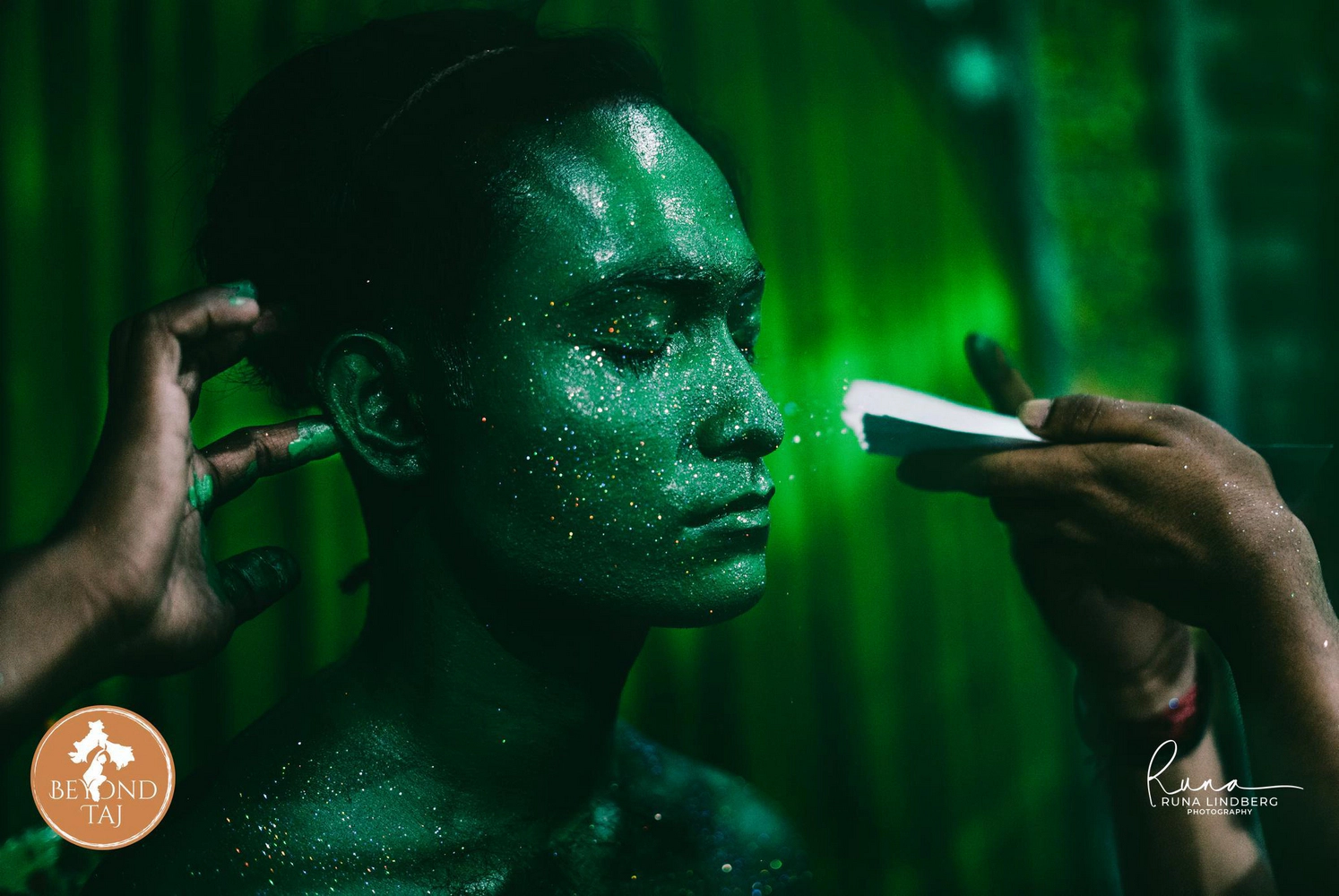
The rest of the day unfolds as documentary work in the chosen village, where Sannyasis spend hours transforming under paint and mask before the first trance dances begin. By evening, we continue on to Murshidabad and check into Cossimbazar Rajbari, our base for the next four night
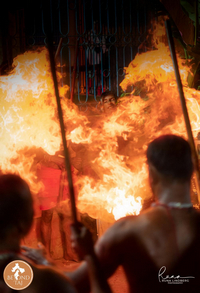
The morning is deliberately unhurried: sleep in, take a late breakfast, and photograph the Rajbari's faded architecture at your own pace. In the afternoon, we drive to Kandi as the Agun Sannyas rituals ignite, devotees dancing across glowing coals and breathing fire through golden hour, blue hour and on into full darkness. We return to the Rajbari for dinner and an early rest before the pre-dawn departure on Day 5.
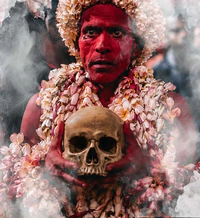
A 3:45 AM wake-up call takes us back to Kandi for the most archaic chapter of the tour. At dawn, red-clad Ranga Sannyasis perform the Kapaala Nritya, the skull dance, at Baba Rudradev temple, tracing trance processions through the low morning mist with human skulls in hand.
After rest at the Rajbari, we photograph face-painting sessions in nearby temple courtyards. At night, Neel Puja brings ritual dances and intense piercings by the light of oil lamps and torche
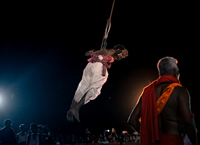
In the morning, the massive Charak poles are raised and anointed with holy oils, while midday is reserved for rest, a Lightroom and Photoshop post-processing workshop, and charging batteries. From dusk, the Charak Hook Festival takes over: Sannyasis suspended from rotating poles by iron hooks, lit by roaring torches against the night sky. The festival unfolds close to the Rajbari, letting participants shoot at their own pace and slip back to the palace for breaks.
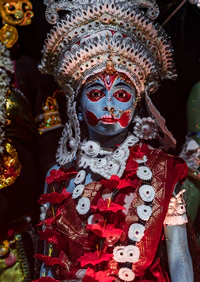
After the all-night festival, breakfast runs late and the morning stays open. Those with energy to spare can photograph the first stirrings of Poila Baishakh, new festive clothing and freshly decorated temples. Around 11:00, we check out and drive back to Kolkata, with drop-off at the airport or a connecting hotel.
Photography instruction, image review and practical coaching run throughout the tour. Expect very early starts, long night sessions and irregular sleep, especially from Day 4 to Day 6.
Festival programmes, access, ritual timings and locations can shift at short notice. The Day 3 route may lead to Sonapalashi, Gangatikuri, or both, depending on the confirmed 2027 festival calendar. The itinerary stays flexible so the group can respond to local decisions, weather, crowds and the strongest light.
Some rituals involve fire, body piercing, hook suspension and the Kapaala Nritya skull dance. Participants should be comfortable working around intense religious practices. Respectful distance and local guidance always take priority over the photograph.
Private air-conditioned transport runs from the meeting point at Kolkata Airport on Day 1 through drop-off on Day 7. Exact meeting and return times will be confirmed closer to departure.
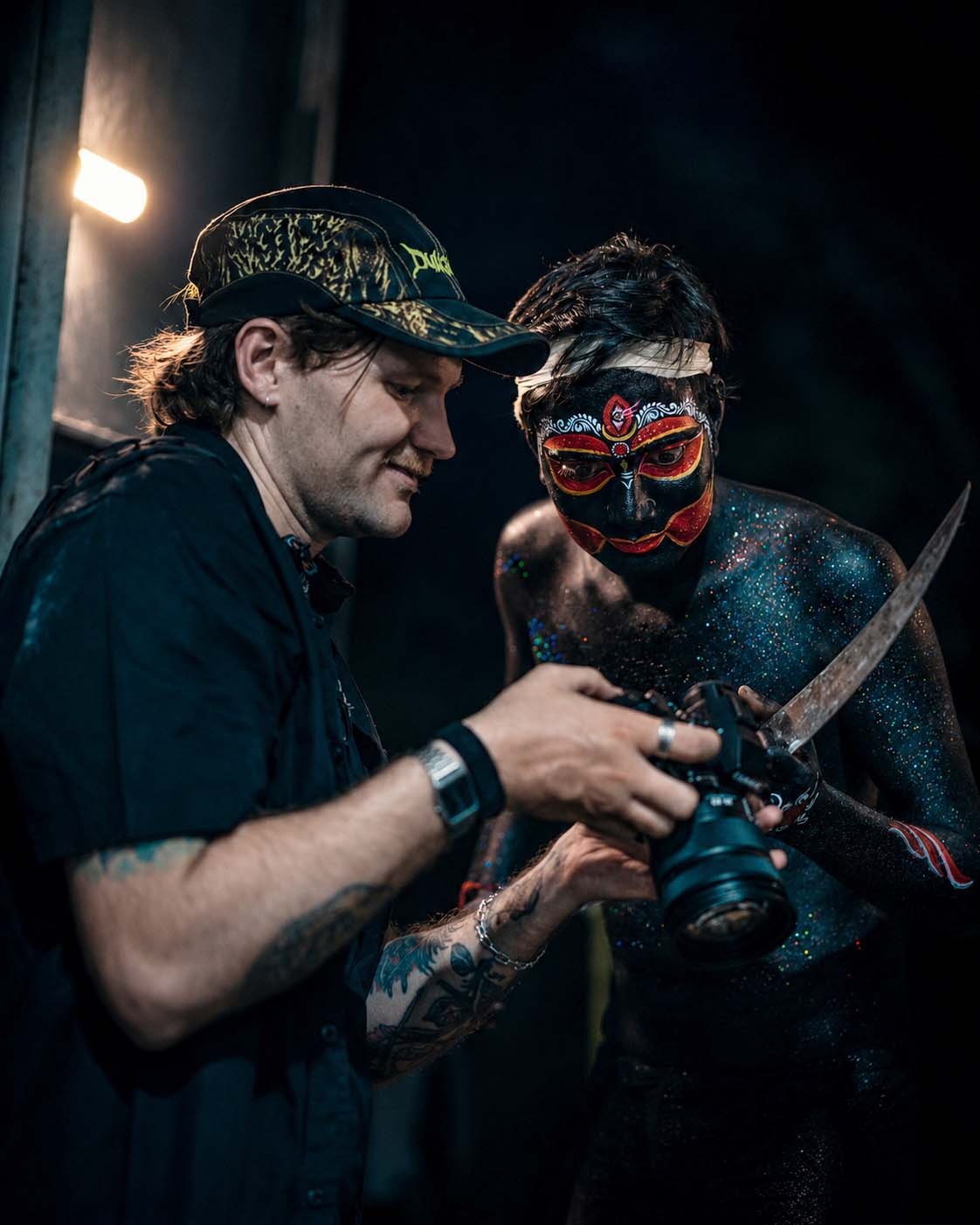
Danny is a street & travel photographer from Australia, whose eye for raw, unscripted moments comes from years spent reading people in the field. His documentary style is built on getting close: candid street portraits, fleeting expressions, real life caught mid-motion. Naturally curious and easy to talk to, he has a gift for putting strangers at ease in front of the lens, and he's just as sharp on the technical side, ready to help you get the most out of your camera and your edit.
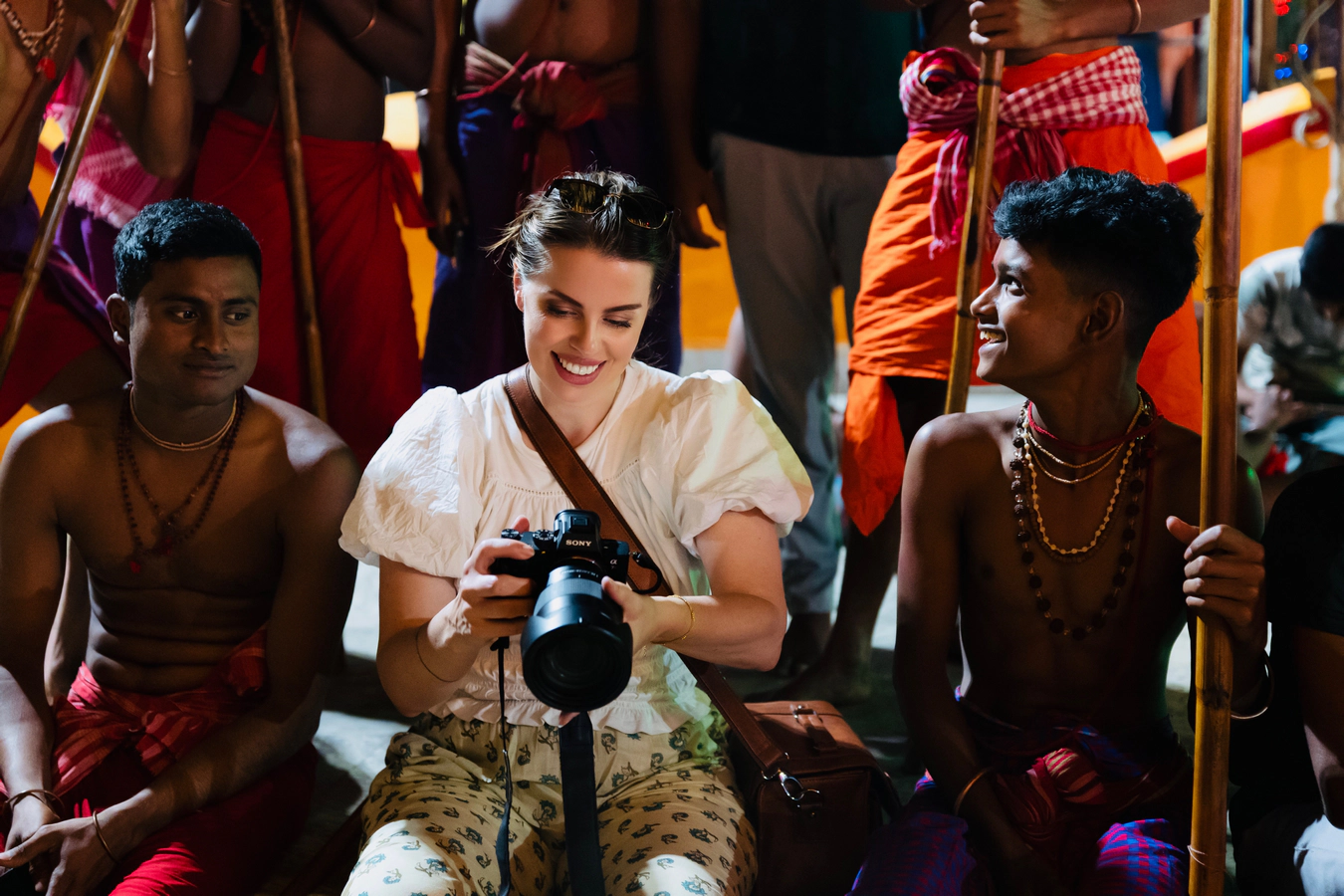
Runa is an award-winning photographer and storyteller, and co-founder and creative head of Beyond Taj. Over 17 years she has travelled extensively across India, Sri Lanka, Nepal and Indochina. She keeps returning again and again to West Bengal, and to Murshidabad in particular, for cultural and documentary projects. Many of her images from the region have been exhibited internationally and recognised with awards. She considers West Bengal one of the world's most underrated, and most beautiful, regions for photographers. Her focus stays on authentic storytelling, respectful encounters, and helping photographers navigate complex festival environments with confidence.