
Murshidabad is the faded former capital of Bengal, a riverside city on the Hooghly that was once among the richest places on earth. Its palaces, mosques, temples and old cemeteries still stand, largely off the tourist route. For architecture and street photographers it is one of Bengal's great overlooked subjects, and this guide covers when to go, where to base yourself, what to shoot, and how to do it respectfully.
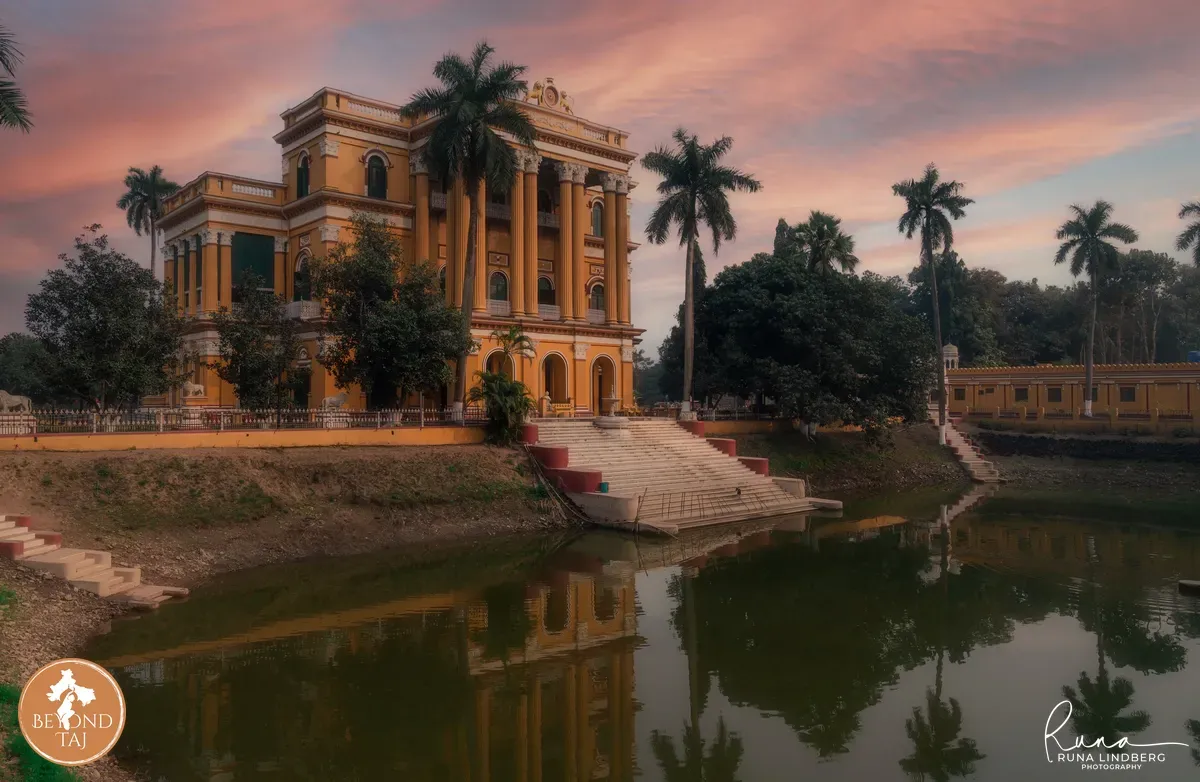
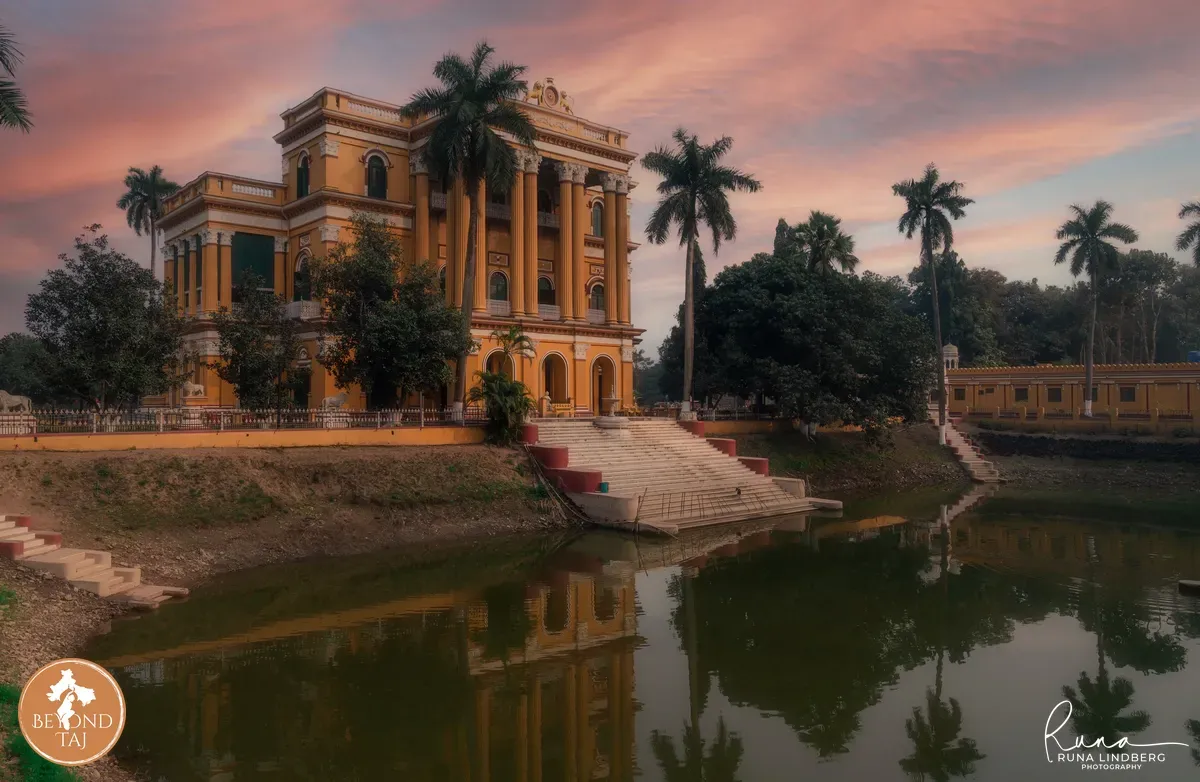
Kathgola Rajbari - a four-storeyed palatial palace in the Kathgola Gardens, Murshidabad, West Bengal
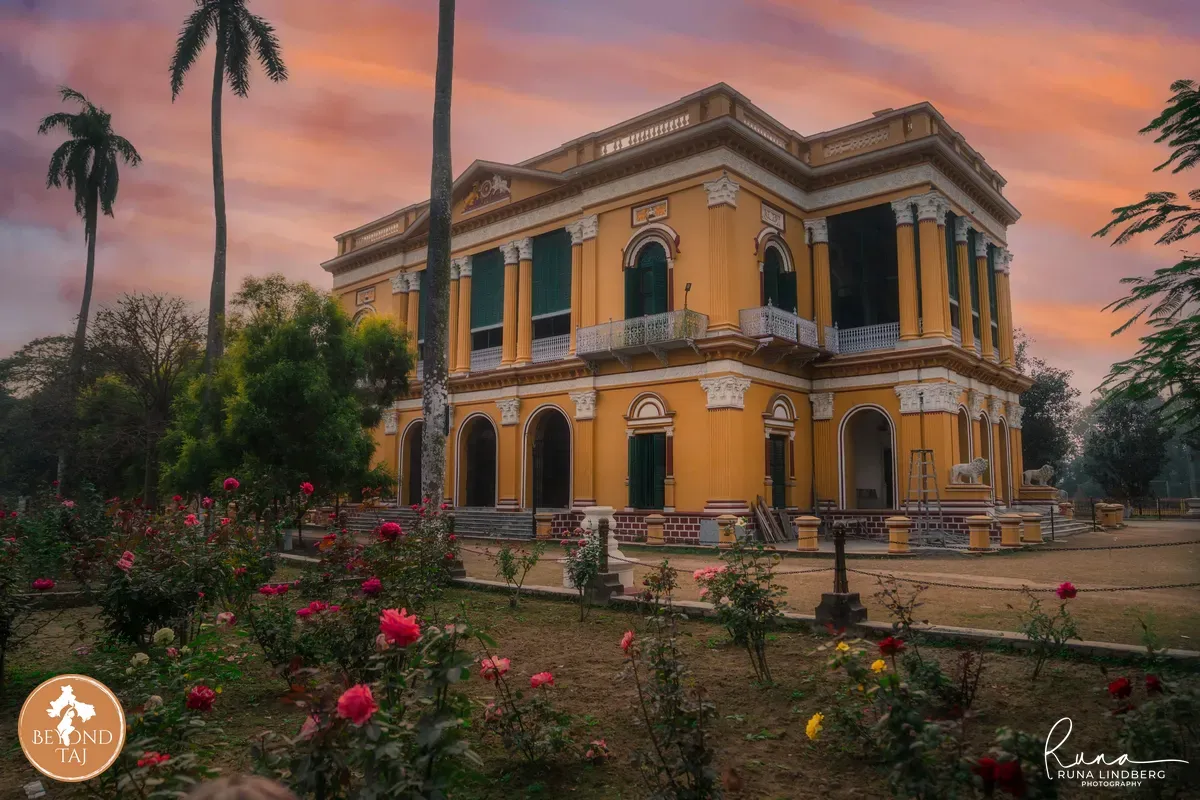
Kathgola Rajbari, set in its garden, one of the best-kept of the great houses.
Jump to:
The drive in tells you what kind of place you have come to. We reached Murshidabad after stopping at the Nimtita Rajbari, which stands in open ruin, roof gone, trees pushing through the walls. So the first thing that struck me on arriving was relief, and a kind of surprise, that Murshidabad itself has kept so much. Whole streets of rajbaris still stand, lived-in or at least holding together, and you can walk them and picture, without much effort, how grand this city once was.
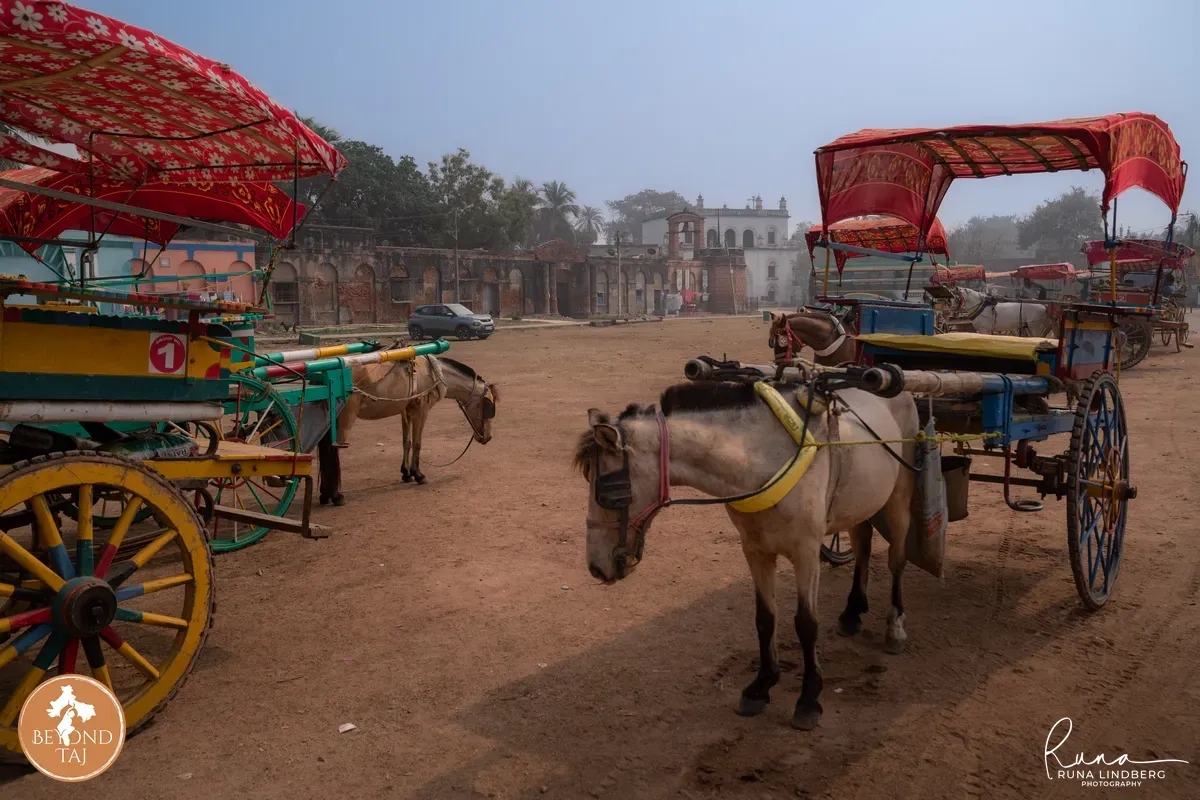
A pony cart waiting on a quiet Murshidabad street, old buildings behind, West Bengal
The other thing I noticed straight away were the pony carts. They seem to be a Murshidabad thing, and out in the old parts of the city they do the work that cars and autos do everywhere else in India. There is barely any motor traffic, so the streets stay quiet enough to hear a loom, or a bell, or the wheels of the cart itself. For a street photographer that quiet is not a small thing. It changes how close you can get and how long a moment lasts.
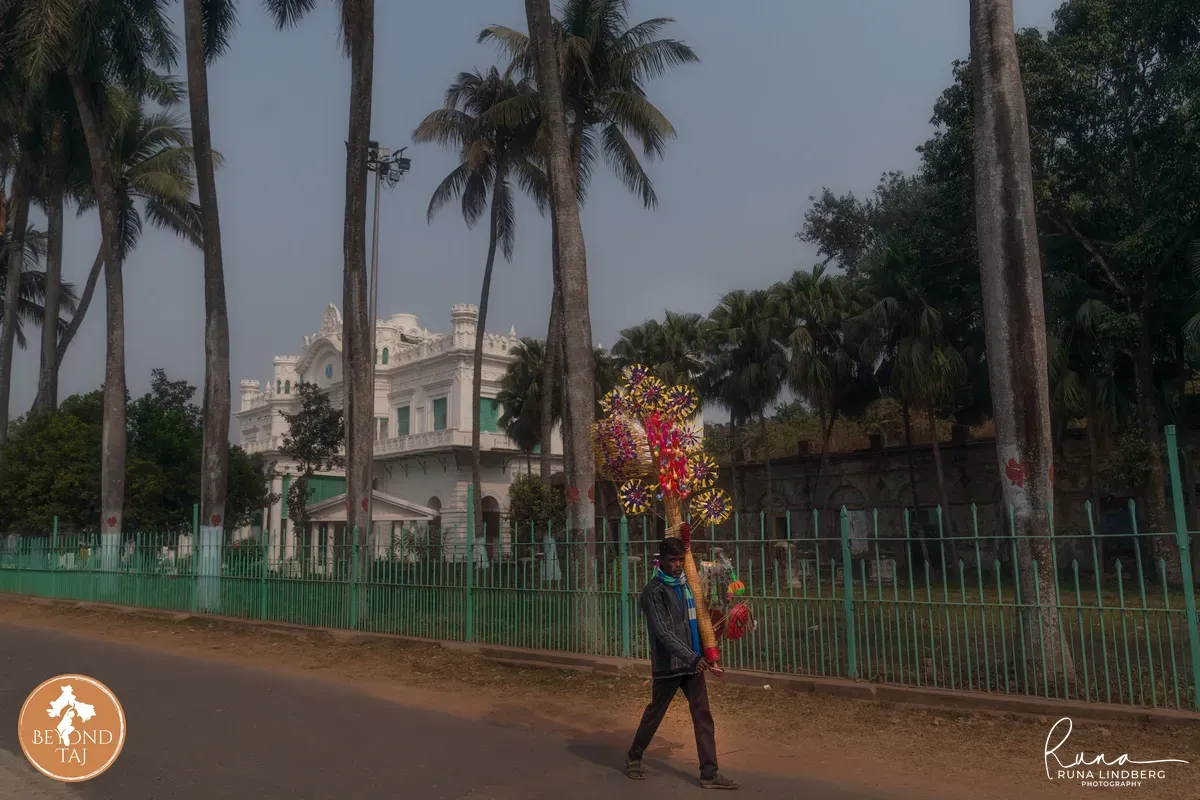
Street scene in the old core of Murshidabad, everyday life among historic buildings, West Bengal
It was, for a stretch of the eighteenth century, the capital of Bengal under the Nawabs, and one of the wealthiest trading cities anywhere, built on silk and river trade. Power shifted to the British after the Battle of Plassey in 1757, and the city slowly slid off the map of importance. What it never did was disappear. That is exactly what makes it a photographer's city rather than a museum one.
The wealth left behind an unusually dense mix of subjects in a small area. There are rajbaris, the old aristocratic mansions, some kept up and some beautifully weathered. There are grand mosques and quiet Hindu temples. There are Armenian, Dutch and English cemeteries, the graves of the traders who came for the silk. And threading between all of it is a living, unhurried city, with its silk weavers, its shola craftsmen, its incense makers and its markets.
I got the clearest account of why some of this survives and some of it falls from Mr. Roy, the owner of the Cossimbazar Palace, the Palace of the Roys, and a historian of the city. As he explained it, his family's rajbari here, and the family house in Kolkata, have stayed in the same hands from the beginning right through to today, which is why they are still standing and still lived in. Many of the other great houses lost that thread. The families died out, or emigrated, or the property fell into inheritance disputes and was left to decay. Some are now held together by trusts. Once you have heard that, you read every facade in Murshidabad differently, and you start photographing the difference between a house that is loved and a house that is merely left.
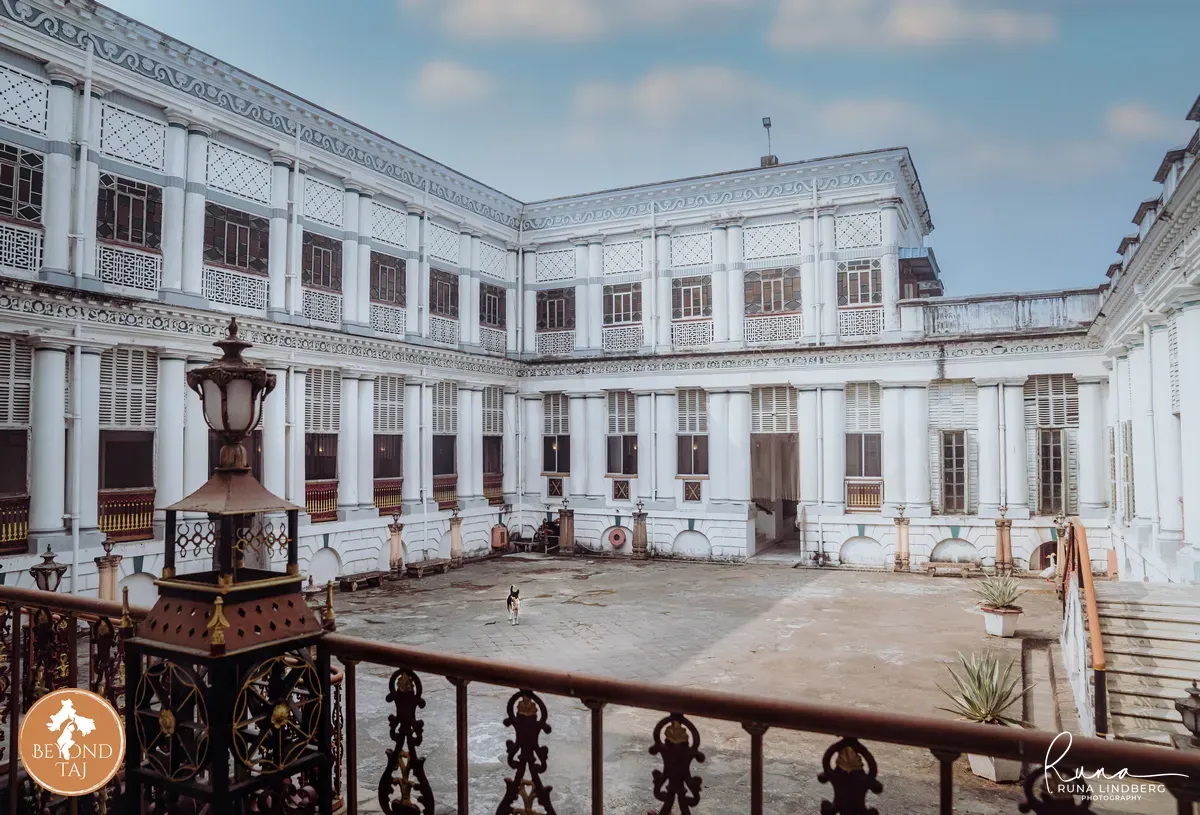
Cossimbazar Rajbari, Murshidabad, West Bengal
Aim for the cooler, drier stretch from roughly October to March. The days are long enough to work properly, the light is cleaner, and the heat does not shut down the middle of the day the way it does later in the year. The monsoon has its own appeal, wet plaster deepens every colour and the ruins turn green, but the flat grey light and the rain make it a harder trip.
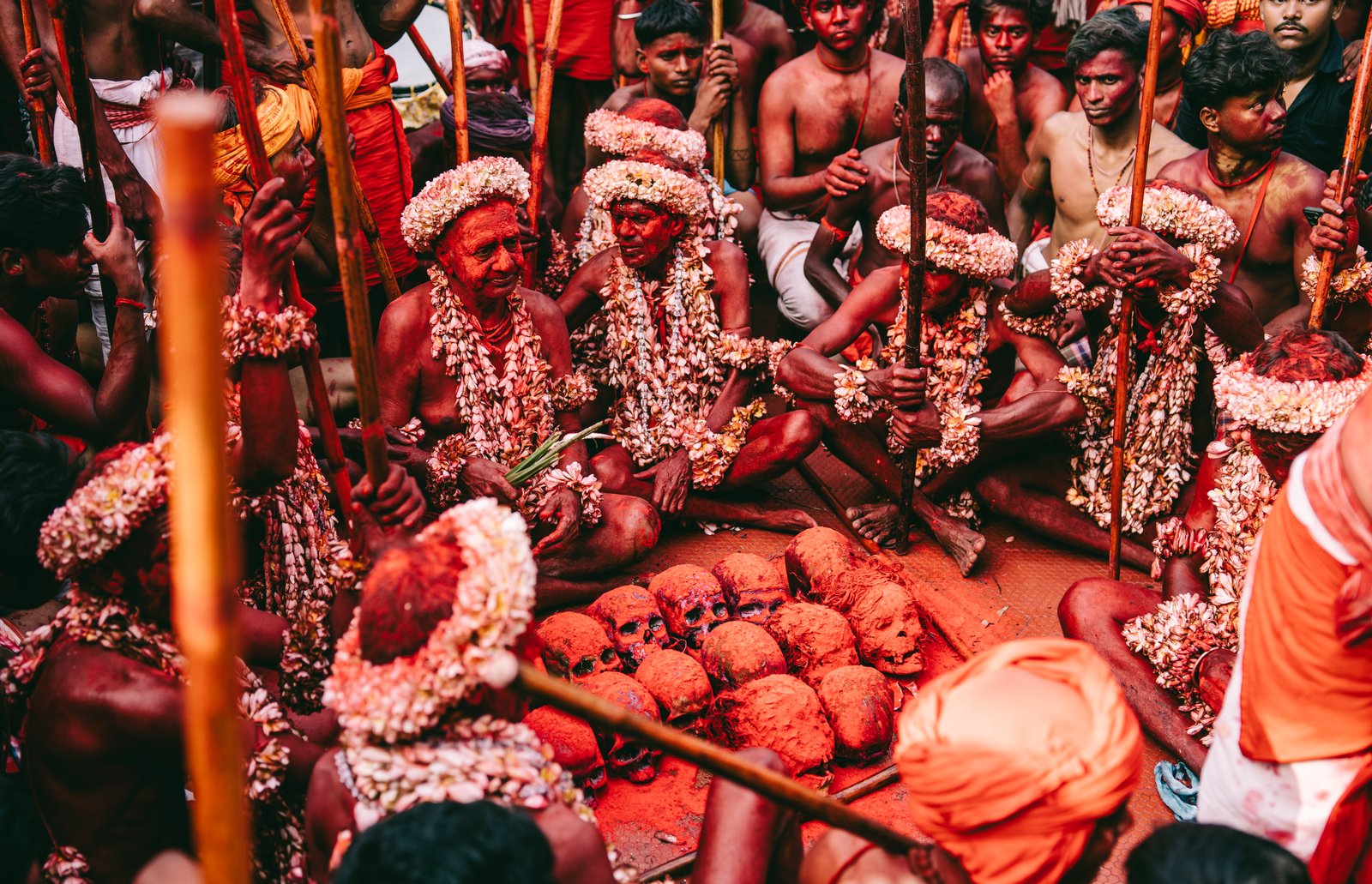
Two living traditions are worth planning around if the timing lines up. Durga Puja turns the whole city into something to photograph, with the old courtyards of the rajbaris hosting their own family pujas. Later comes Gajan, the ascetic festival, which is intense enough and photographically rich enough to deserve its own guide rather than a paragraph here.
Base yourself in or right beside the old city, and if you can, stay inside one of the heritage rajbaris rather than a standard hotel. Several of Murshidabad's old palaces have been carefully turned into places to stay, so you can sleep inside the exact kind of building you came to photograph, and wake up with the courtyard to yourself before any day-trippers arrive.
The Cossimbazar Palace of the Roys is the obvious example, a working family palace that also takes guests. There are others in and around the city in the same spirit. For a plainer, more conventional room, Berhampore nearby has ordinary hotels and is an easy base for driving out each day. Either way you are close to the main clusters of rajbaris, mosques and cemeteries, which sit within a compact area.
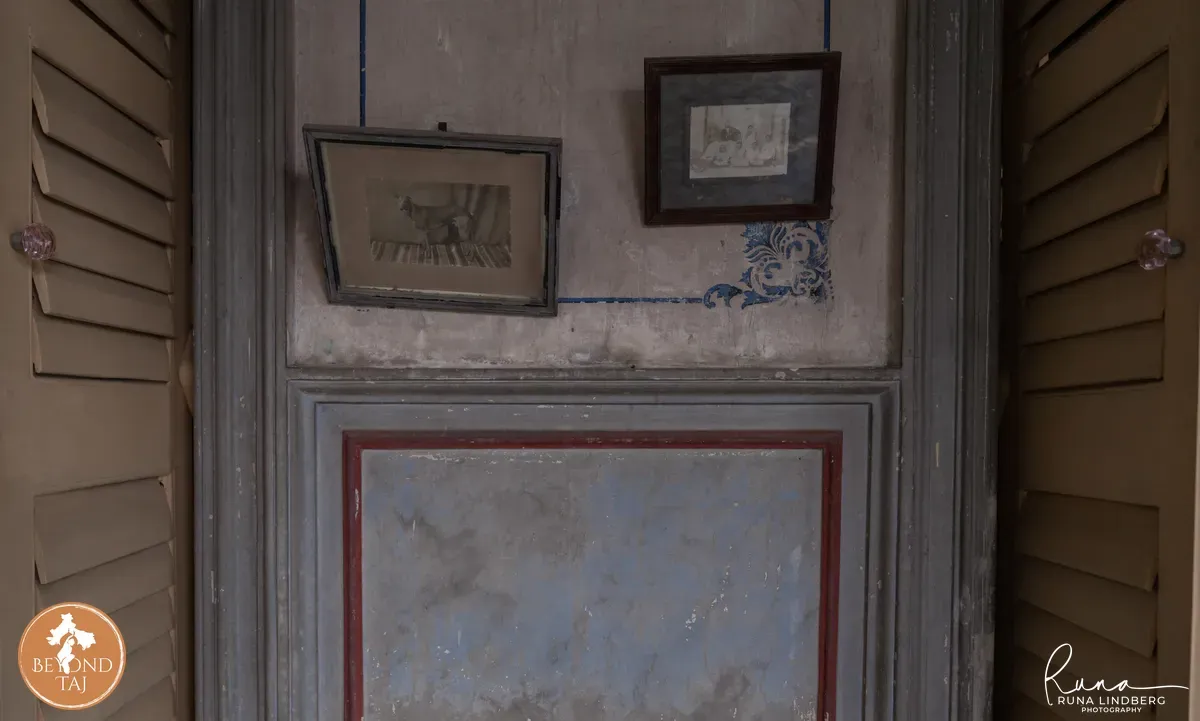
A weathered rajbari wall hung with two faded portraits, a hunting dog and children, the plaster crumbling around them.
The comfortable way in is to fly into Kolkata and cover the rest by road or rail. A car and driver can take you the whole way to Murshidabad and Cossimbazar, crossing the Hooghly by ferry where the road calls for it, which is handy if you want the car waiting for the days ahead. The train up to Berhampore, right beside Murshidabad, is the straightforward alternative.
Once you reach the old town, though, the car stays behind. You cannot drive into the historic core, so it moves on pony carts, cycle rickshaws and your own two feet, and that is a large part of the pleasure. Keep a driver for reaching the outlying sites, but the photography itself happens slowly, on foot, at the pace of the city.
This is the heart of the trip for most photographers, so it earns the most care. The subjects fall into two kinds, the grand exteriors and the dim interiors, and each asks for something different.
Light and timing. Work the ends of the day for the facades. Low sun rakes across the plaster and brings out every crack, cornice and stain, which is exactly the texture you came for. Reserve the harsh middle of the day for interiors, courtyards and covered markets, where the hard light outside matters less. Inside the palaces the light is low and beautiful, coming through shutters and tall windows onto old floors, and that is where a steady approach pays off. The cemeteries reward soft, slightly overcast light, which suits the moss and the worn inscriptions better than full sun.
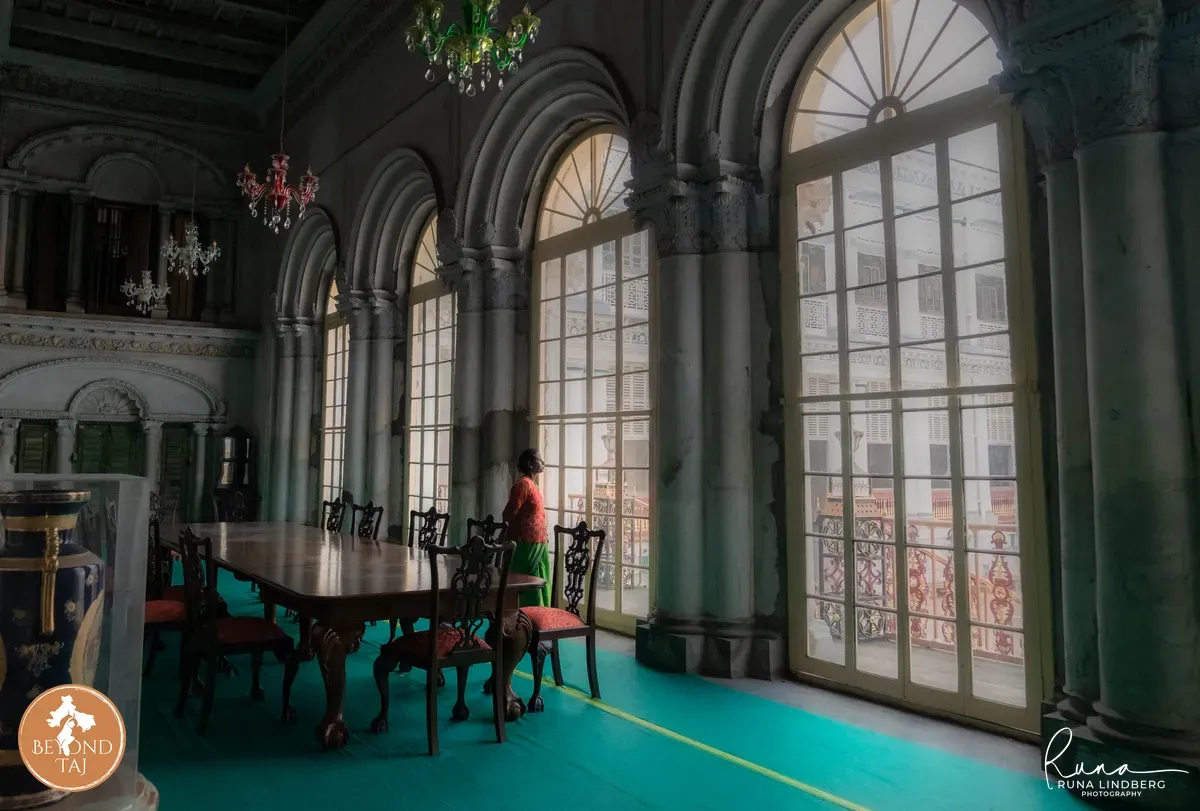
Interior of a Murshidabad palace, chandelier and tall windows in soft low light, West Bengal
Recommended gear. A short, honest list, with the reason for each:
One thing I will not do is hand you exposure numbers to copy. The right settings depend on the room, your camera and your lens, and the interiors here vary from bright courtyards to near-dark halls within a few steps. Know your own kit well enough to react: where your sensor breaks down, how your lens behaves wide open. Trust your eye over any recipe.
Access and positioning. Access is better than you might fear and more varied than most destinations. Some rajbaris are lived-in and open to visitors, some run as heritage stays where being a guest is your way in, some are museum-managed, and a few you can only photograph from the street. Where a house is a private home, ask first, and take a no gracefully. Inside the mosques, dress and behave as you would in any place of worship, and read the room before raising the camera. The cemeteries are usually quiet and open, and they reward patience more than permission.
Murshidabad is not only its monuments. The everyday city, moving at pony-cart pace through streets that happen to be three hundred years old, is as strong a subject as any palace. Because there is so little traffic and noise, street photography here is calmer and closer than in most Indian cities. People are curious and friendly rather than performative, which shows in the frames.
The crafts are the other half of this. Murshidabad has a long silk-weaving tradition, and you can still find weavers at their looms, the source of the region's famous silk. The city is also known for shola craft, the white pith the Bengalis call sponge wood, carved into ceremonial masks and the fine bridal headpieces you see across Bengal. Incense making is part of the daily economy too. These workshops are working places, not shows, so photograph them as such, with a hand raised in greeting first and a purchase or a fair word after.
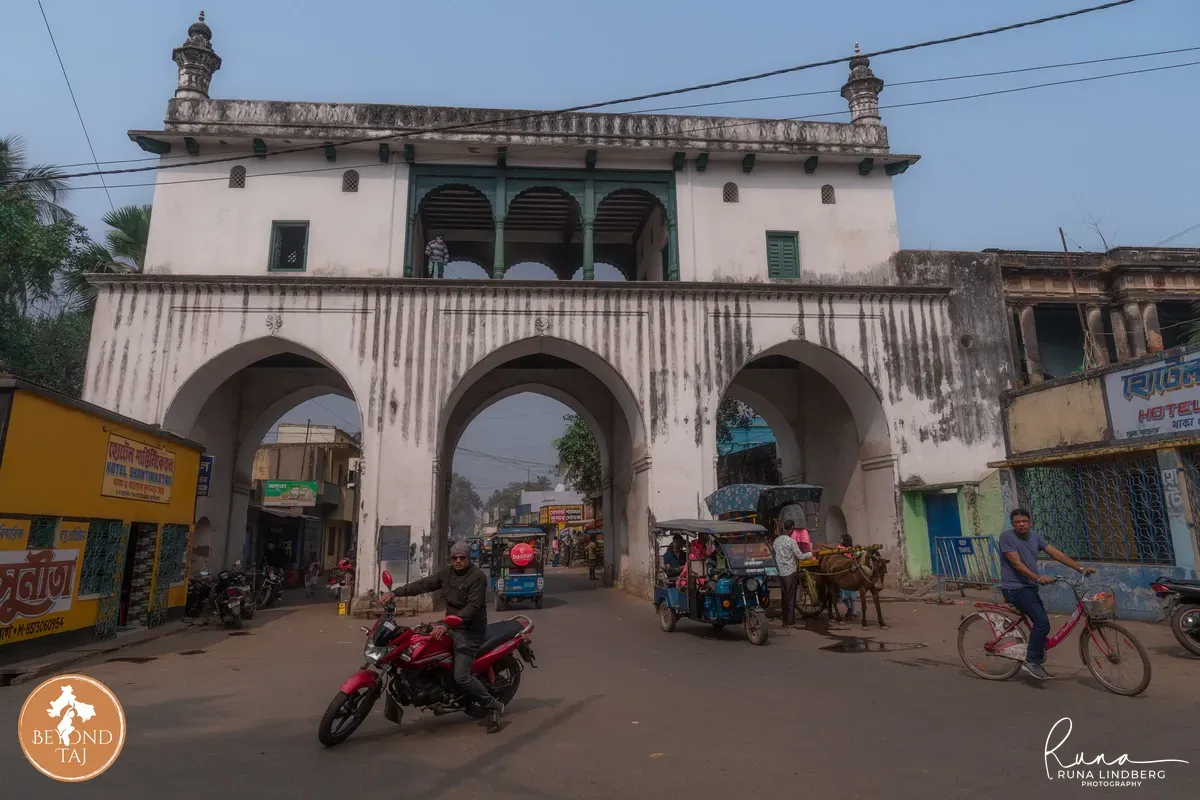
One of the old gates to the markets in Murshidabad, West Bengal
Murshidabad is somebody's home, place of work and place of worship, not a set. That is precisely why it photographs so well, and it asks the usual restraint in return. Ask before close portraits and before stepping inside a private house or a working temple. In the mosques, follow the etiquette of the place and lower the camera during prayer. If a family running one of the old houses would rather you did not photograph a particular room, that is the end of it. The trust you earn this way is what opens the doors that matter.
Half the pleasure of photographing Murshidabad is knowing what you are standing in front of. Here are the ones worth building a couple of days around, with a note on what each gives a photographer and where you are allowed to shoot inside.
Hazarduari is the grandest landmark in Murshidabad and its most famous building, a vast nineteenth-century palace named for its thousand doors, built for the Nawabs in a European classical style beside the river. It now houses a museum of their arms, paintings and treasures. Photography is not permitted inside, so treat this as an exterior subject: the long facade, the sweep of steps and the riverside grounds, at their best in low, raking light early or late.
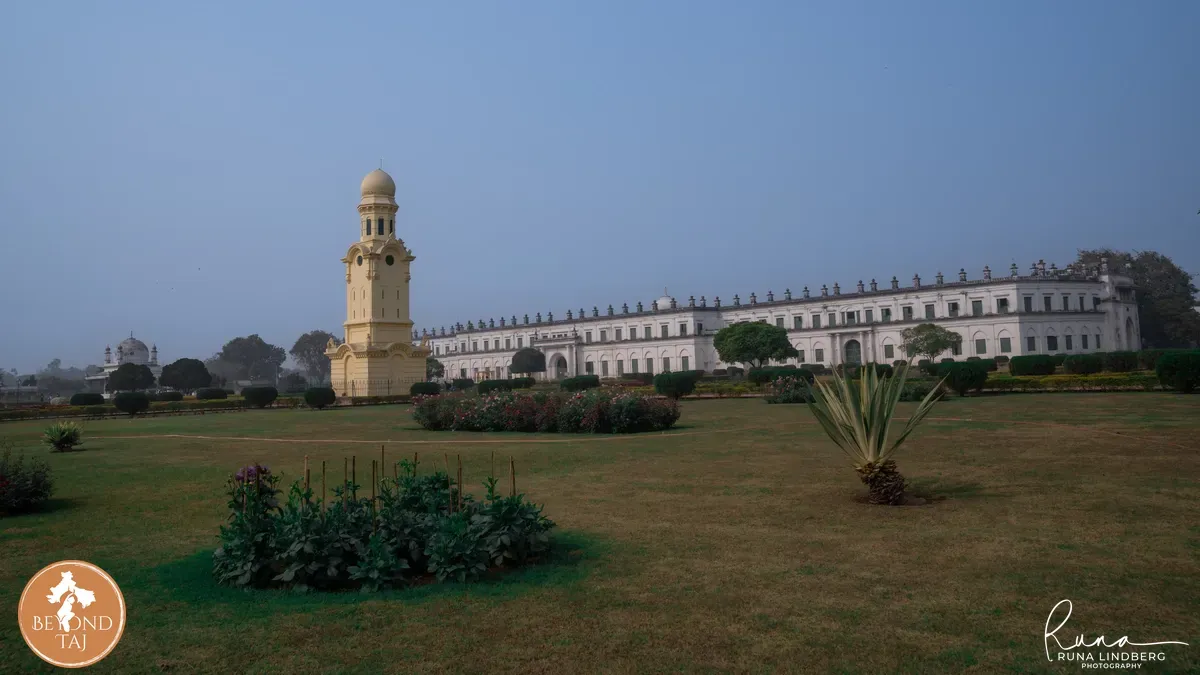
Nizamat Imambara's long southern facade facing Hazarduari Palace across the courtyard, Murshidabad, West Bengal
Wasif Manzil, the New Palace, is the later riverside palace of the Nawabs, built in the early twentieth century in a European style and standing close to Hazarduari on the bank. It comes with a temple area in its grounds. You can photograph the exterior and the temple area freely. Interior photography has to be asked for, and the answer seems to be decided on the day. When we asked, it was allowed, so it is always worth a polite request.
The Jagat Seths were the great banking family of the age, financiers to the Nawabs, and for a while among the richest men anywhere. The house, now a museum, is a quiet, layered subject: the plain-to-grand contrast of a merchant dynasty rather than a royal one, and interiors full of objects and detail. Outside, photography is fine. Whether you can shoot the interior depends on the staff's call at the time, so ask rather than assume. We were given the go-ahead, which is where the inside frames here come from. Work the facade from the street in low light, and go for the rooms if they say yes.
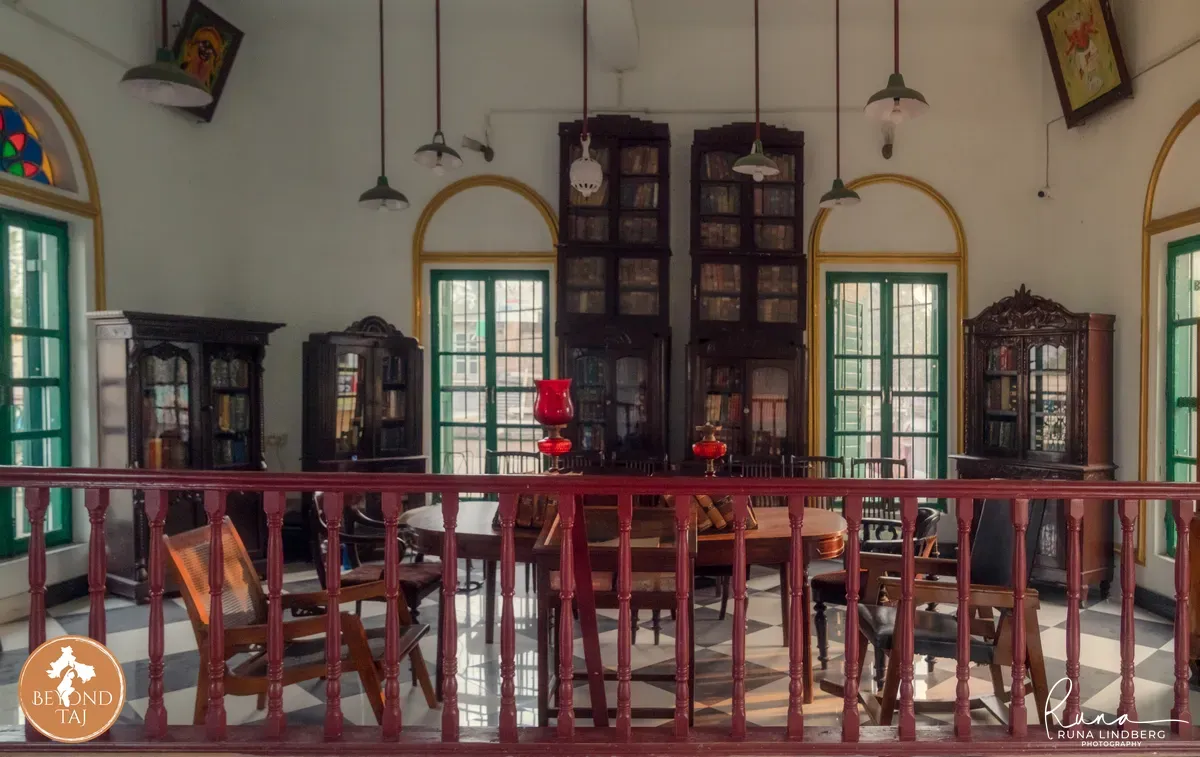
Interior room inside the House of Jagat Seth, historic objects and old walls, Murshidabad
Kathgola is one of the best-kept of the great houses, set in a garden, and it comes with a jewel beside it: an ornate Jain temple, the Adinath temple, all fine carving and colour. The pairing is the gift here. You get the grand secular architecture of the rajbari and, a few steps away, the intricate sacred detail of the temple, in one visit. Photography is not permitted inside either the temple or the palace, so treat both as exterior subjects. The good news is that everywhere outside is fair game, the facades, the temple's carved surfaces, and the garden itself, so there is still a full morning's work here even without a single interior frame..
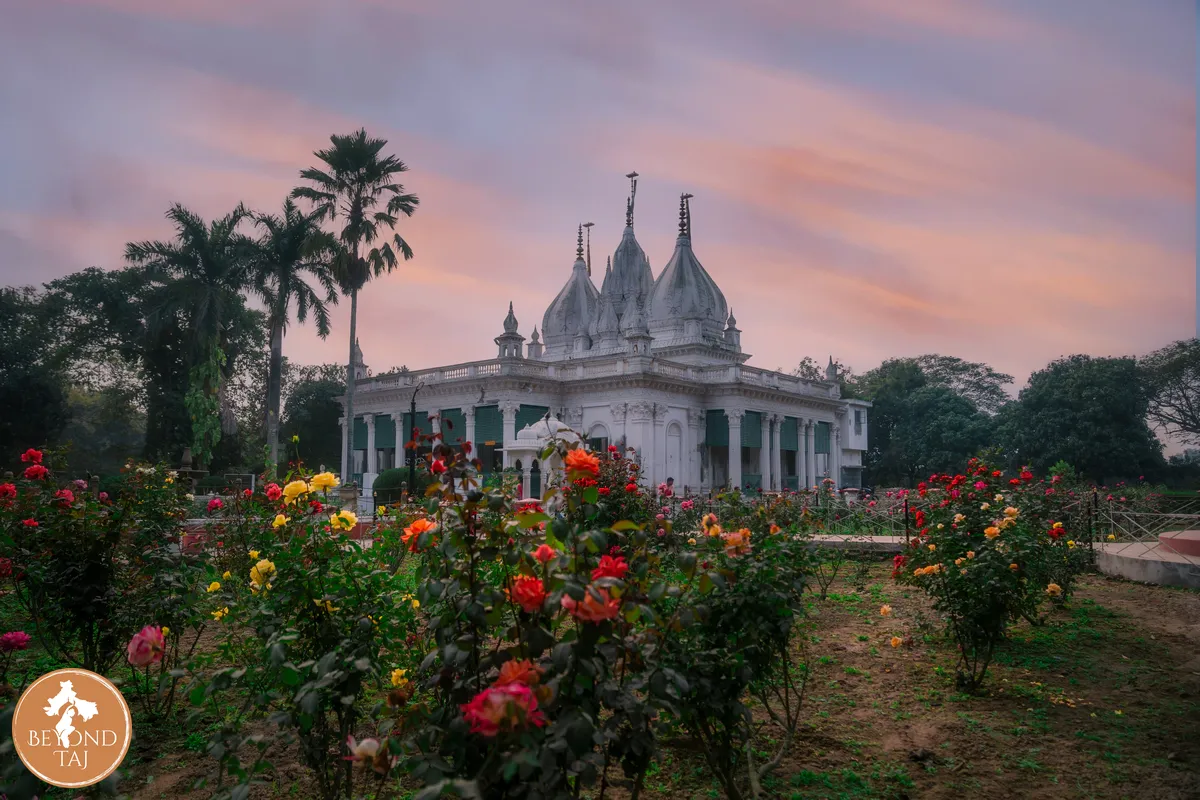
The ornate Jain temple beside Kathgola Rajbari, carved and painted detail, Murshidabad, West Bengal
This is the one where you can also stay, and where the city's history has a living voice in Mr. Roy. Photographically it is a rare thing, a grand rajbari that is still a family home, so the interiors have the warmth and wear of a lived-in house rather than the emptiness of a museum. If you stay, you have the courtyards and halls in the best light, early and late, with no one else in the frame.
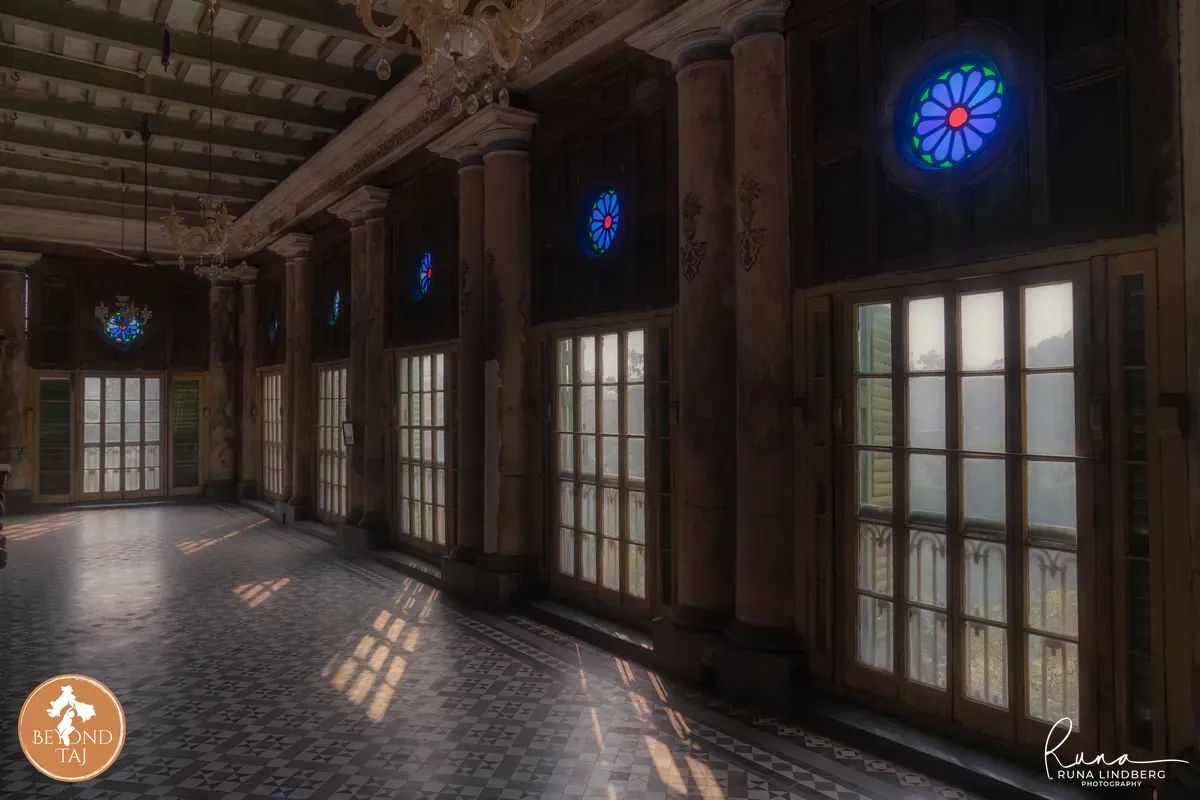
One of the historical rooms at the Cossimbazar Palace of the Roys at golden hour, Murshidabad, West Bengal
Nashipur Rajbari is another of the great houses, with a Ramachandra temple in its grounds. Photography is officially not allowed here, so this one asks for the respect the rest of the trip is built on. In practice, if you show real interest in the temple and leave a donation for it, or ask for a guided tour of the temple and the house, you are usually welcome to photograph. Treat it as a courtesy earned, not a rule to work around, and lower the camera the moment anyone would rather you did not.
Beyond the named houses, build in time for the grand mosques, the Katra Masjid among them, the smaller Hindu temples, and the old Armenian, Dutch and English cemeteries. The cemeteries in particular are an unusual, atmospheric subject you will not find in many Indian cities, the moss-covered graves of the traders who came for the silk and never left.
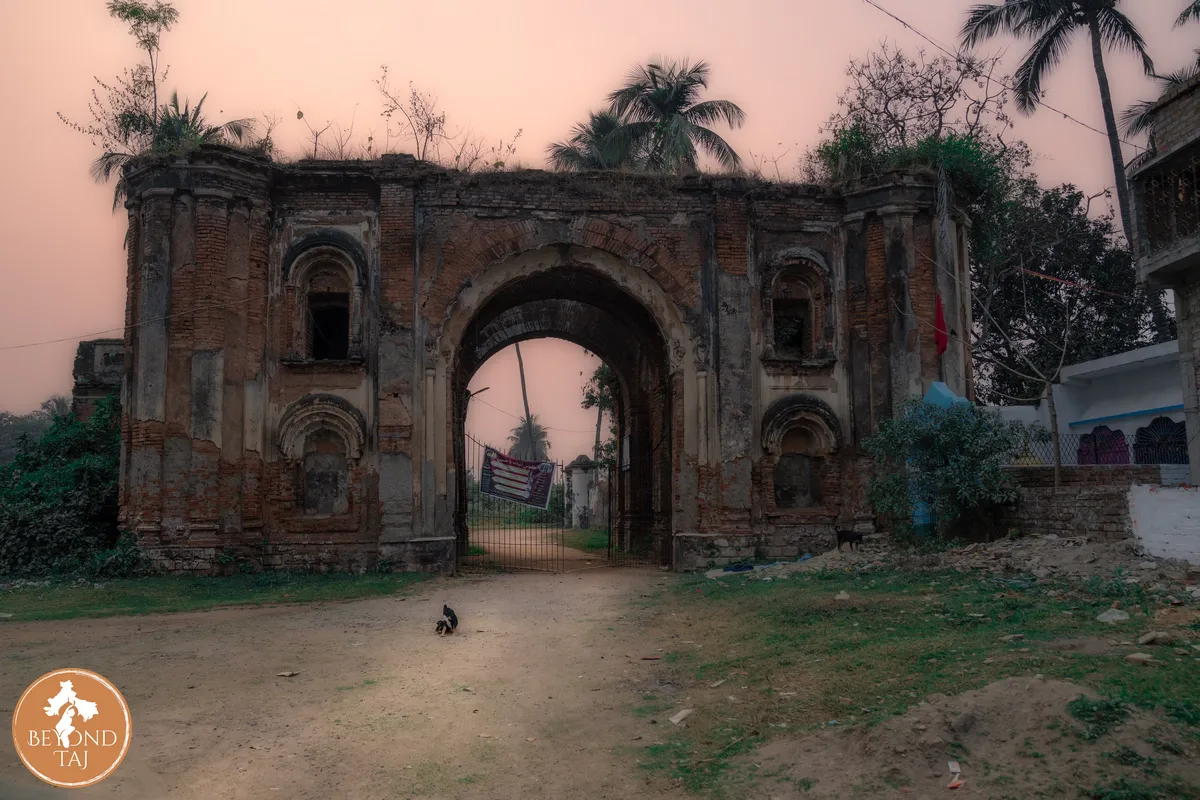
An weathered entry gate to a mosque in Murshidabad, West Bengal
Here is the short, honest list, everything on it something we actually carry.
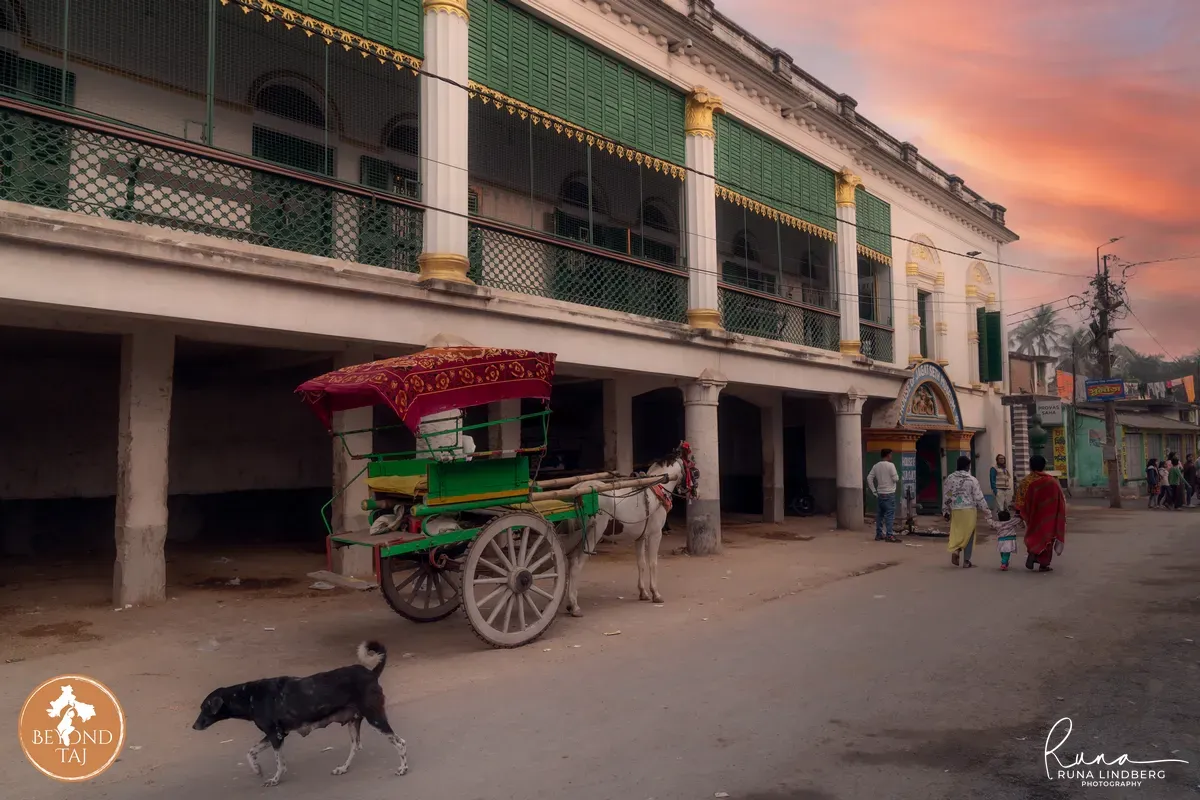
A quiet Murshidabad lane at the end of the day, pony cart and old walls in low light, West Bengal
Best for: Architecture and street photographers who want faded grandeur, real streets and unusual access, and travellers curious about a great city that history quietly forgot.
Not ideal for: Anyone who needs international restaurants, polished five-star comfort or a tidy, ticketed sightseeing loop.
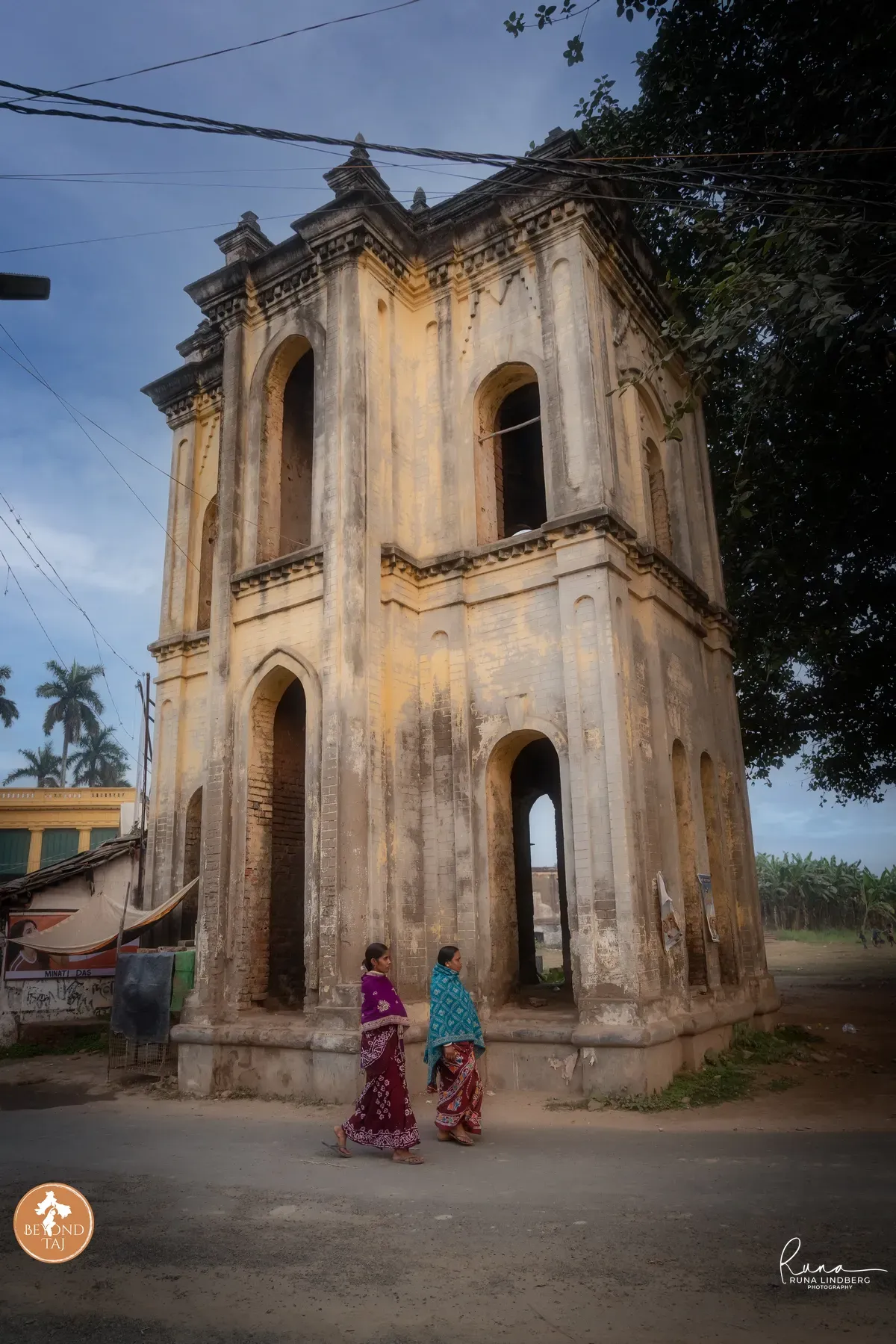
The weathered Naubat Khana gate at Nashipur Rajbari, Murshidabad, West Bengal
Is Murshidabad safe for travellers and photographers? Yes. Despite warnings you may hear about West Bengal, Murshidabad is a calm, welcoming and notably safe place to travel with camera gear. People are friendly and reserved, and happy that an outsider takes an interest in their city. As always, keep an eye on expensive equipment, but the everyday sense of safety here is high.
Is photography allowed inside the palaces and mosques? Outside, essentially always. Facades, courtyards, gardens and streets are fair game across nearly every site in Murshidabad. Inside is a different matter, it varies by place and often comes down to the mood of whoever is on duty that day. Asking politely is genuinely worth it, it often gets you a yes, and accept a no gracefully when it doesn't.
When is the best time to visit Murshidabad for photography? Roughly October to March, for cooler, drier days and cleaner light. The monsoon deepens the colours of the old plaster but brings flat light and rain. The city is especially lively around Durga Puja and the later Gajan season.
Can you stay inside a real palace in Murshidabad? Yes. Several of the old rajbaris, including the Cossimbazar Palace of the Roys, have been turned into heritage stays. Sleeping inside one lets you photograph its courtyards and interiors in the best early and late light, before any day visitors arrive.
How do you get around Murshidabad? Mostly by pony cart, cycle rickshaw and on foot. The old core has very little motor traffic, which is part of its charm for a street photographer. A car and driver is useful for arriving and for the outlying sites, but the photography itself happens slowly, on foot.
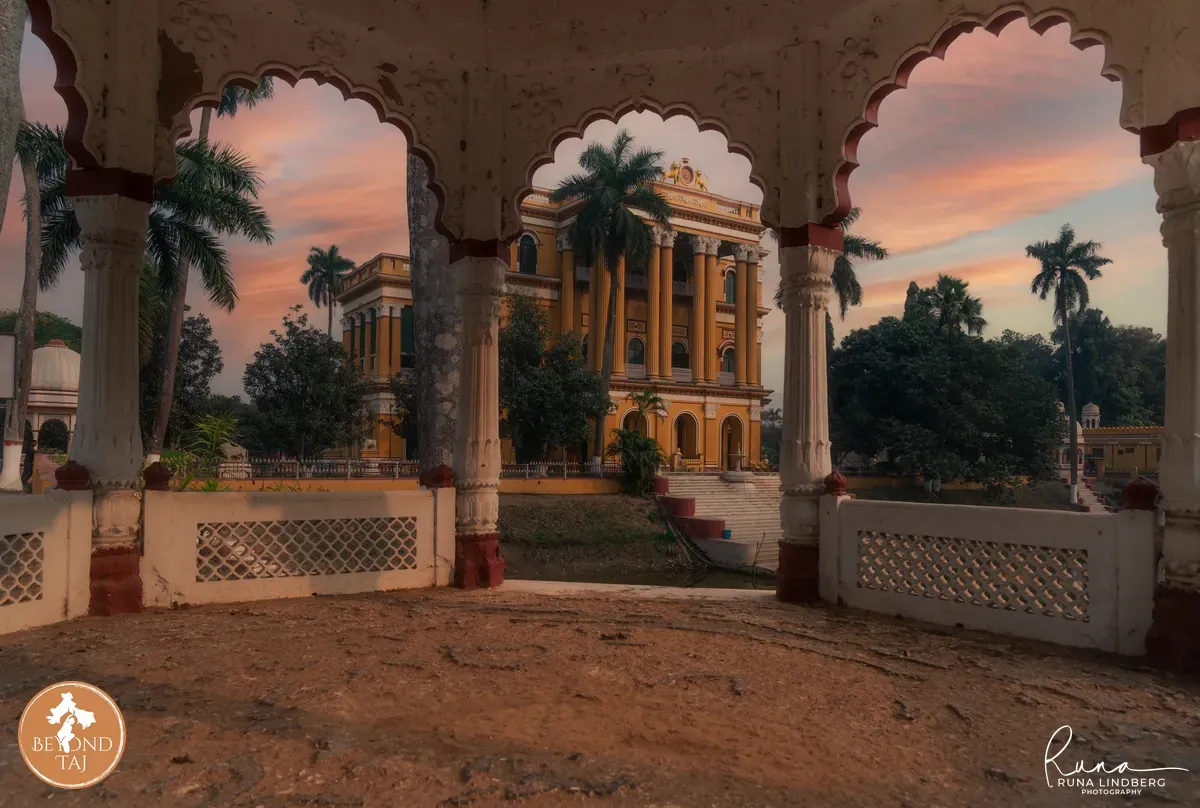
Facade of Kathgola, grandeur without the ruin, West Bengal .
Murshidabad sits at the heart of a photo journey designed by Beyond Taj Tours, with itineraries shaped together with award-winning photographers who know rural West Bengal from the inside. A trip built around the city can open doors that are hard to find alone, from the lived-in rajbaris to the weavers' workshops, and time it for the light rather than the crowds. All bookings, payments and travel logistics are handled by our travel partner. To join a small-group departure or shape a bespoke version of your own, follow the itinerary below.
Read the itinerary → Blood & Bones Photography Tour 2027
Runa Isabel Lindberg is a writer and passionate photographer whose work has been exhibited internationally. She has been travelling through India, Nepal, Sri Lanka and Indo-China since 2008, and photography has been the thread through all of it. This blog is her personal editorial project: first-hand field notes, honest reviews of the heritage hotels she has stayed in, and photographs taken through her own lens over many return visits.
Follow her personal photography on Instagram: @runa_lindberg
Tours & bookings: The photo tours featured on this site are designed by Beyond Taj Tours, with itineraries curated together with award-winning photographers. All bookings, payments and travel arrangements are handled by our travel partner, Orange DMC, a licensed destination management company based in India. Follow Beyond Taj Tours on Instagram: @beyondtaj.tours
© 2026 Runa Isabel Lindberg. Text and photography by the author, all rights reserved. Site and brand development by Credio Digital Media.
09 Oct 2026
28 Sep 2026
17 Sep 2026

05 Sep 2026
31 Aug 2026
15 Aug 2026
15 Jul 2026
19 Mar 2026
12 Feb 2026
15 Jan 2026
28 Dec 2025
01 Dec 2025
13 Nov 2025