Gomira is a ritual masked dance from the Dinajpur countryside of West Bengal, where village men become gods, goddesses and demons behind huge carved wooden masks to invite good fortune and drive out evil. Its traditional season is the sowing months, but you can catch it far more flexibly now, which is a quiet gift for photographers.
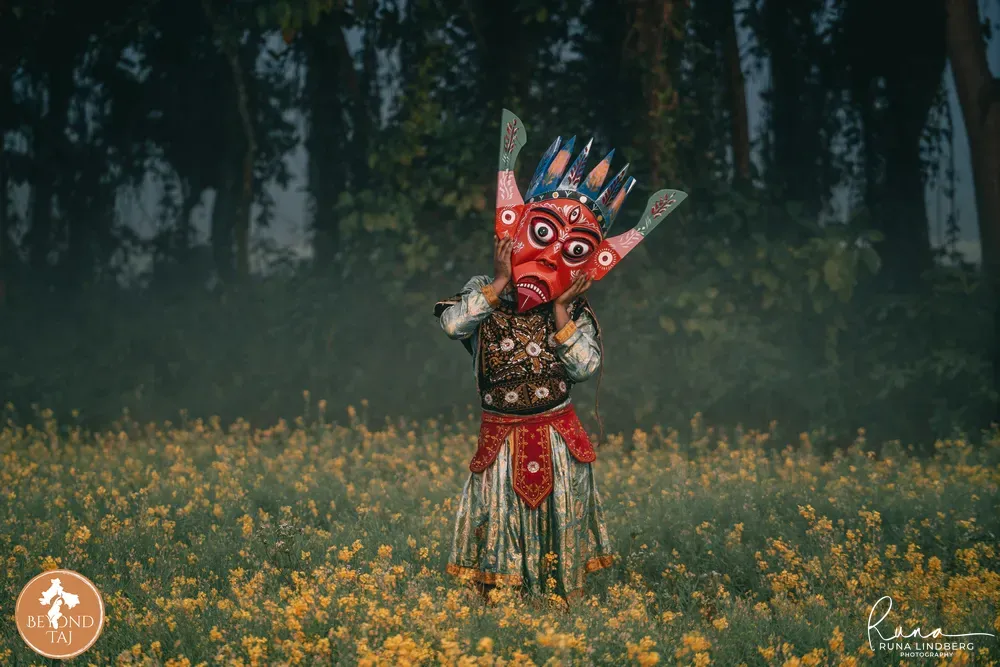
A gomira dancer in a yellow mustard field. Kushmandi, West Bengal
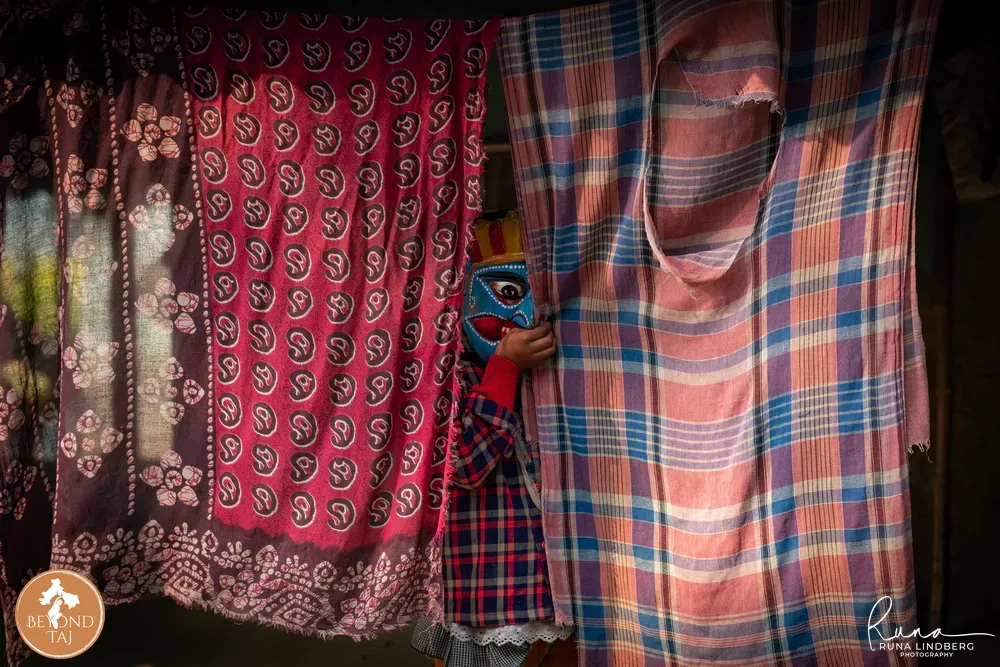
Young child peeking out from behind red scarves while wearing a Gomira mask, West Bengal
Over the years I got to see a lot of festivals and rituals in India, many blur together a little - Gomira did not. It has stayed with me, sharp and warm, ever since.
We arrived around seven in the morning, and the village was still under mist. The sun was coming through the trees in low shafts, and ducks and goats moved between the mud-walled houses. The first children we met peered out from behind the corners of the houses, watching the strangers, curious and unsure whether to come closer. The morning went to the masks themselves: watching them being carved, seeing the range of characters laid out, and watching the dancers get ready. It is a slow, close way into the day, and by the time the dancing starts you already know half the faces behind the masks.
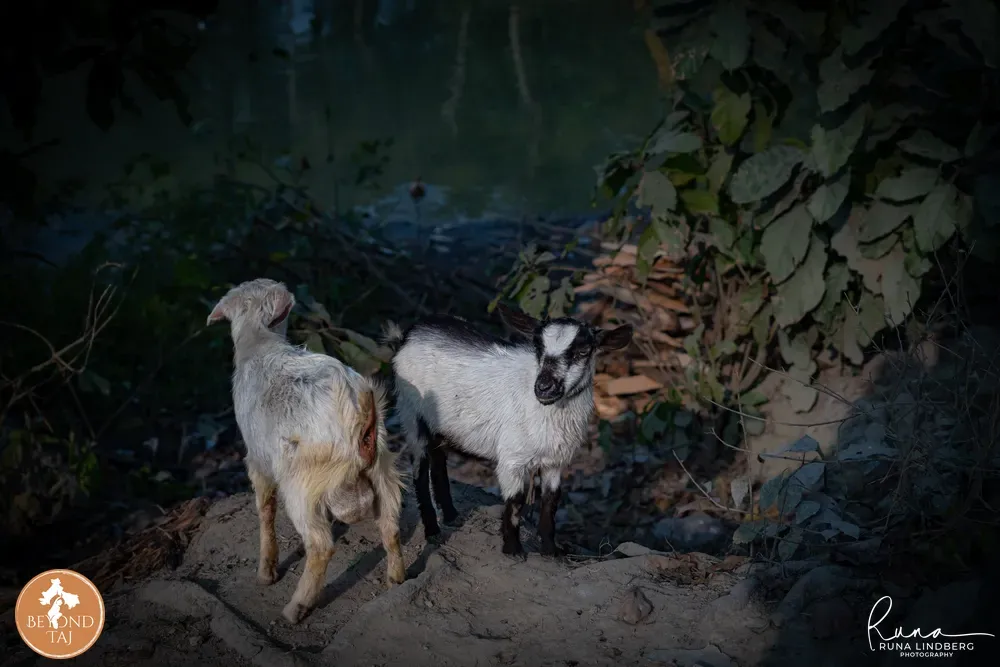
The village in the hour before the masks come out.
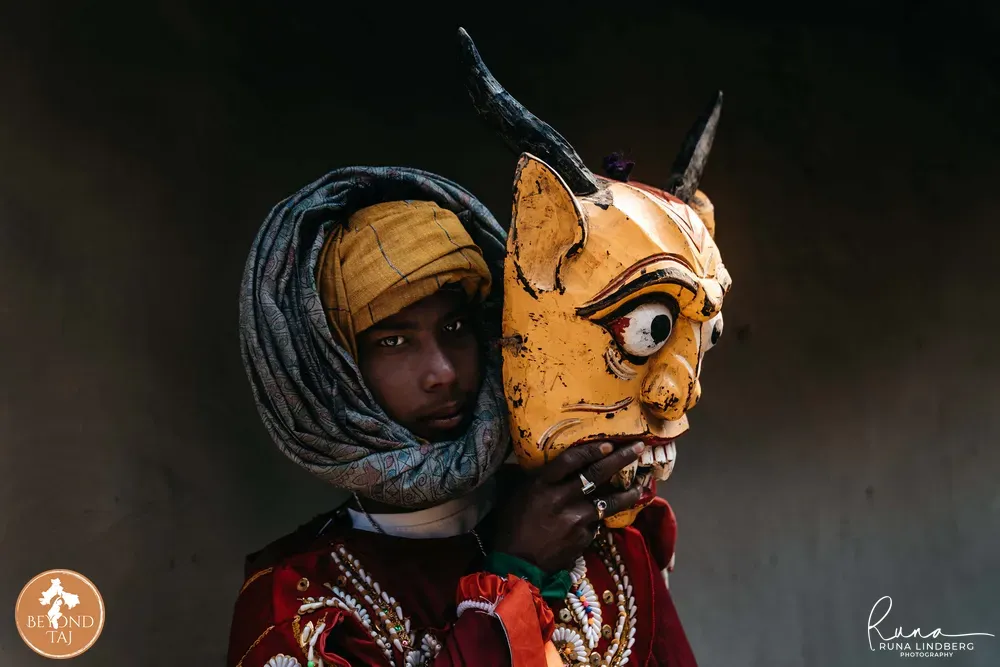
The dance itself came later, in the afternoon and into the evening. When the masks did come out, the ordinary day tilted into something else. There is no fixed stage or arena here, or at least there was none in the first village we visited. The dancers moved through the place instead, performing in a mustard field in full yellow bloom, then among the bamboo, then by the small river, then along the lanes between the houses. Because we were a group of photographers, the troupe worked with the light, shifting from spot to spot as the afternoon turned. The carved faces stood two feet tall. Some were horned, some bared long teeth, and they swayed to a big drum, a reedy flute, and the ring of small cymbals. Small children pulled masks over their own faces and copied the steps, half playing, half in awe. Then, between rounds, the dancers sat down in the shade to rest, masks pushed up, laughing, neighbours again. That switch, from neighbour to inhabited god and back to neighbour, is what Gomira gives a photographer that almost nothing else does.
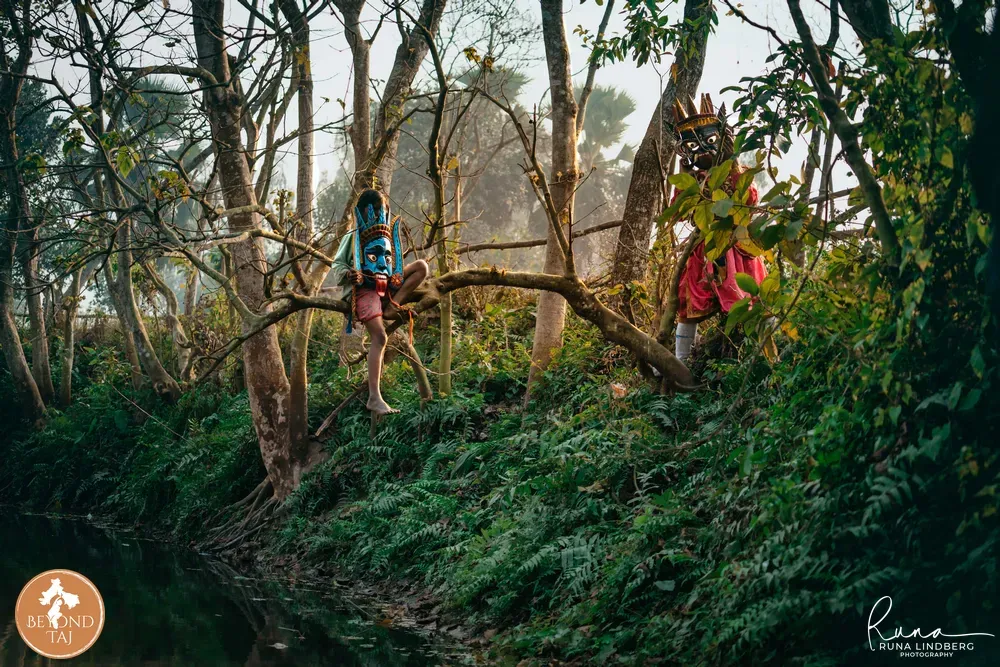
Two generations, two masks
A word on what this was, before you build your own day around it. We did not stumble into a festival. What we saw was arranged for our small group. The ritual festivals proper happen later in the year and, as one of the carvers explained, run over several days. I was invited but could not make it back in time. And even those are village affairs, not the huge, crowd-drawing festivals you might picture from elsewhere in India. These are small places, mostly mud houses with fields and forest around them.
The two villages we saw felt different from each other. The first had no shrine that I noticed and no set place to dance. The second did have a little shrine with a small forecourt, but the space was tight, so the dancing happened out in the fields anyway. Some of the villages I passed were so small I struggled to picture a proper temple in them at all, though that is my impression, not something I can tell you for certain. At one of the shrines I photographed a row of small votive horses, straw-cored and packed with mud, some of them painted. They honour a village deity, as far as I could gather, though the language between us did not stretch to the details.
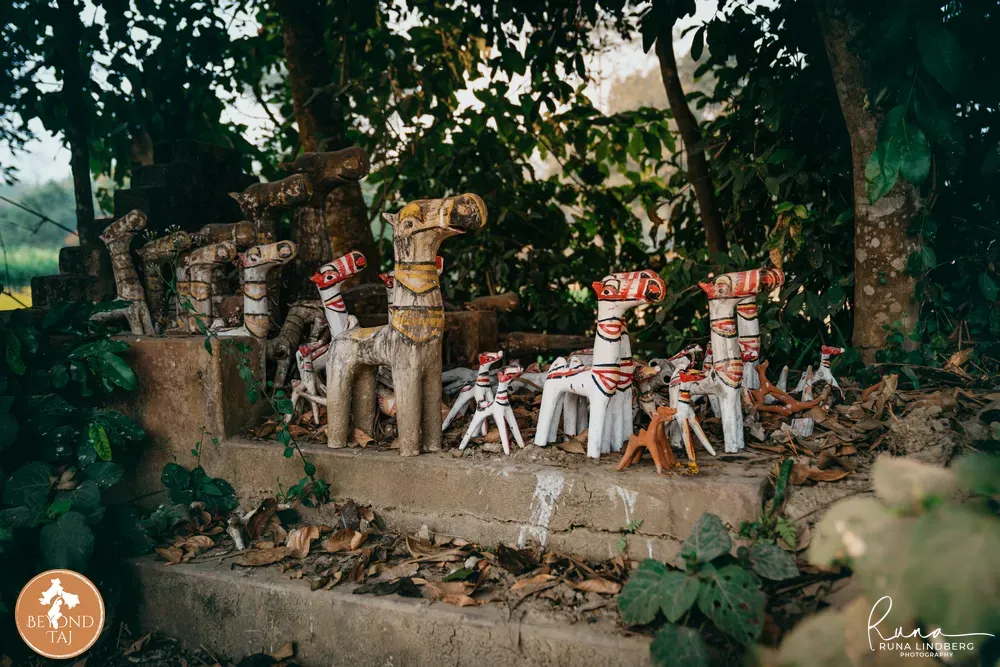
Row of painted straw-and-clay votive horses at a small village shrine, offered to the local deity, Dakshin Dinajpur
There is no single date, and that turns out to be one of the best things about it. The answer comes in two layers.
The old one first. Gomira belongs to the sowing season, and older accounts place the ritual dances from mid-spring into early summer. They are woven into the worship of the village goddess, Gram-Chandi, and into the close of the Gajan cycle. Above all, this is a tradition of the Rajbanshi community, and of the Desi and Polia groups within it, who have carried it through the Dinajpur countryside for generations. That calendar, and that lineage, are still very much alive.
But in practice, things are looser and more generous than the books suggest. Troupes dance around their own village-deity festivals throughout the year. Gomira dancers travel to cultural and tribal gatherings elsewhere in India, where different communities share their traditions. And a performance can simply be arranged. The dancers and musicians give their time, they are paid for it, and then the whole thing comes to life. When I visited in January, two neighbouring villages danced for our small group. People walked in from the surrounding hamlets to watch and the children pressed to the front. I have also been invited to celebrations as early as March. So the useful question is not really which week to book, but who to know.
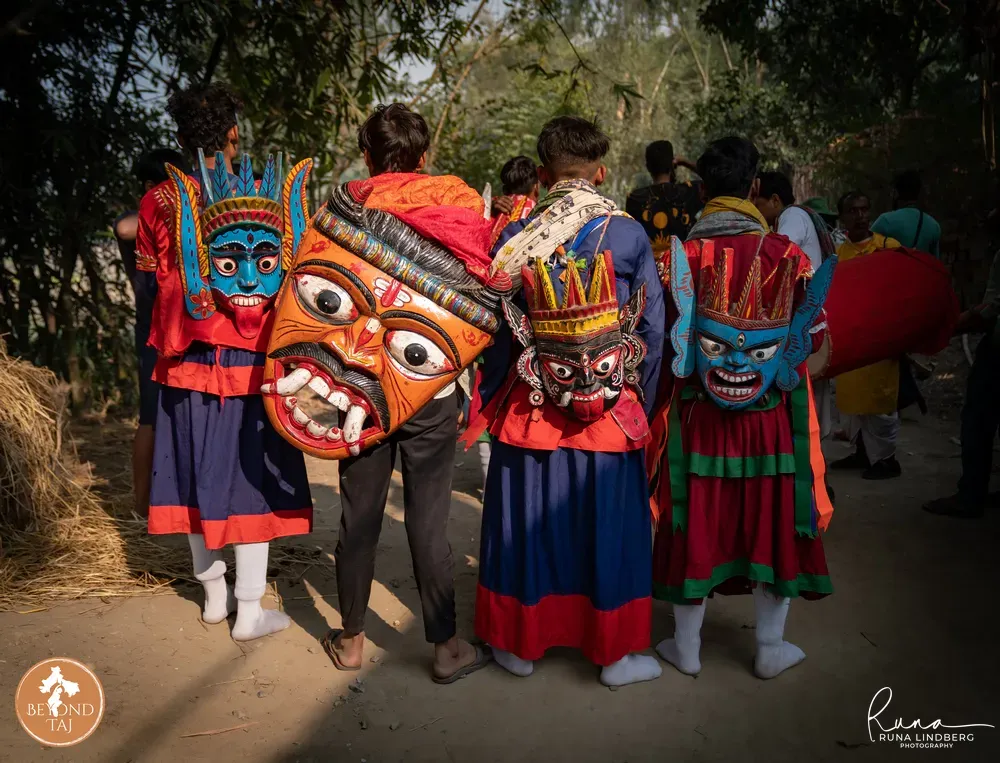
The troupe, masked and ready.
While we waited, I talked with one of the carvers, who showed me his workshop, and with one of the musicians, sitting and smoking before his turn. He had a little English and spoke mostly in Hindi with the friend I was travelling with. What he said stayed with me: that Gomira, as he saw it, was dying out, and that he was glad people now came to the village wanting to watch. There is another side to that. Since the Kushmandi masks earned a Geographical Indication tag in 2018, Gomira has been finding a new audience online, and photography tours have started to bring visitors to these villages. That is worth setting against something I have seen at other festivals in India, ones that went viral and drew such crowds that the locals could no longer enjoy their own celebration. You could see they were not happy about it. Gomira, precisely because it follows no fixed calendar, does not gather thousands at once. When a person or a small group comes, the village can host them without strain, and the welcome is real.
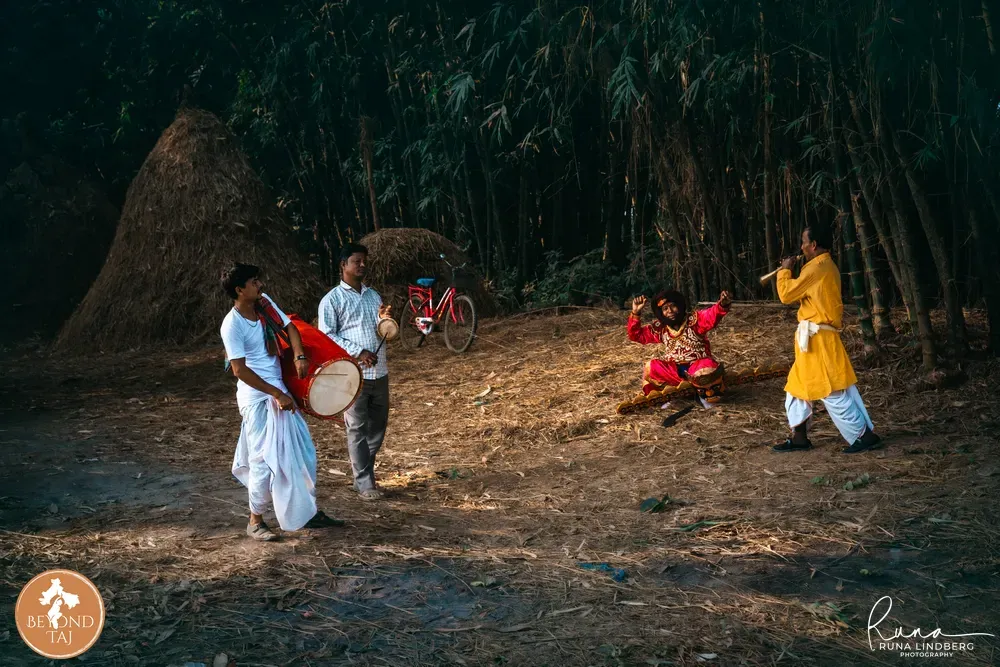
The drum, the flute, the cymbals - no sung narration, just rhythm
A word on the arranged dance, because it shapes how you photograph it. The masks, the drumming, the moment a dancer disappears into his character, none of that is diluted by the timing. All that changes is the date. For a photographer, that is a gift, and the only thing it asks of you is honesty about what you saw. The sound is a big drum, the dhak, a reedy local flute, and small cymbals, with no sung narration carrying a story. When a performance follows the full ritual, the masks are carried out the night before for a midnight puja called Nishi Puja, and the dance unfolds the next day on the open ground beside the village shrine. I did not see the full ritual myself. This is how the carvers and musicians described it.
Base yourself in Malda. Good hotels grow scarce the moment you leave it, so rather than chase a bed somewhere deep in the countryside, most photographers settle in Malda and drive out to the villages each day. It is easy to reach, it has a real choice of places to stay, and it keeps the rest of your logistics calm.
There are a couple of alternatives worth knowing about. Closer to the villages, the small towns of Gangarampur and Buniadpur have a handful of hotels and somewhere to eat. If they fit your route, they can trim a good chunk off the daily drive. Either way, the dances themselves happen out in working farming villages, so you travel to them and come back the same day, tired and happy and full of frames.
Getting to this corner of Bengal takes a little planning, but there are really only two comfortable ways in. You can fly to Bagdogra and carry on to Malda by train or by car. Or you can fly into Kolkata, take the train up to Malda, and arrange a driver from there. Either route, Malda is where the real journey begins.
From Malda, a private car with a local driver is the only realistic way in. The villages sit deep in the countryside, well off any bus or rail line, and without your own driver you will not reach them. Pay for someone who knows the roads, and ideally the troupes. That local knowledge is the difference between arriving in time for a dance and hearing later about the one you just missed.
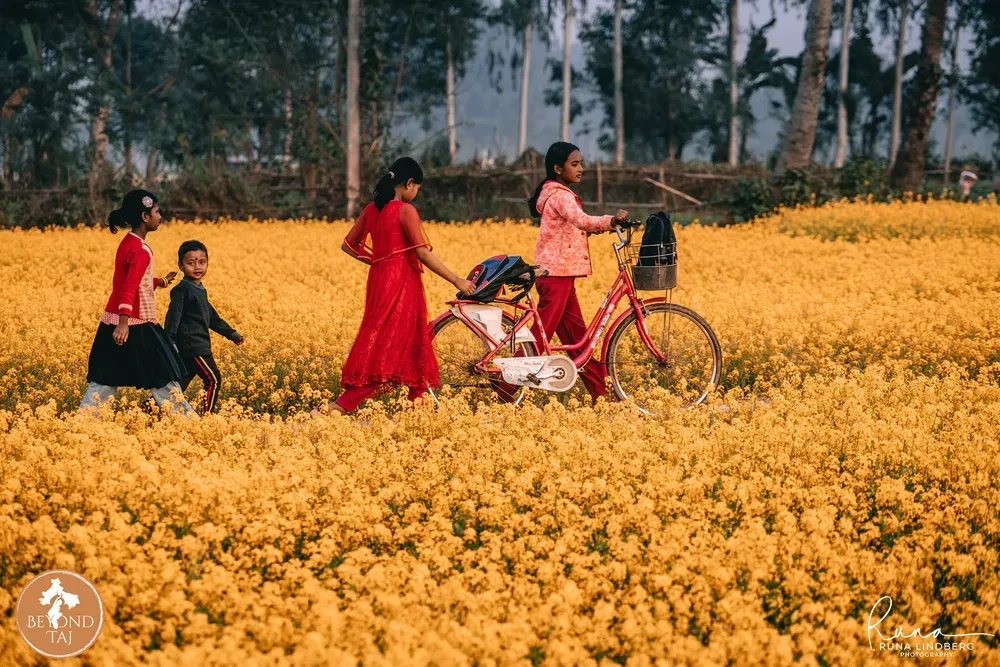
Children running through a blooming yellow mustard field near a Gomira performance, Dakshin Dinajpur
This is where a little preparation pays you back, because the day comes in two halves and each one asks for something different.
Light and timing. Worth separating two things here, because they are not quite the same. A village's own festival dances, tied to their calendar of celebrations, tend to run in the afternoon and into the evening, so if that is what you are hoping to catch, plan your day around it. An arranged performance, danced specifically for a visiting photographer rather than for a festival, is more flexible in principle, and can in theory be timed to suit the light, morning included, if you ask for it in advance.
The soft gold at either end of the day is beautiful on dancers moving through the fields and bamboo, and the night performances, lit by fire and torches, are the most dramatic light you will get. Midday sun out in the open is the harshest, though there is still mask and carving detail to shoot, and the faces in the watching crowd. Read the light you are given, and work with it rather than against it.
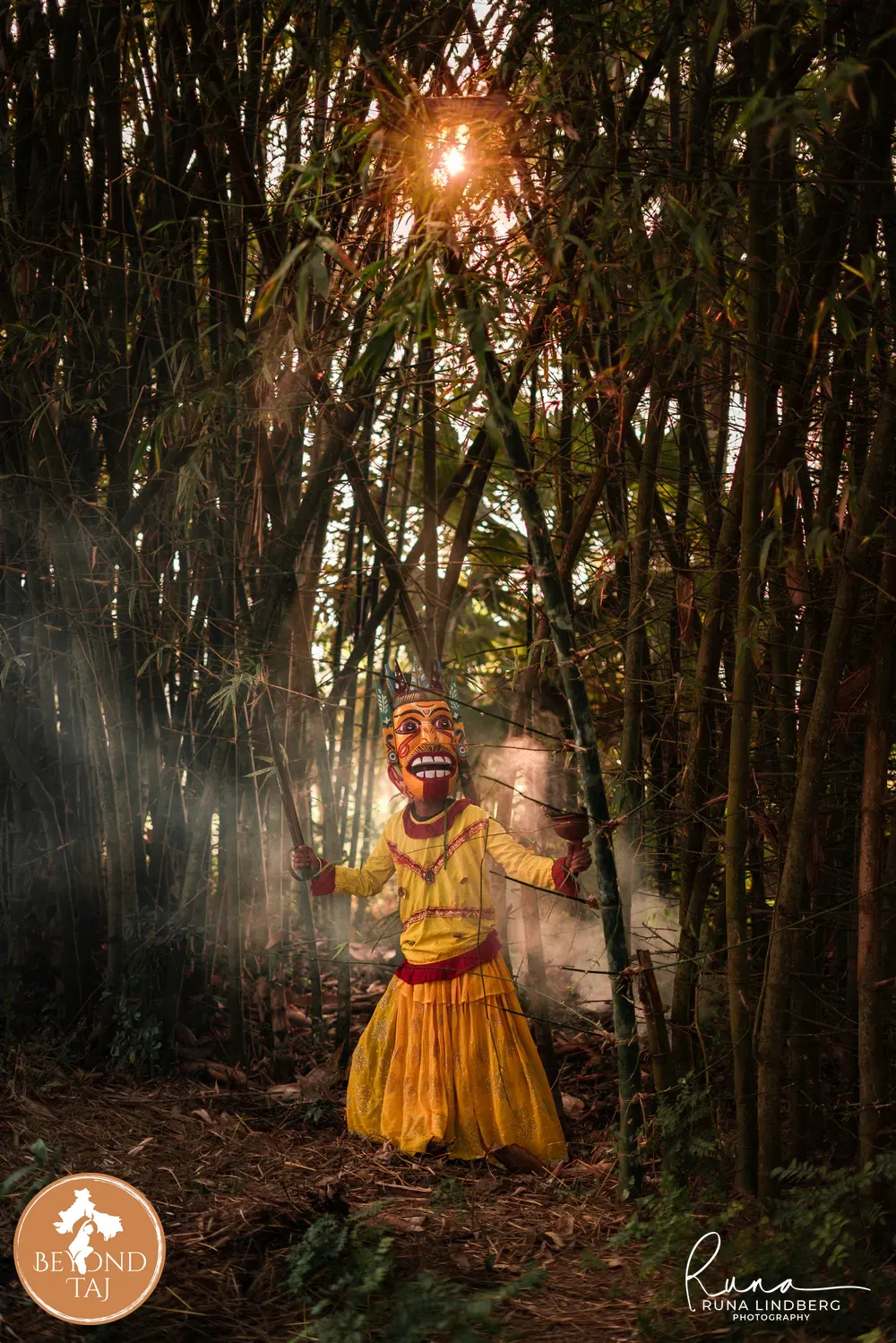
Masked Gomira dancer moving through a stand of bamboo in low afternoon light, West Bengal Caption
One thing I will not do is hand you a set of exposure numbers to copy, and I would gently steer you away from chasing anyone else's. The right settings depend on the moment, your camera, and your lens, and out here the light shifts fast. What matters far more is knowing your own kit well enough to react without thinking: where your sensor falls apart in low light, how your lens behaves wide open. Trust your eye over any recipe.
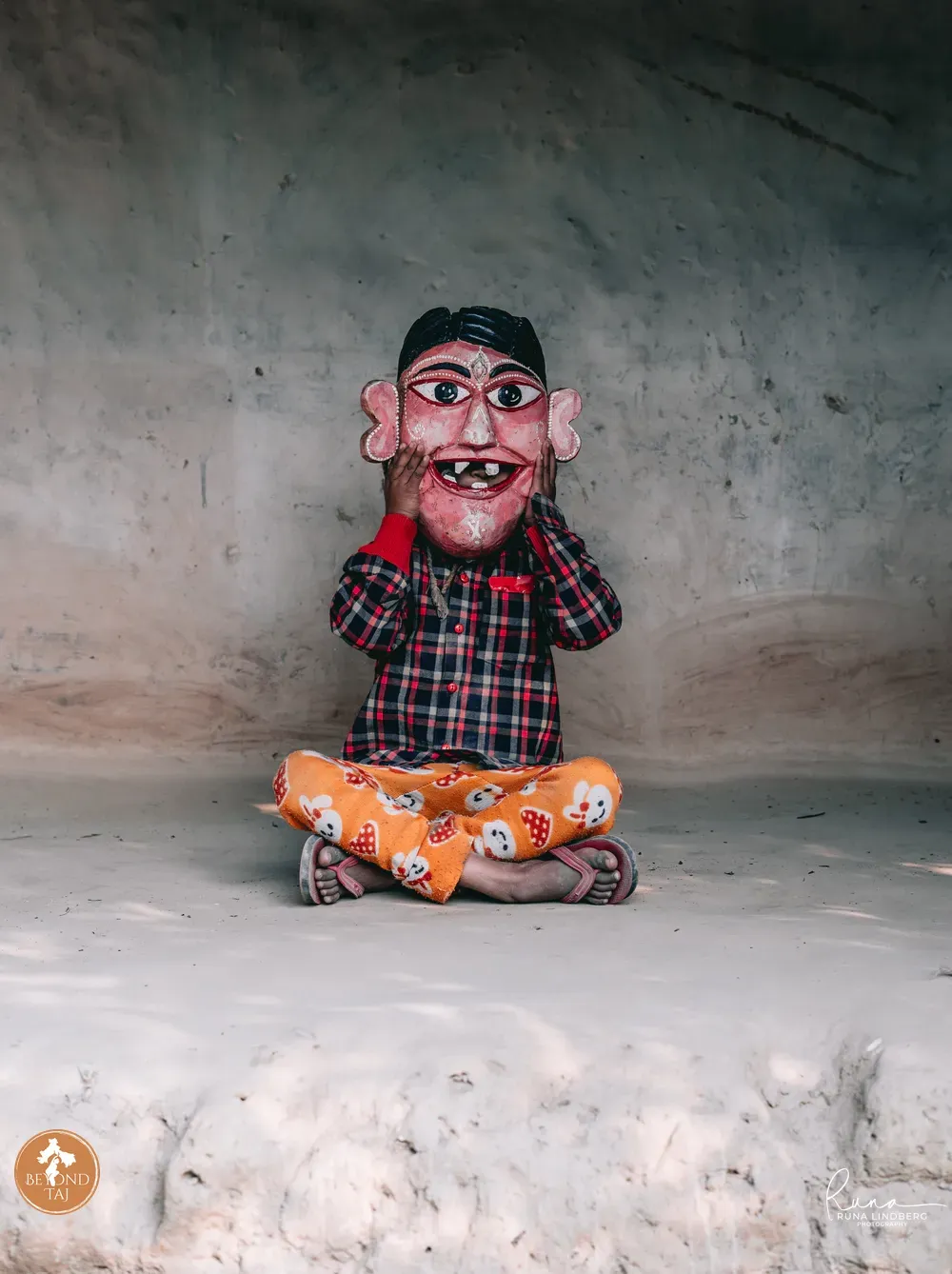
Child sitting against a clay wall, holding a Gomira ( Buro & Buri ) mask nearly as big as themselves
Access and positioning. The openness here is one of the things I love most about it. The openness here is one of the things I love most about it. One pro tip: try to plan your visit for spring, and you will get bright yellow mustard fields in full bloom alongside the morning mist.
Gomira is worship first and a spectacle second, and it rewards you for remembering that. Ask before you photograph. Some moments are meant to be intense and private, even out in a public clearing, and if a family or an organiser shakes their head, lower the camera without a second thought. Restraint is what earns you the trust behind the best frames.
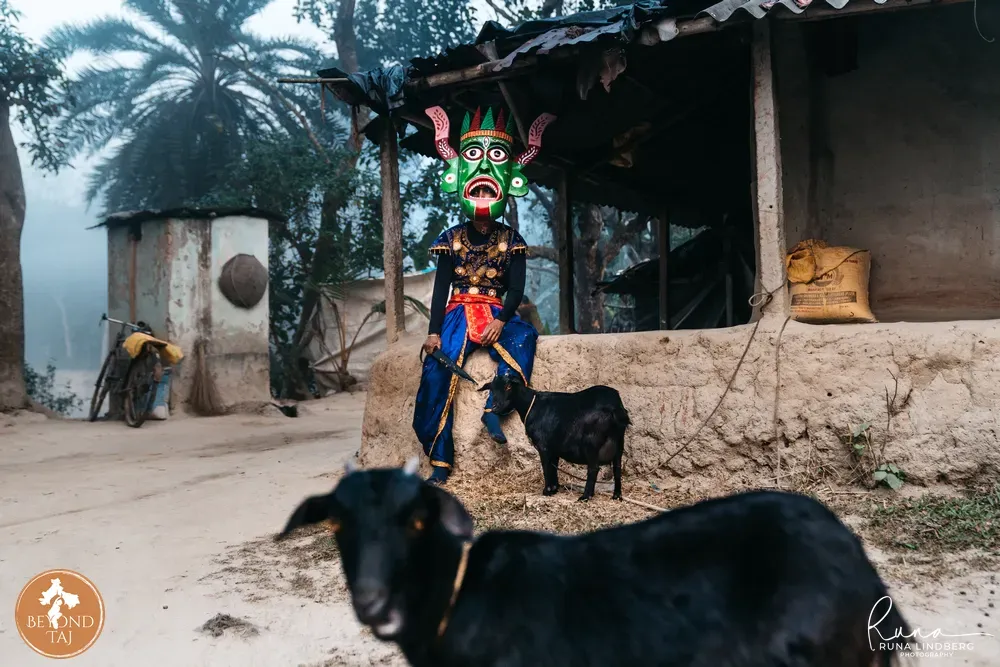
Village scene in Kushmandi, West Bengal, home of the Gomira mask-carving tradition
Half the joy of photographing Gomira is slowly learning what you are looking at. Once you can name the characters, you stop merely reacting and start shooting with intent.
First, know that there are really two dances here. The one most people mean by Gomira is the older ritual form, a procession of gods, goddesses, demons and nature spirits. The second is Ram Vanvas, which acts out Rama's exile in the forest and his search for Sita, and it tends to appear around Dussehra. The masks resting on the carvers' benches belong to both.
In the full ritual the characters arrive one at a time, broadly in four groups, so it helps to know who is who.
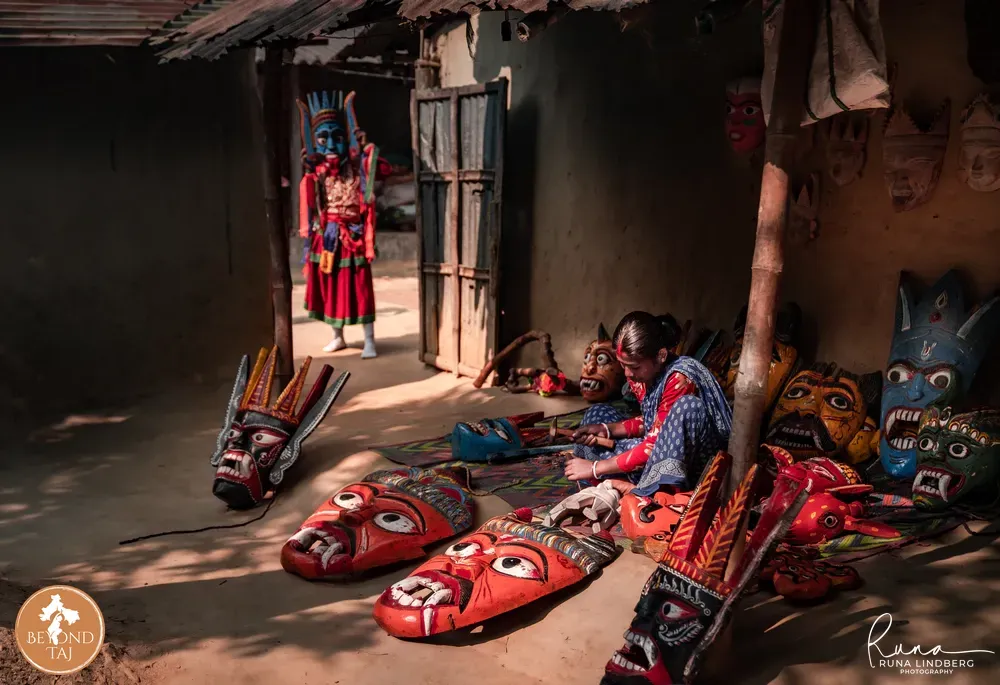
Village artisan hand-carving a Gomira mask from a single block of gamar wood, Kushmandi, West Bengal
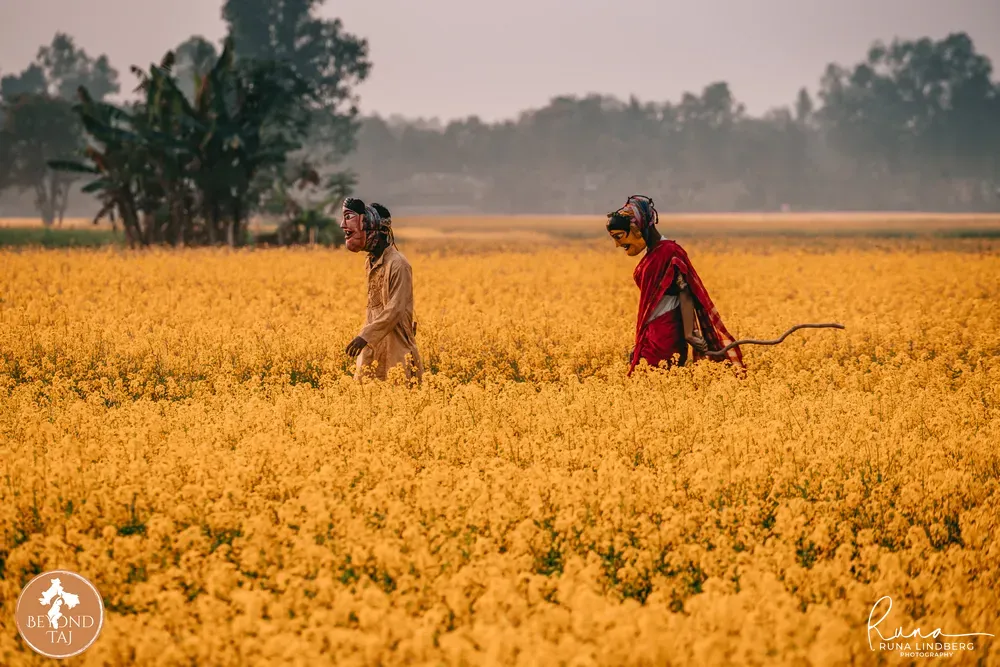
Buro-Buri - the old couple who open every dance.
This is where the horns, the bulging eyes and the long fangs begin.
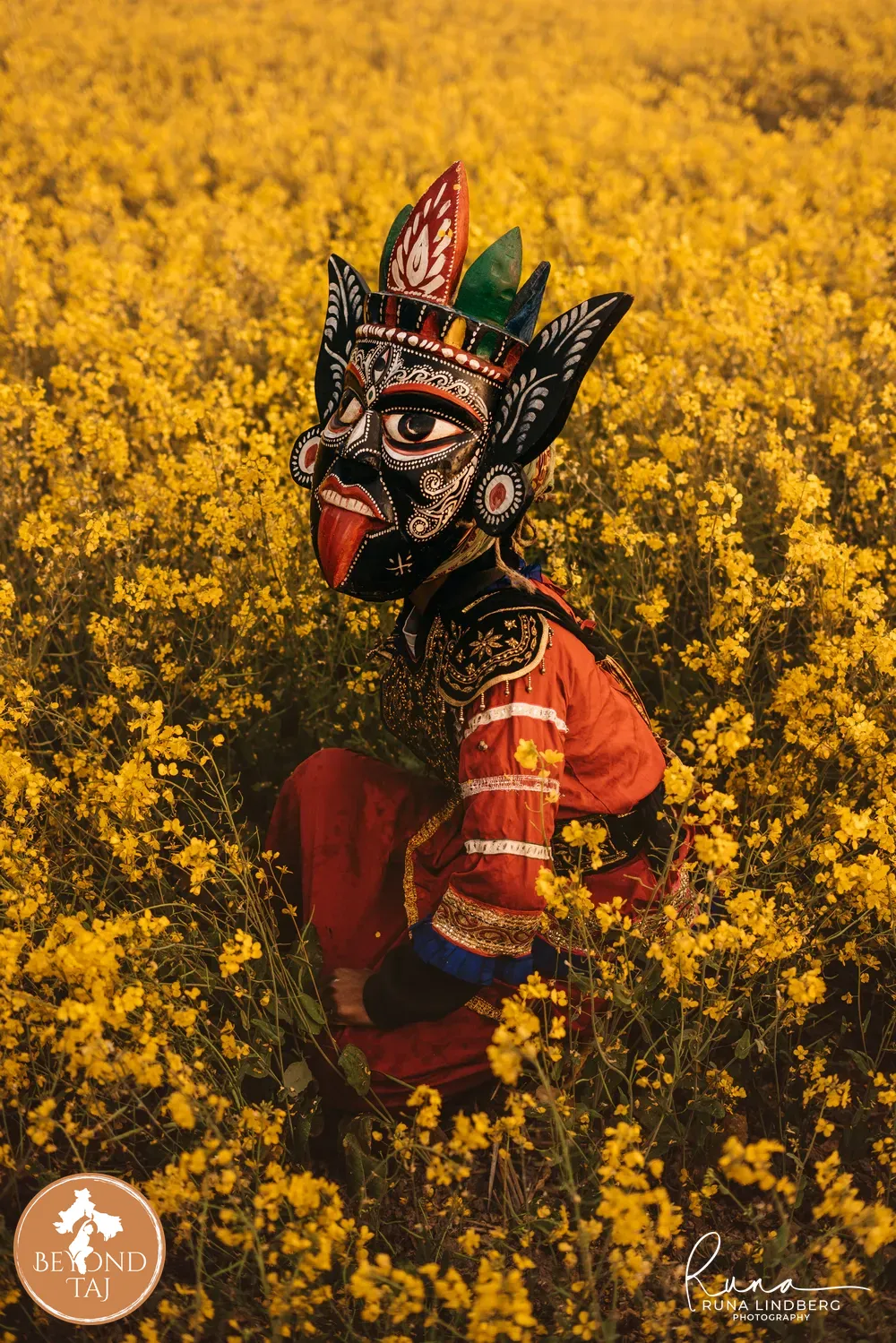
Smasan Kali, guardian against evil
That last stage brings the trance, known locally as Bhor. Dancers in the biggest masks, above all Nara-Rakshas and Narasingha, are believed to be entered by the deity, and they can turn wild and hard to hold. The villagers calm them through ritual, with holy water sprinkled from the sacred Gomira pot. It is intense and deeply felt, and it is exactly the wrong moment to push a lens into someone's face. Photograph it, but do so quietly and from a respectful distance.
If you catch the second dance, a different cast steps out of the epic:
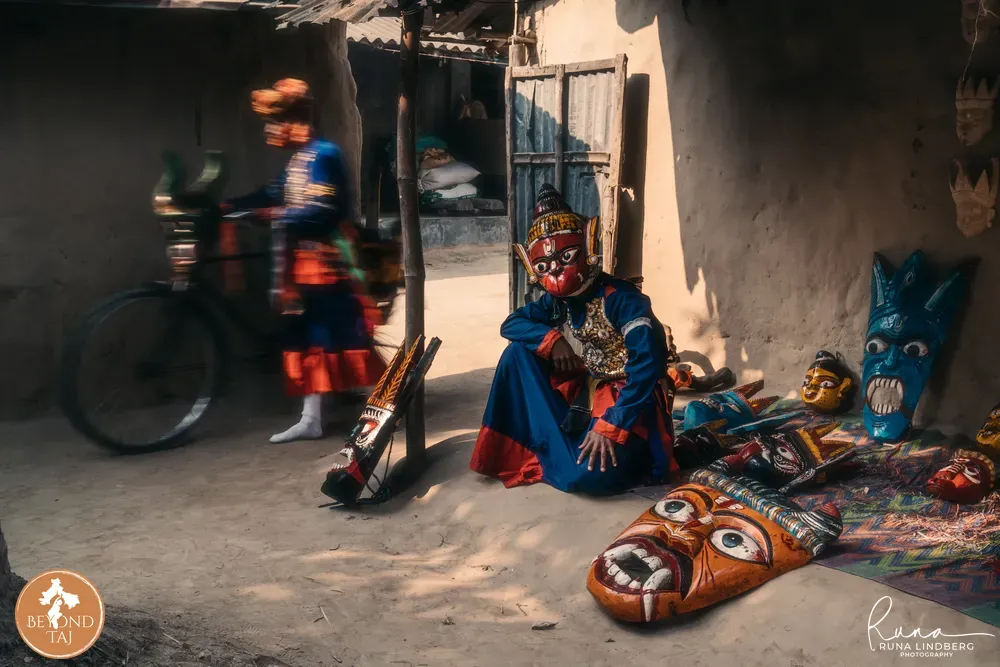
Hanuman waiting for his call
A last word on the masks themselves, because you will want to shoot them close on the carvers' benches. Each one is cut from a single block of gamar wood, never pieced together, and a large mask weighs two to three kilos. Gamar is the wood of choice today, valued for being light and hard-wearing. Neem was the older, traditional favourite, prized as the purest wood, and lighter papier-mâché and shola versions are made for easier wear. The finest masks are small monuments, and they earn a portrait of their own.
This is the point in the trip where you will wish you had packed better, so here is the short honest list. Everything on it is something we actually carry.
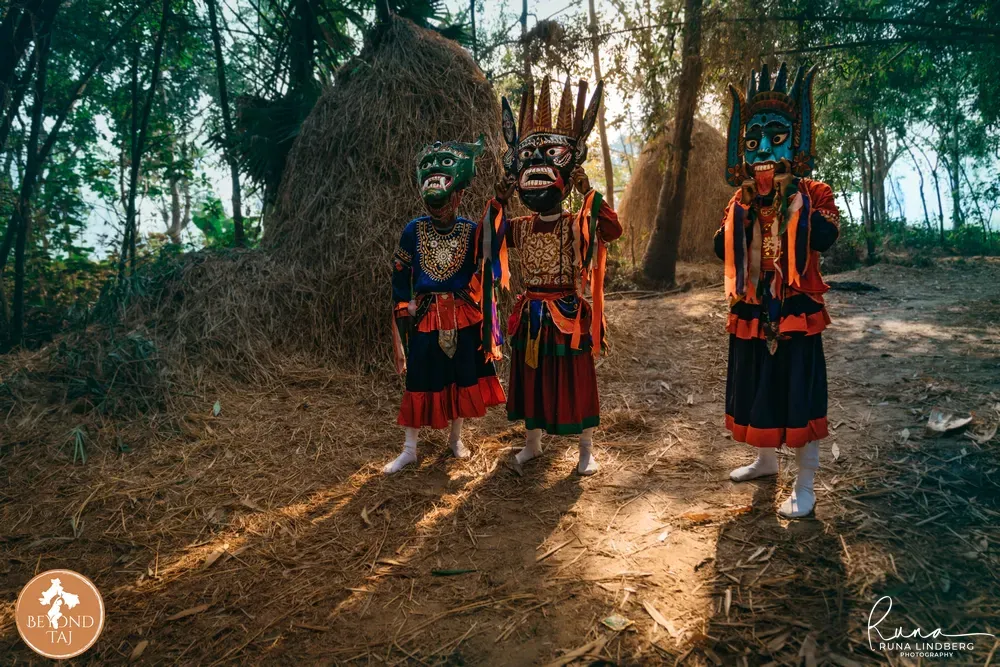
The full cast, masked and moving together
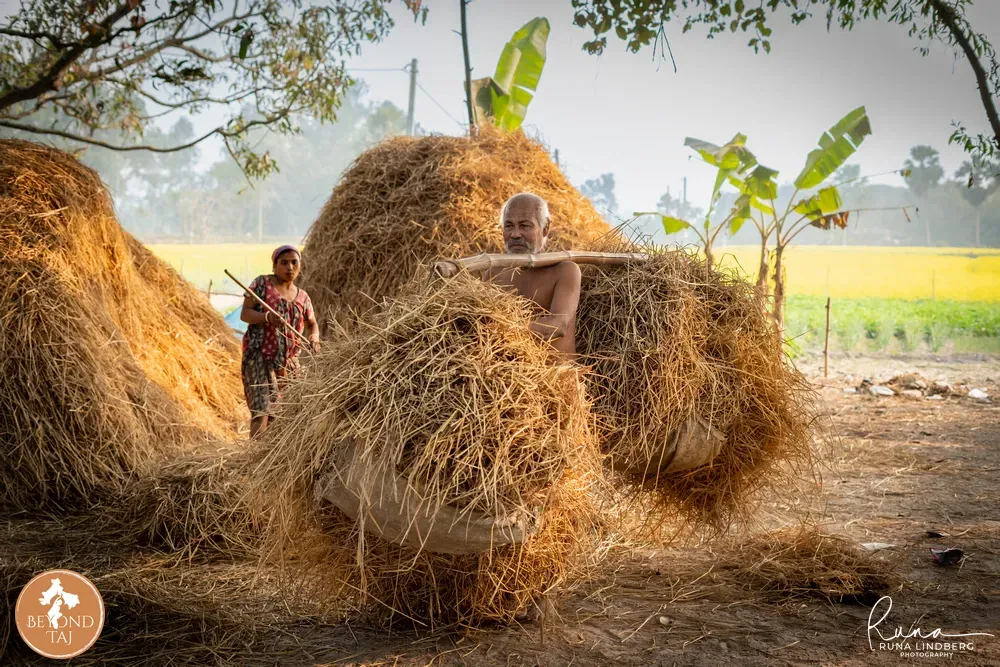
Everyday village scene in Kushmandi
Best for: Photographers who would rather earn a picture than be handed one, and travellers curious about a living, fragile folk tradition.
Not ideal for: Anyone who needs fixed times, soft hotels, or guaranteed shots on a tight clock.
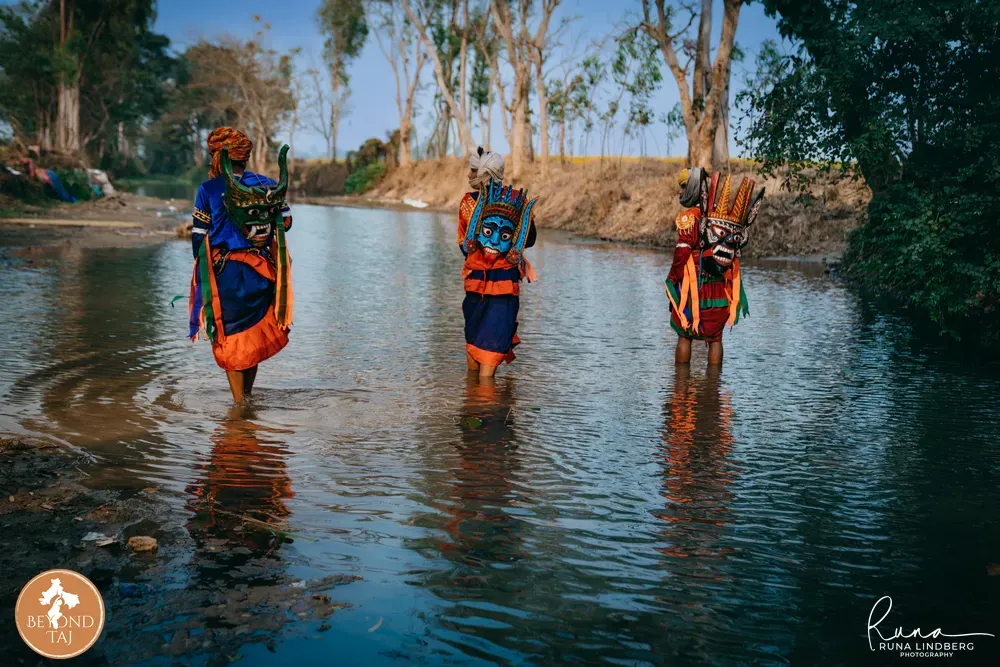
Reflections in the shallow river
Is photography allowed during Gomira? Yes, and warmly so. Gomira is danced in the open, and visitors are generally welcome to photograph both the dance and the mask-making. Just ask before close portraits, and never walk into the space the dancers are using or block the devotees during the ritual.
When is the best time of day to shoot Gomira? There is no single best hour, and that is part of the appeal. Morning mist over the fields, the dances themselves, everyday village life, the carvers at work, and the night performances lit by fire and torches all give you something different. Golden light at either end of the day is lovely, but plenty of the best frames here have nothing to do with it. Shoot through the whole day and read the light you are given.
Can I see Gomira outside its traditional season? Often yes. Gomira grew out of the sowing-season calendar, but troupes dance around village festivals through the year, at cultural events, and by arrangement. With the right local contact, a dedicated performance can be organised in most months, with the dancers and musicians paid for their time.
Do I need a guide for Gomira? In practice yes. The dances have no fixed dates and happen in scattered villages with minimal signposting. A local contact who knows the troupes is what turns a hopeful plan into an actual performance.
What are the masks made of? A single block of gamar wood, never pieced together, and a large mask weighs two to three kilos. Gamar is favoured today for being light and durable, while neem was the traditional choice. The wooden Gomira mask of Kushmandi carries its own Geographical Indication tag.
Gomira sits at the heart of a photo journey designed by Beyond Taj Tours, with itineraries shaped together with award-winning photographers who know rural West Bengal from the inside. Because a dance can be arranged directly with the village troupes, these journeys can bring you a full Gomira performance even outside the old ritual season, with the dancers and musicians properly looked after for their time. All bookings, payments and travel logistics are handled by our travel partner. To join a small-group departure or shape a bespoke version of your own, follow the itinerary below.
Read the itinerary → Mask & Mystery Photography Tour 2027
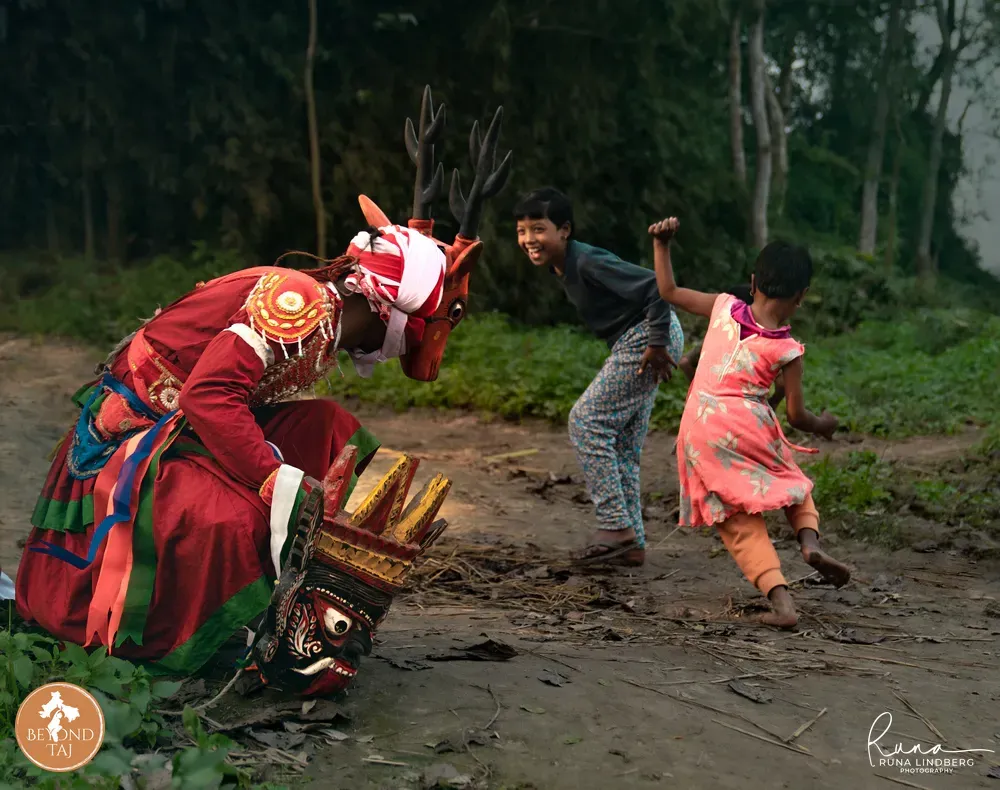
The stag mask, Kali still in hand, chasing off the mischief-makers
Runa Isabel Lindberg is a writer and passionate photographer whose work has been exhibited internationally. She has been travelling through India, Nepal, Sri Lanka and Indo-China since 2008, and photography has been the thread through all of it. This blog is her personal editorial project: first-hand field notes, honest reviews of the heritage hotels she has stayed in, and photographs taken through her own lens over many return visits. Her work on Gomira has won two awards.
Follow her personal photography on Instagram: @runa_lindberg
Read more → Gomira masks are slaying it on social media. Here’s why
Tours & bookings: The photo tours featured on this site are designed by Beyond Taj Tours, with itineraries curated together with award-winning photographers. All bookings, payments and travel arrangements are handled by our travel partner, Orange DMC, a licensed destination management company based in India. Follow Beyond Taj Tours on Instagram: @beyondtaj.tours
© 2026 Runa Isabel Lindberg. Text and photography by the author, all rights reserved. Site and brand development by Credio Digital Media.
09 Oct 2026
28 Sep 2026
17 Sep 2026

05 Sep 2026
31 Aug 2026
15 Aug 2026
15 Jul 2026
19 Mar 2026
12 Feb 2026
15 Jan 2026
28 Dec 2025
01 Dec 2025
13 Nov 2025