The most unique photo opportunities in India are festivals such as Holi in Braj, Hola Mohalla, Gajan, Durga Puja and the Pushkar Mela, and places such as Jodhpur's blue lanes, Udaipur City Palace, Chandni Chowk in Delhi, the Varanasi ghats and Rajasthan's stepwells. This guide covers when to go, how to shoot each one and where access gets difficult.
| # | What | Where | When | Good to know |
|---|---|---|---|---|
| 1 | Holi in Braj | Barsana, Nandgaon, Vrindavan, Mathura (Uttar Pradesh) | February or March, about a week | Extreme crowds, colour on your gear, not a festival for a woman alone |
| 2 | Hola Mohalla | Anandpur Sahib (Punjab) | March, three days around Holi | Keep your distance from horses and weapons |
| 3 | Gajan | Murshidabad district (West Bengal) | Mid-April | No fixed schedule, most of it at night |
| 4 | Durga Puja | Kolkata and rural West Bengal | September or October | Crowds in Kolkata, remote villages and local contacts in the countryside |
| 5 | Pushkar Mela | Pushkar (Rajasthan) | October or November | Arrive a week before the official programme |
| 6 | Jodhpur's blue lanes | Jodhpur (Rajasthan) | All year | A residential neighbourhood, you will see day-to-day life |
| 7 | Udaipur City Palace | Udaipur (Rajasthan) | All year, main season October to March | A camera that handles low light well and a fast wide-angle lens help, or a 24-70mm |
| 8 | Chandni Chowk | Old Delhi | All year, best early in the morning | Best around Jama Masjid, the spice market (Khari Baoli) and the flower market |
| 9 | The ghats of Varanasi | Varanasi (Uttar Pradesh) | All year, any hour | No camera at the cremation ghats without a local guide |
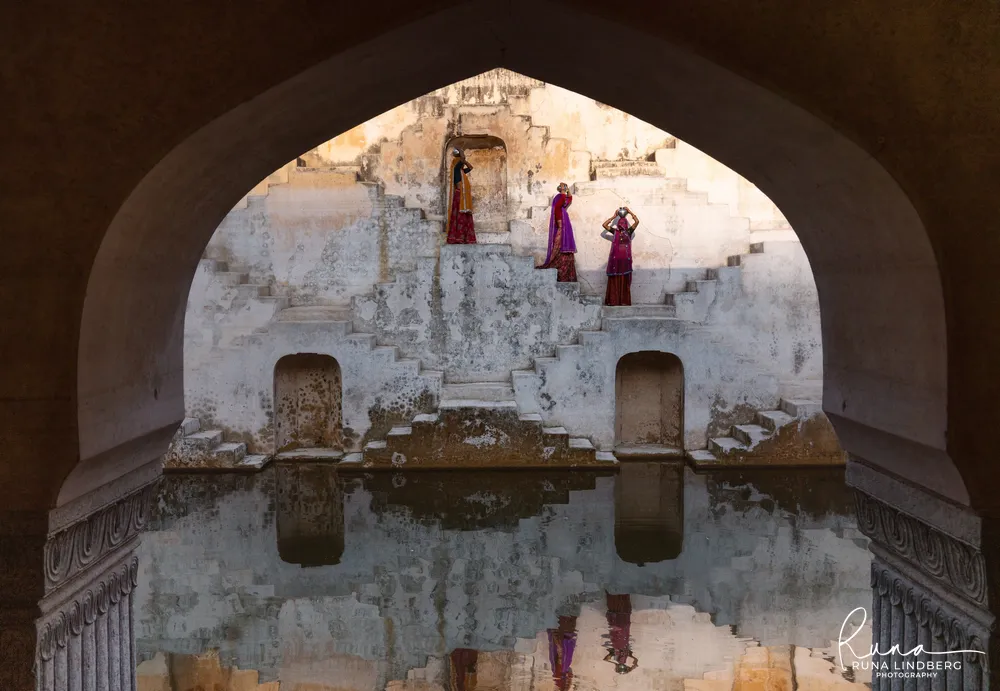
| 10 | Stepwells of Rajasthan | Amer, Jodhpur, Bundi, Abhaneri | All year | Permit needed for the steps at Panna Meena ka Kund |
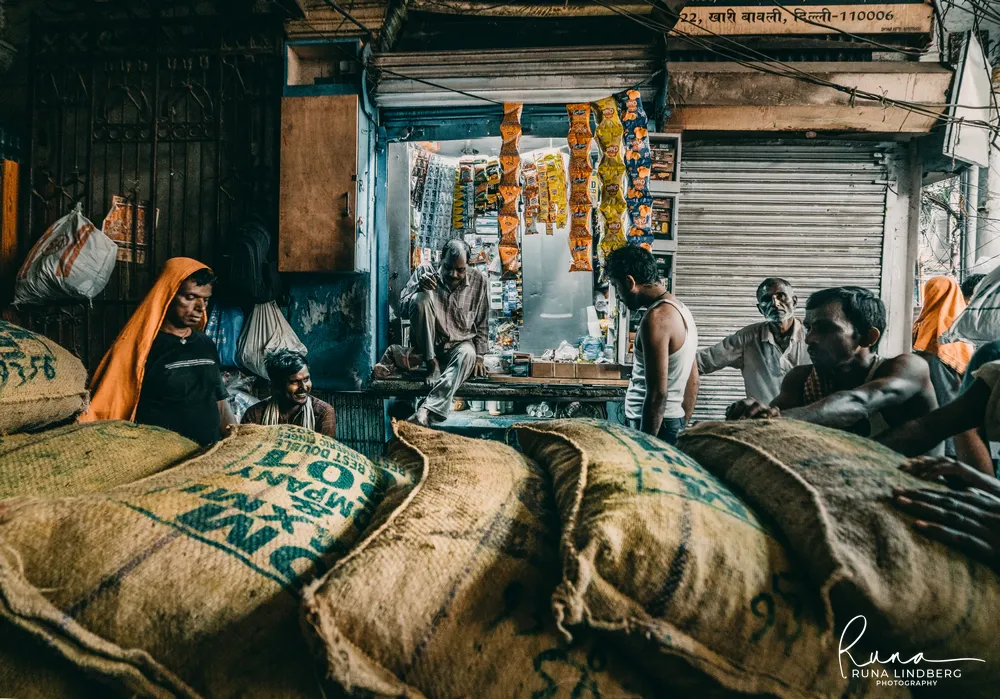
Porters among jute sacks in Khari Baoli (Chandni Chowk), Old Delhi.
Jump to:
These five, listed in the order they fall through the year. Two of them, Holi and the Pushkar Mela, are famous. At Gajan and in the villages of Purulia you will meet almost no other visitors.
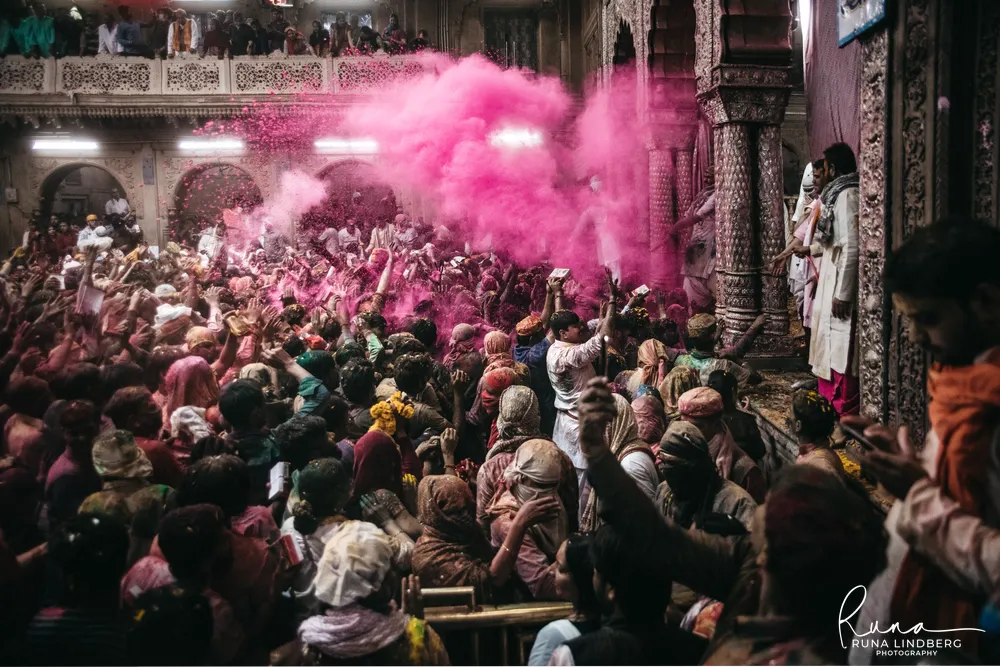
Gulal thrown from the platform inside the Banke Bihari temple, Vrindavan.
What it is. In Braj, Krishna's home region around Mathura and Vrindavan, Holi runs for about a week. Each town holds its own ritual on its own lunar day: laddus thrown from the temple in Barsana, the Lathmar stick battles in Barsana and Nandgaon, a rain of rose petals inside the Banke Bihari temple, the Widows' Holi at the Gopinath Temple, bonfires on the full moon night and the main colour day after it.
When. February or March. The dates move with the lunar calendar.
How to shoot it. Decide which ritual matters most to you and build the week around it. In Barsana I have shot Lathmar from street level and from a rooftop. The street puts you between the sticks and the colour, the roof gives you the whole crowd. At Banke Bihari the flower rain lasts roughly thirty minutes, and photography inside needs a permit arranged in advance. Camera protection stays on all week.
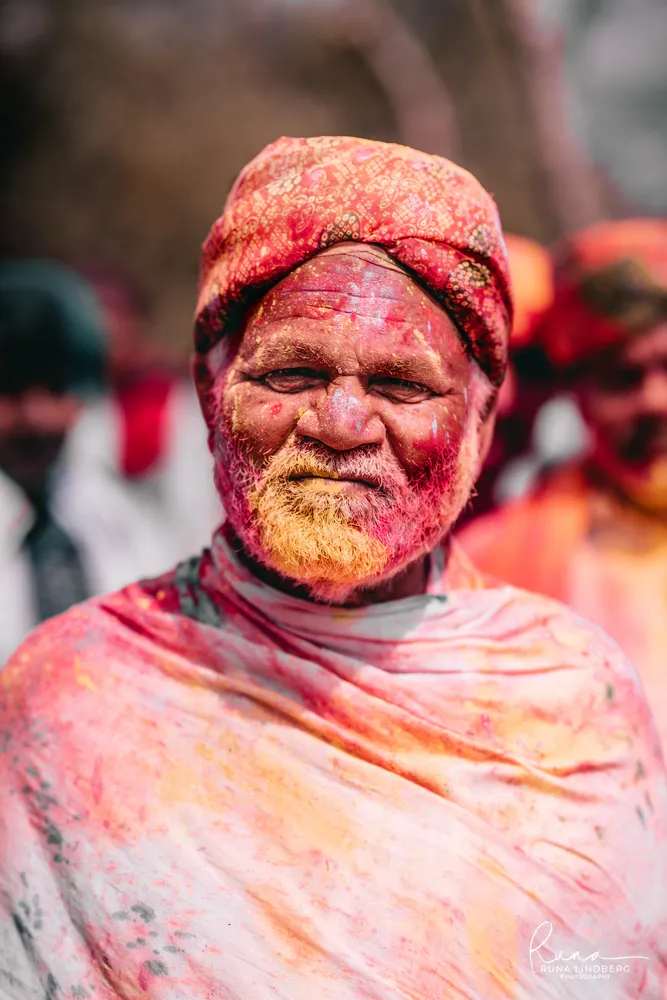
Know before you go. Lathmar day in Barsana is the hardest day of the festival. As a woman I would not go there on my own, and I never have. The gentlest day is the Widows' Holi, where it is mostly women and children throwing flowers and the older women are glad to have photographers around.
Full guide: Barsana, Nandgaon, Vrindavan & More: Comparing Braj Holi Locations for Photographers
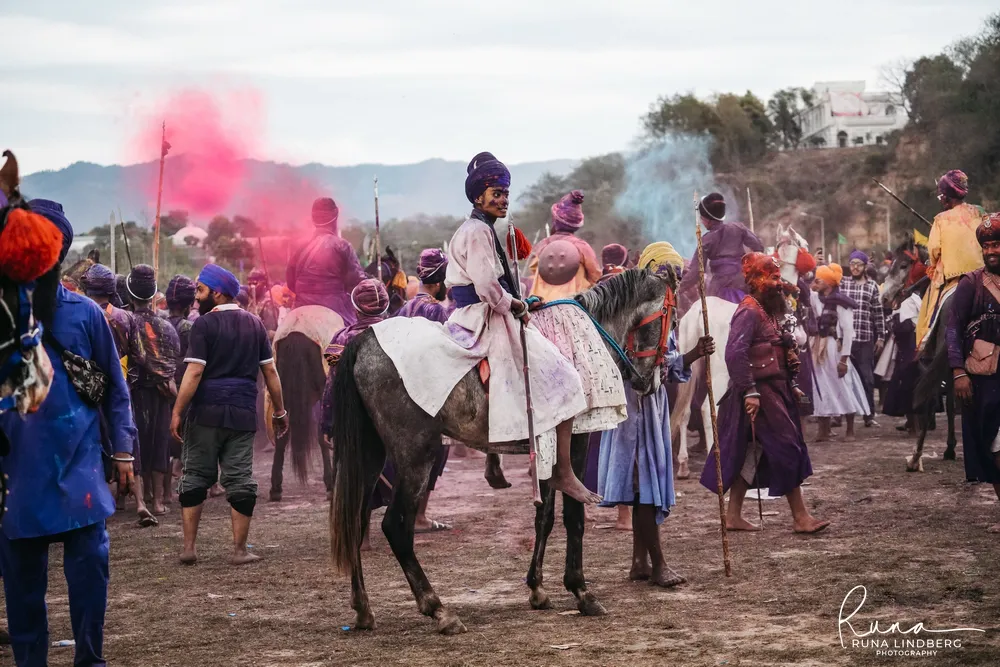
Riders gather while colour goes up behind them.
What it is. A three-day Sikh festival, founded by Guru Gobind Singh in 1701 as a gathering to show martial skill. Nihang warriors in blue robes and tall turbans ride, fence and parade through Anandpur Sahib, and colour powder flies here too.
When. March, around Holi. The two can be combined in one trip.
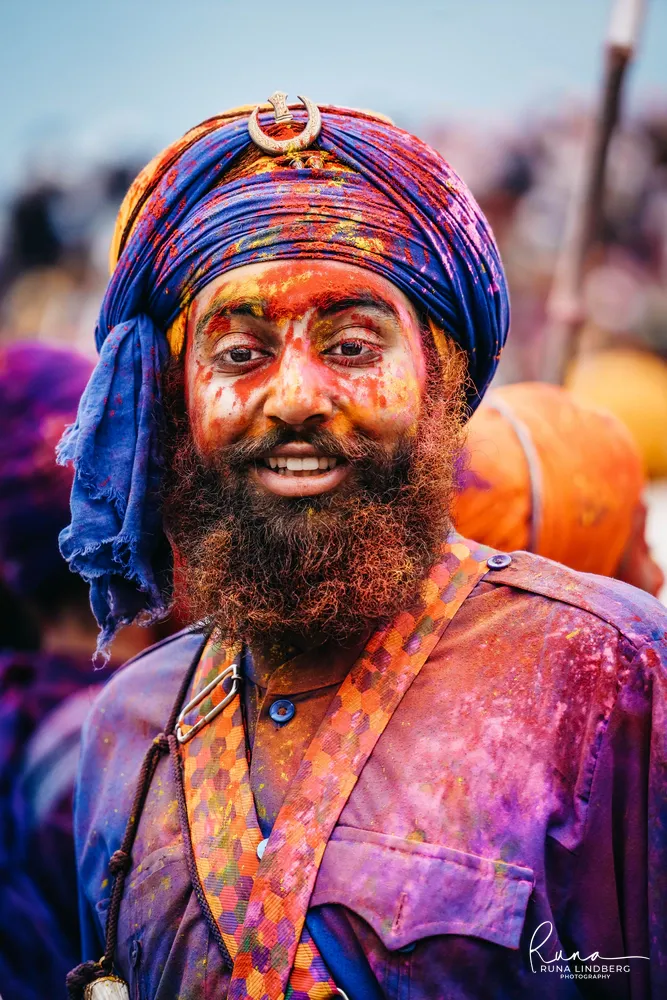
How to shoot it. A longer lens earns its place. A 70-200mm lets you isolate riders and gatka fighters and keeps you clear of horses and blades. The action is slower and more deliberate than Holi, so there is time to compose. Look at the turbans, the weapons and the faces of the older warriors as much as at the displays.
Know before you go. This is a religious gathering of the Sikh community. Cover your head, ask before you photograph a person and stay out of the ceremonies.
Read more: Photographing India's Color Festivals: Holi, Dauji Huranga & Hola Mohalla
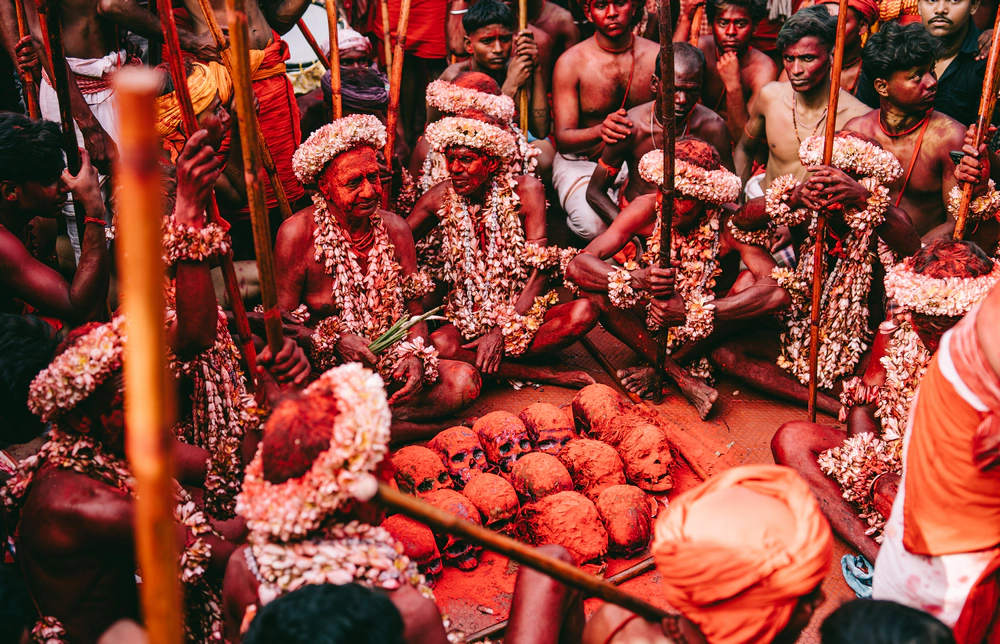
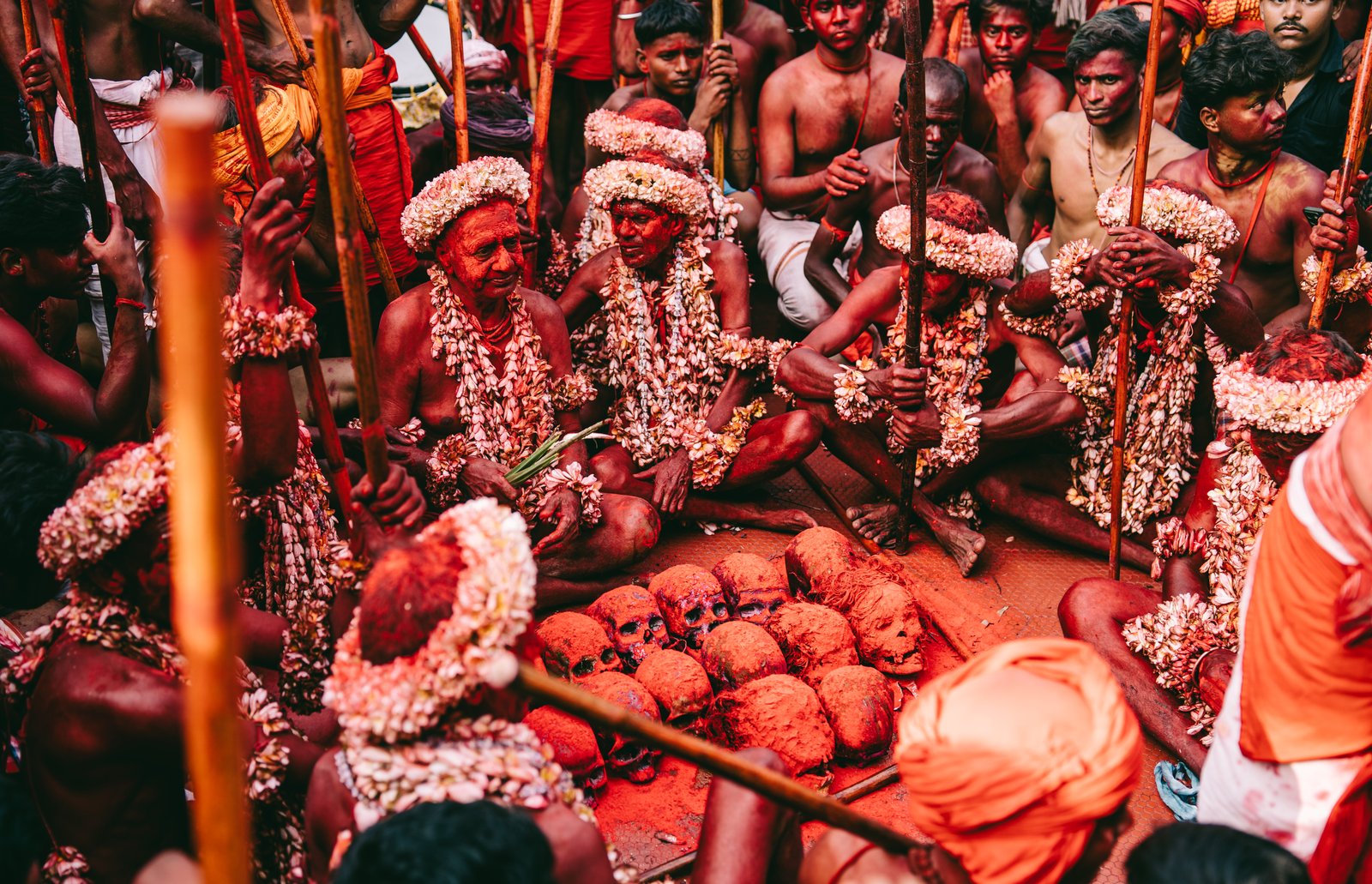
Devotees smeared in red powder and wearing flower garlands sitting in a circle around a pile of red-powdered human skulls, Gajan festival, Kandi, West Bengal
What it is. Gajan is a festival for Shiva at the end of the Bengali year. Villagers take ascetic vows, fast, and have their faces and bodies painted as gods, demons and skeletons. I followed it from the face painting in Gangatikuri to the fire dances and piercings in Kandi and the hook-swinging of Charak Puja in Cossimbazar. We were the only outsiders at every stop.
When. Mid-April, in the final days of the Bengali month of Chaitra. Village timings shift from year to year.
How to shoot it. Most of it happens at dusk, at night or at first light, lit by oil lamps and fire. Bring fast lenses and leave the flash off. In Gangatikuri the painters use acrylic paint on skin, children included, which gives saturated colour for portraits.
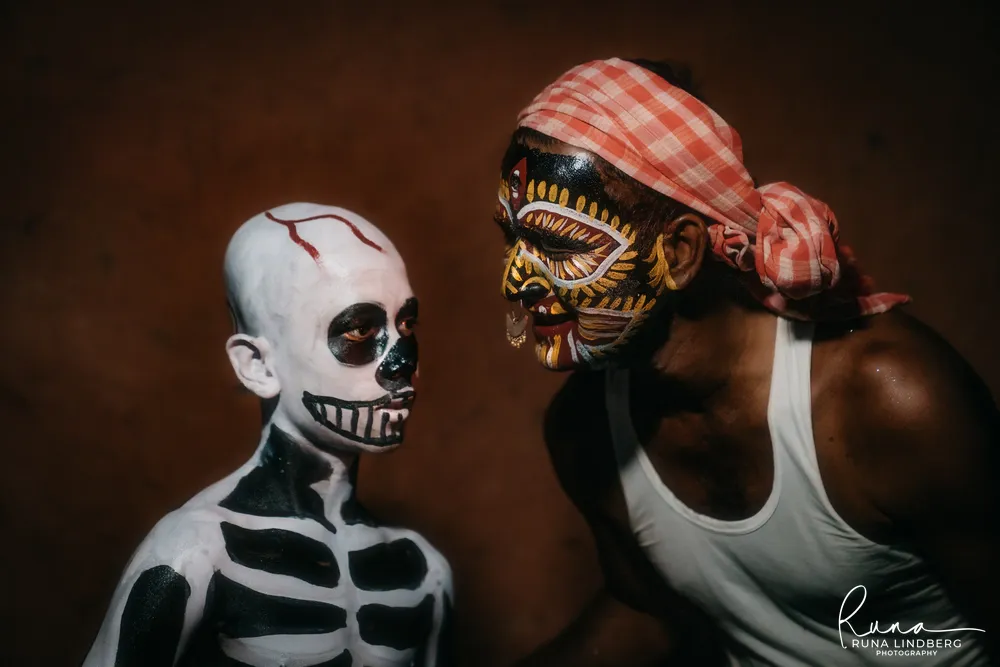
Skeleton and spirit, two of the ganas said to accompany Shiva. Gangatikuri.
Know before you go. Nothing runs on a schedule. In Kandi in 2026 the skull dancers came back from the cemetery at around eight in the morning. We had given up in the middle of the night and missed them. Rest in the evening and come back early.
Full guide: Gajan Festival in West Bengal: A Photographer's Guide to Skull Dances, Hook-Swinging and Fire Rituals.
For the quiet daytime hours: Photographing Murshidabad.
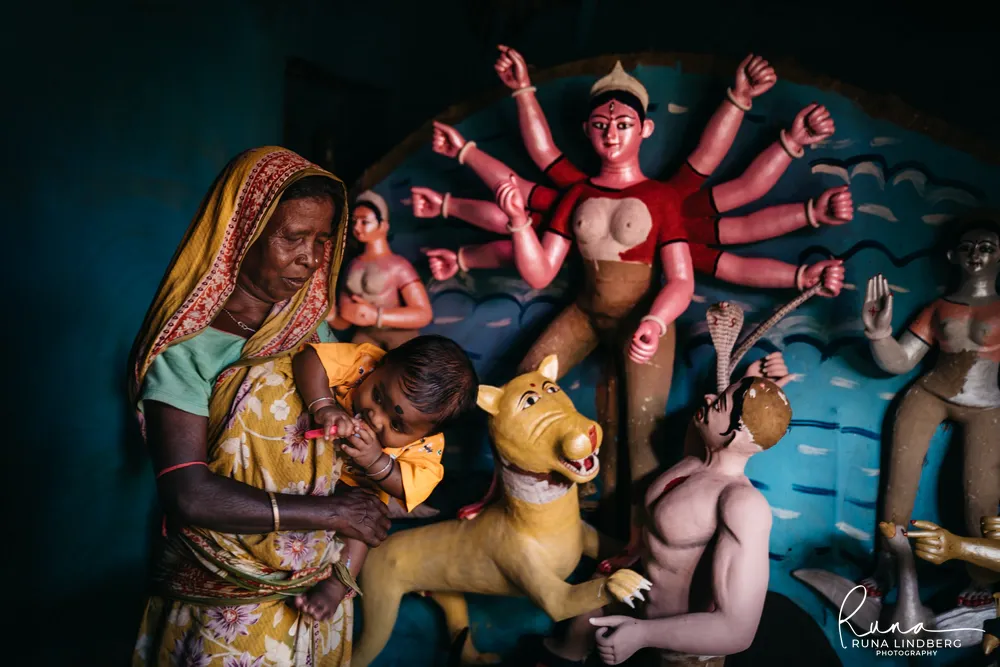
A Durga idol waiting to be finished, Purulia.
What it is. Durga Puja is celebrated all over West Bengal, and it comes in two very different forms. In Kolkata it is big and commercial: millions of visitors, elaborate pandals competing for the most inventive design, and organised pandal circuits. In the countryside, villages across the state hold their own small pujas, with idols painted by hand in community spaces.
Which one this is about. My own post covers the rural version, in the villages of Purulia district around 300 kilometres west of Kolkata, where Santhal traditions mix with the Hindu ritual. The notes below refer to Purulia.
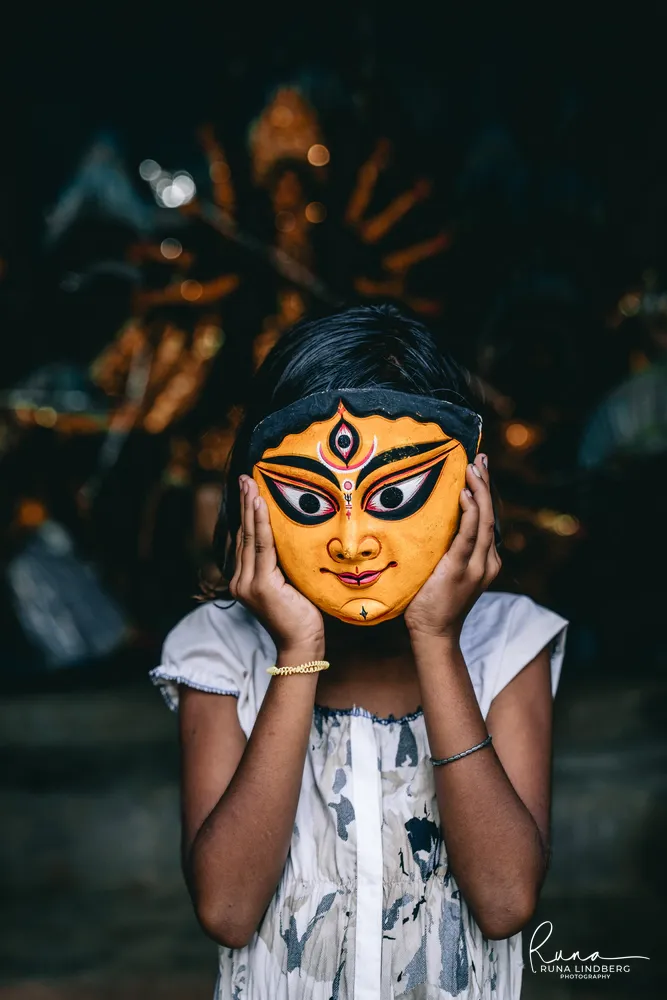
A girl with a painted Durga mask, Purulia
When. September or October, by the lunar calendar. The days of preparation before the main festival give you better access than the peak days.
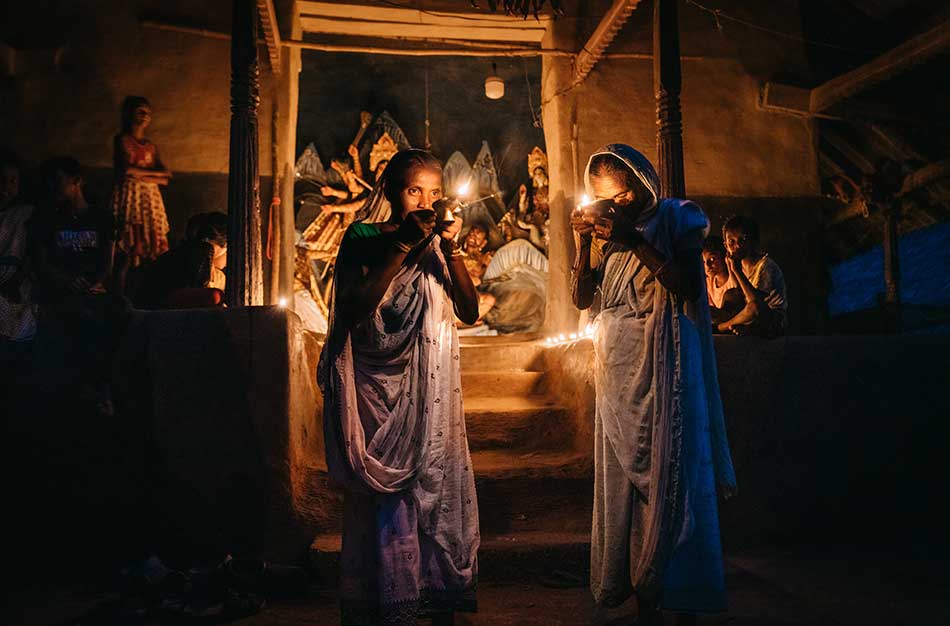
How to shoot it. In Kolkata you are navigating crowds between electrically lit pandals. In the villages you work with the light that is there. Evening prayers are lit by clay oil lamps against earthen walls. During the day the backdrop is paddy fields and houses built from red earth.
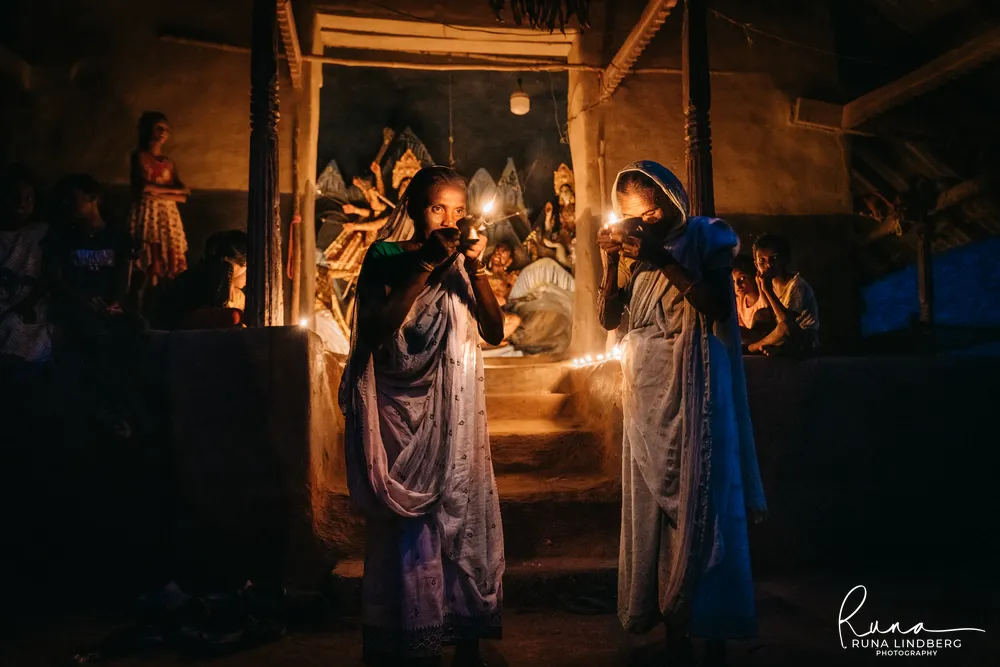
Evening prayers by oil lamp in front of a village Durga shrine, Purulia.
Know before you go. The villages are not on tourist maps. English is rare and even Hindi is not spoken everywhere. I worked with two photographers from Kolkata, Arpan and Jeet, who know the district and its families. Do not count on finding a decent restaurant on the road.
Read more about the rural celebrations: Durga Puja Beyond Kolkata: Discovering Purulia's Tribal Celebrations
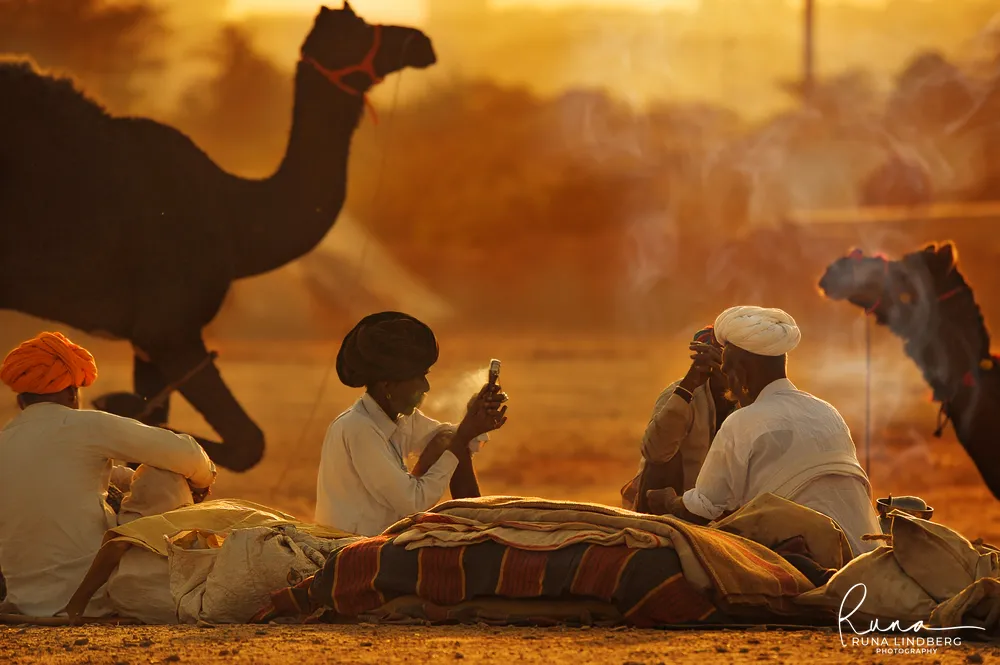
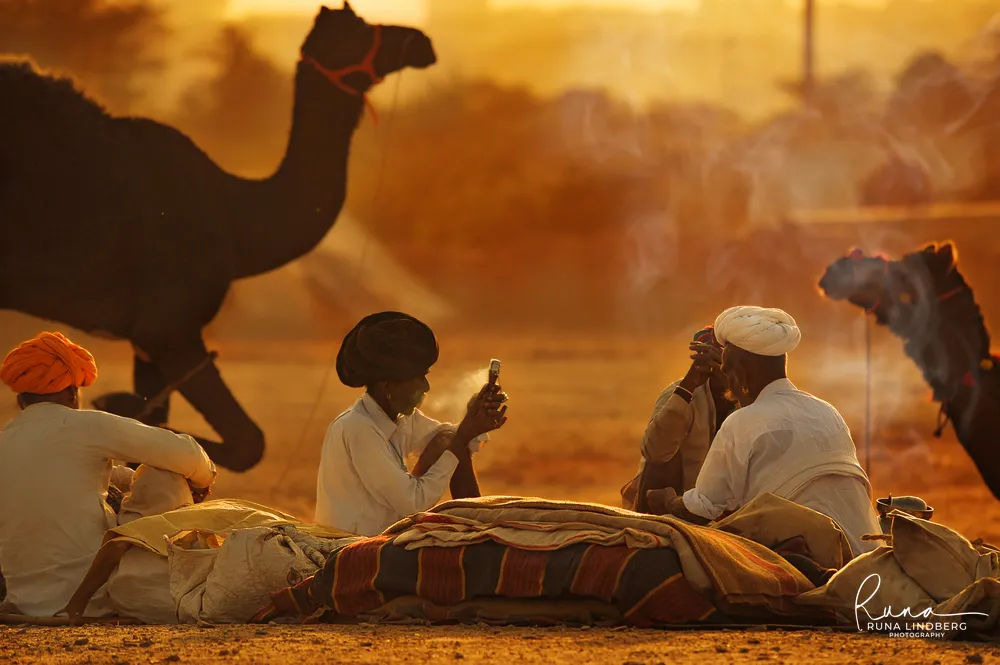
Herders' camp on the dunes at the Pushkar Mela
What it is. Three events in one: a livestock fair on the dunes, an official programme in the Mela Ground arena, and a pilgrimage to the lake that peaks on the November full moon, Kartik Purnima.
When. October or November. Herders arrive days before the official programme, and many have sold their animals and left by the time the tourist crowds peak. Plan to arrive about a week early.
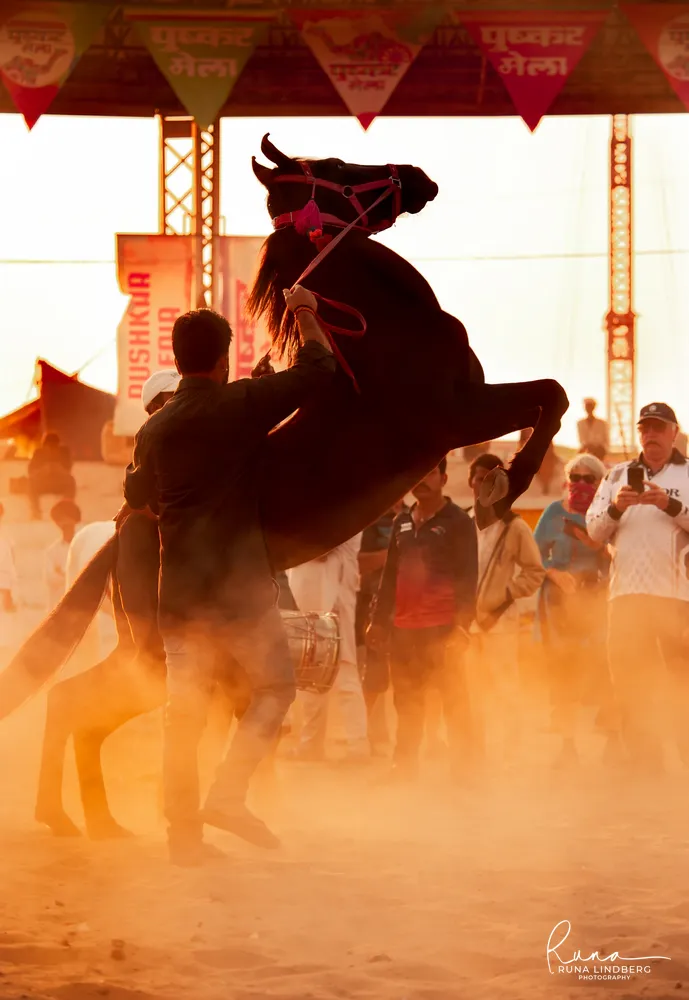
How to shoot it. Be on the dunes before sunrise, when the herders make chai over small fires, and again in the last hour of light. Use midday for the lanes of the old town. The camels are one subject among several. The Marwari horse traders set up where the dunes begin, and in 2025 horses outnumbered camels at the fair by more than two to one. At first light, women from the town and the nearby villages walk their round of the lake, a scene few visitors are awake for.
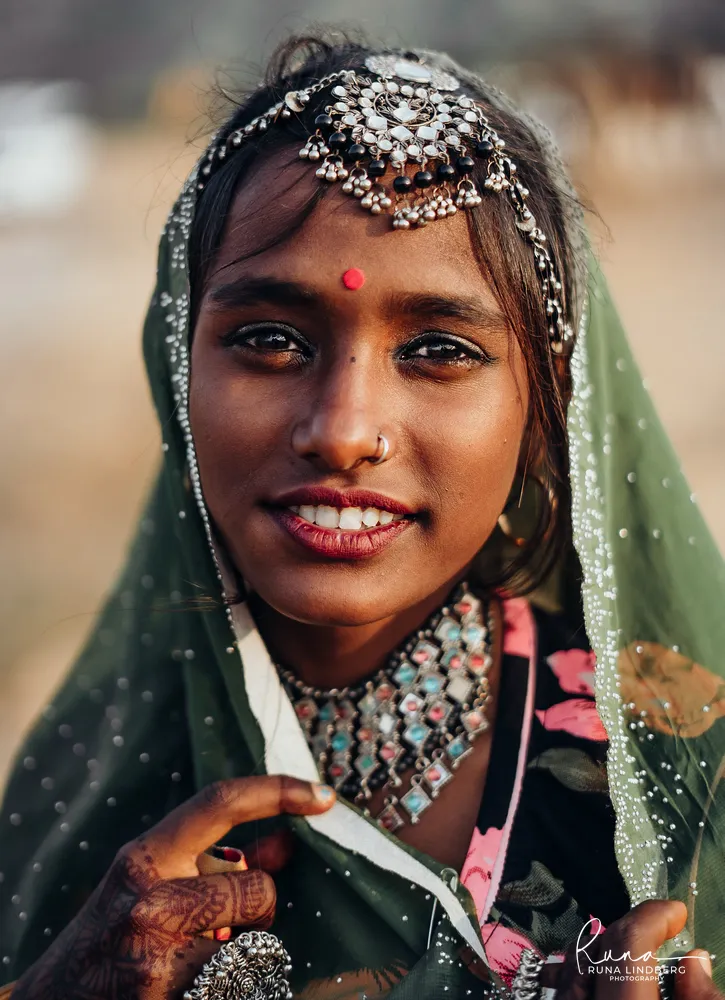
Portrait of a young woman in a green veil edged with silver beads, wearing a silver headpiece, nose ring and mirrored necklace, henna on her hands
Know before you go. Photographing people while they bathe at the ghats is not allowed, and some priests enforce it firmly. Some herders will ask for money for a portrait. Decide in advance how you will handle that.
Full guide: An Insider's Photo Guide to the Pushkar Mela: Camels and Beyond
These five do not depend on a date. All of them are in North India and combine easily with Holi or the Pushkar Mela.
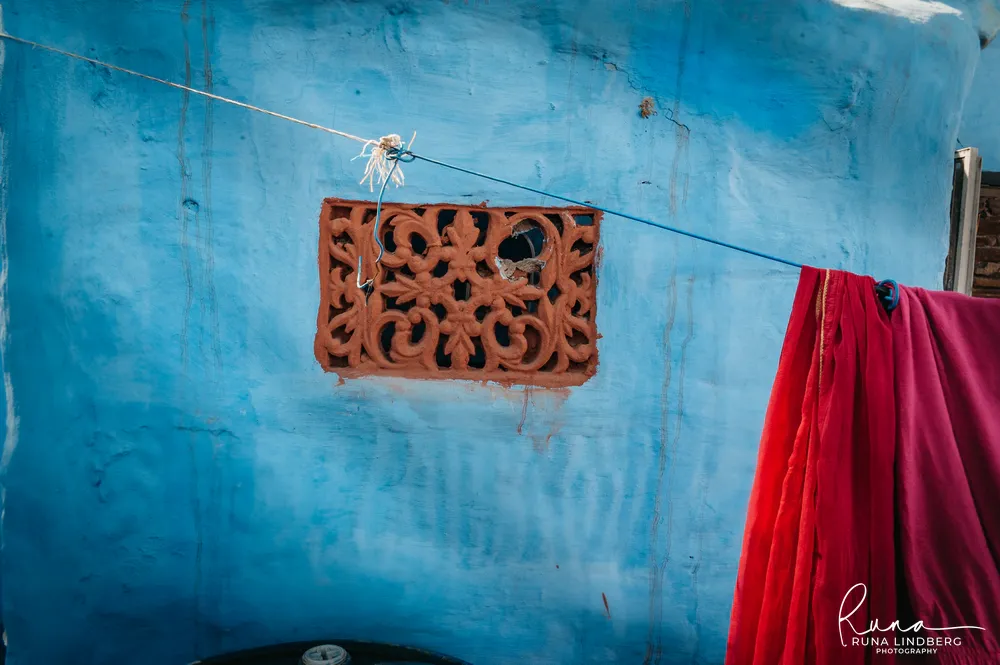
What it is. The blue houses fill one residential neighbourhood below Mehrangarh Fort, a small part of the old city. It is a maze of narrow lanes that you can walk in three to four hours, passing the same corners more than once.
How to shoot it. Skip the freshly painted walls, they look flat. Peeling paint over stone has texture. The strongest frames come when a bright colour meets the blue: a yellow sari, a red turban, pink laundry on a line. From the fort you get the blue rooftops from above.
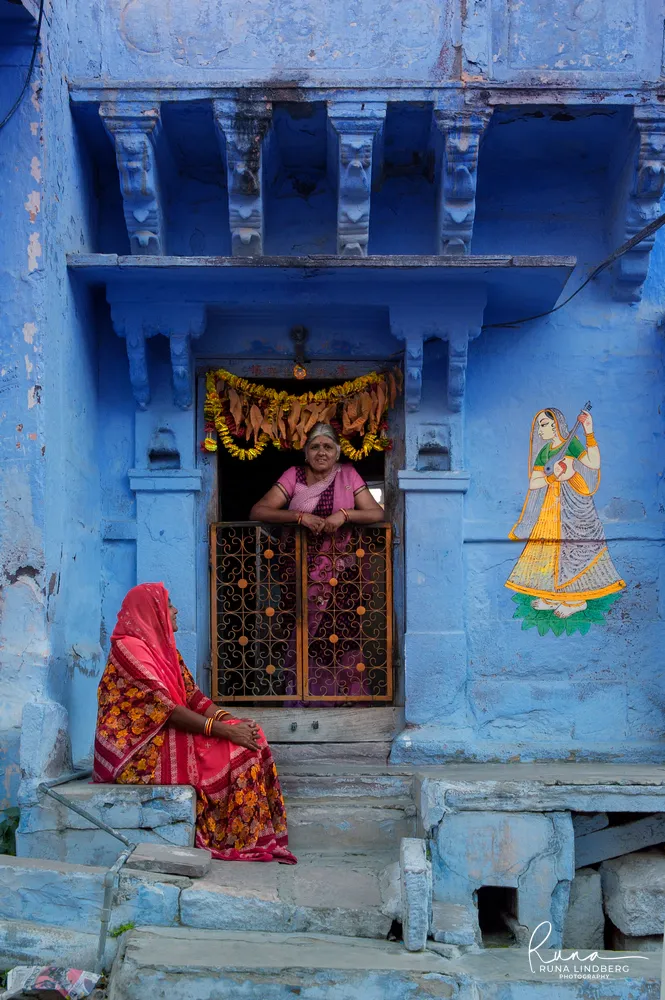
Know before you go. People live here. I have been coming back almost every year since 2016/17, and some of my pictures are of friends I have known for years. Many residents say no to a photograph, and that settles it. Part of the area is car-free, hilly and uneven, so expect serious walking.
Read more: Jodhpur's Blue Streets: What You Need to Know Before You Go
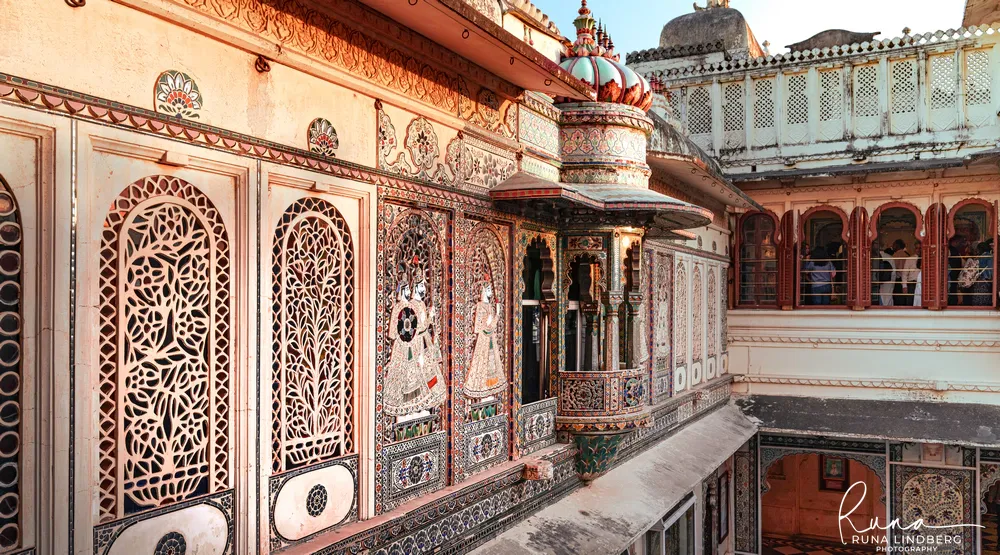
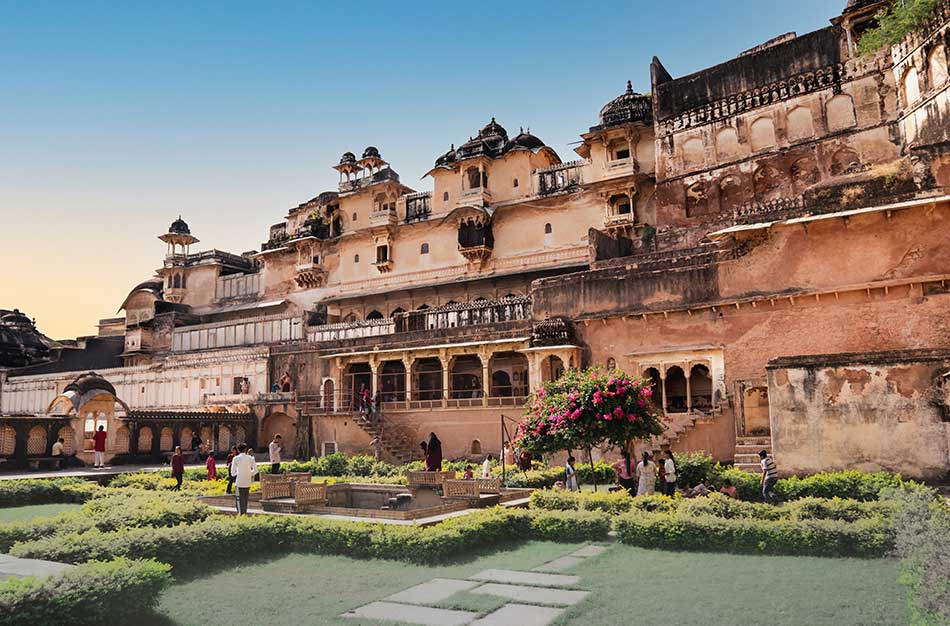
What it is. The largest palace complex in Rajasthan, on the eastern shore of Lake Pichola. Maharana Udai Singh II began it in 1559, and his successors kept building for about 400 years. Part of it is still home to the Mewar royal family. The central part is open as the City Palace Museum.
When. Udaipur works all year, and the main travel season runs from October to the end of March. The palace museum only opens at 9:30, so mornings are difficult. Inside, any time of day works. For the outside, shoot on your way back out, towards evening, when the light is no longer harsh.
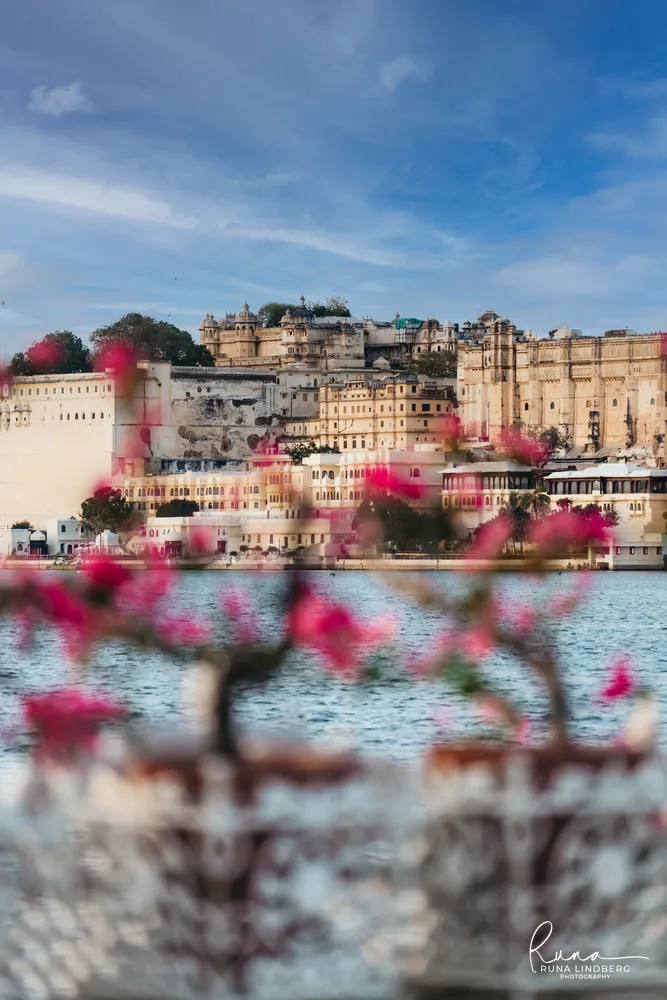
How to shoot it. On the walk up from the ticket office, use a 70-200mm. The path runs along the painted outer walls and opens onto Lake Pichola, and the long lens reaches the boats and the island palaces. Inside, look for Mor Chowk, the Peacock Courtyard, where three peacocks are set into the walls in coloured glass and mirror above a black and white chequered marble floor. Chini Chitrashala, right next to it, has blue tiles and windows of coloured glass. The blue room in the Zenana Mahal is the most photogenic of the palace's coloured rooms. The rooms are small and the light is low, so bring a fast 24-70mm or a fast prime, an 16-35mm for the smaller rooms and courtyards, and a camera that handles high ISO well.
Know before you go. Photography is allowed throughout the museum. Flash is not permitted in the galleries, and commercial or professional shoots need permission from the museum administration in advance. The royal family's Marwari stallions are stabled beside Manek Chowk, the first large courtyard. I saw them on two of my three visits, so do not count on them. The museum is open from 9:30 am to 5:30 pm. Check its website for current hours and ticket prices.
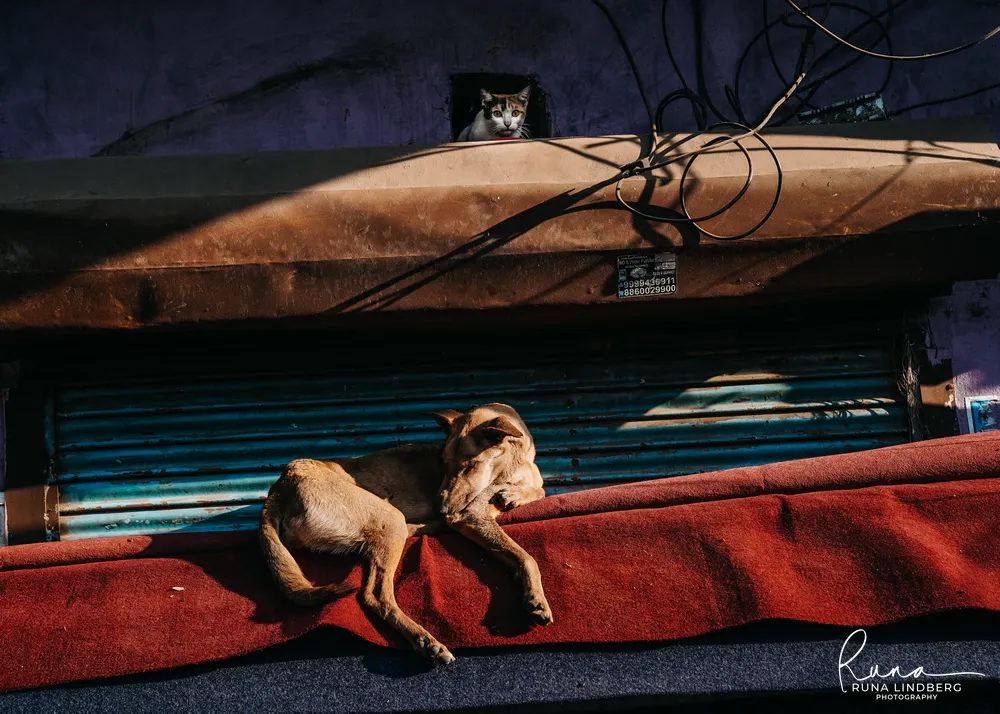
What it is. The main street and market quarter of Old Delhi, laid out in the 17th century under Shah Jahan. For photographers it is lanes, markets and people.
When. All year. Go early. The flower market trades from around six to eight in the morning, and before 7:30 you are ahead of the tour groups and the main market rush.
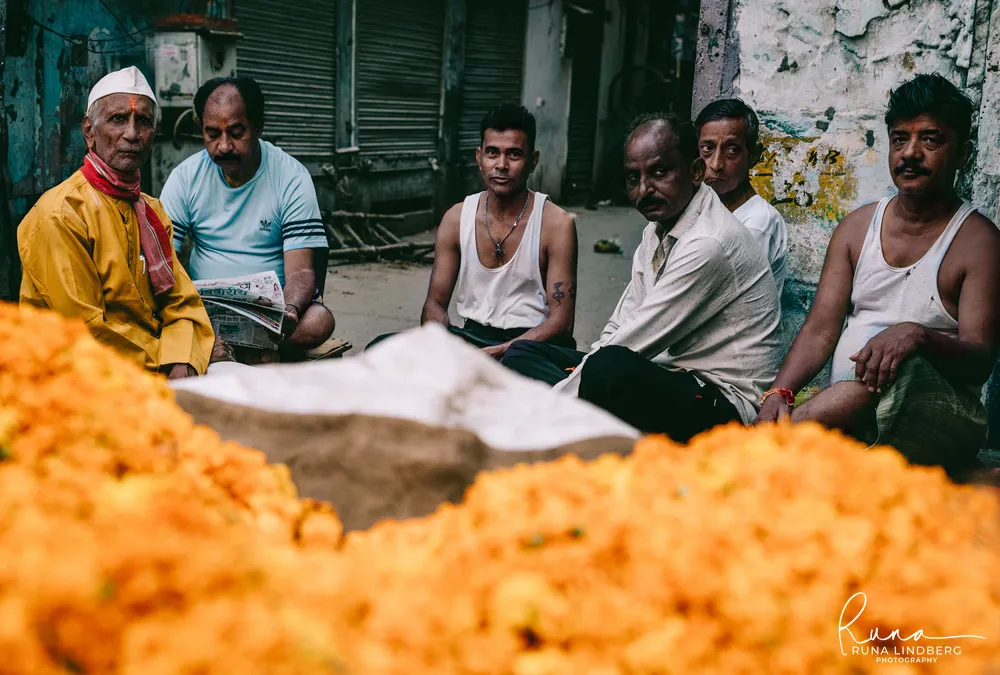
Where to shoot. Three areas work best for me: the streets around Jama Masjid, the spice market of Khari Baoli and the flower market. At the flower market, marigolds are sold by the sackful straight from the pavement. Other photographers also recommend the elevated walkways inside the spice market building for a view down onto the trade, and they prefer the lanes that branch off the main road to the main road itself. Nai Sarak and Chawri Bazar, the paper and brass markets, are named often as well.
Keep the kit small: one body and a wide-angle lens, an 16-35mm or wider, are enough for the lanes. Make eye contact, smile and ask before you point a camera at vendors and workers, and accept a no. Take the Delhi Metro to skip the traffic. Chandni Chowk station is on the Yellow Line, Jama Masjid station on the Violet Line.
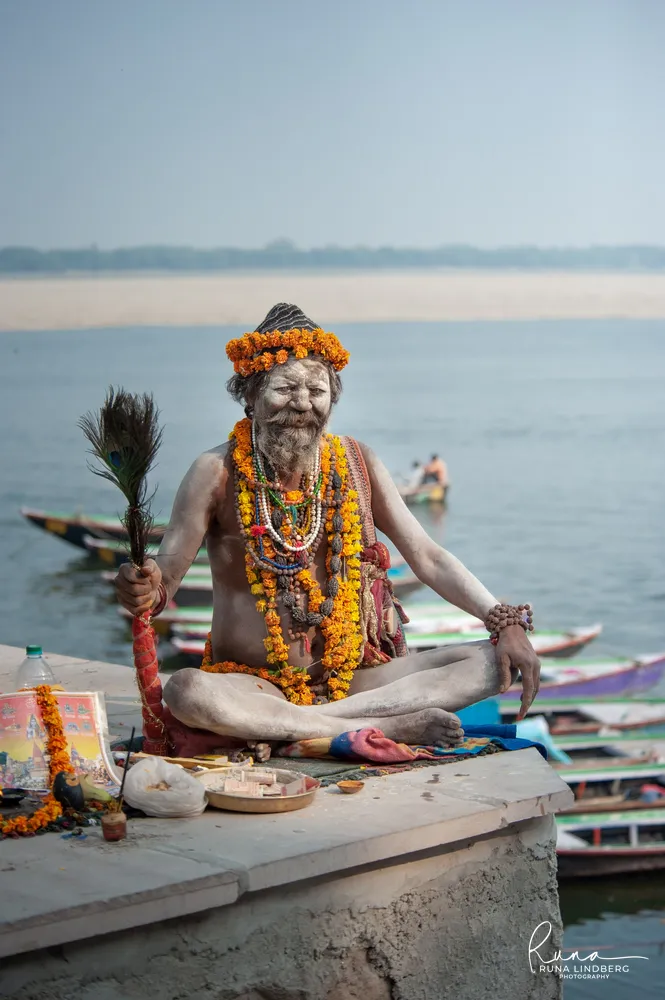
What it is. Stone steps run down to the Ganges along the whole old city, one ghat after another. Bathing, prayer, laundry, boats and cremation happen side by side.
When. Any time of year and any hour. There is always something happening on the steps.
How to shoot it. On foot. Walking the ghats lets you stop where something is going on.
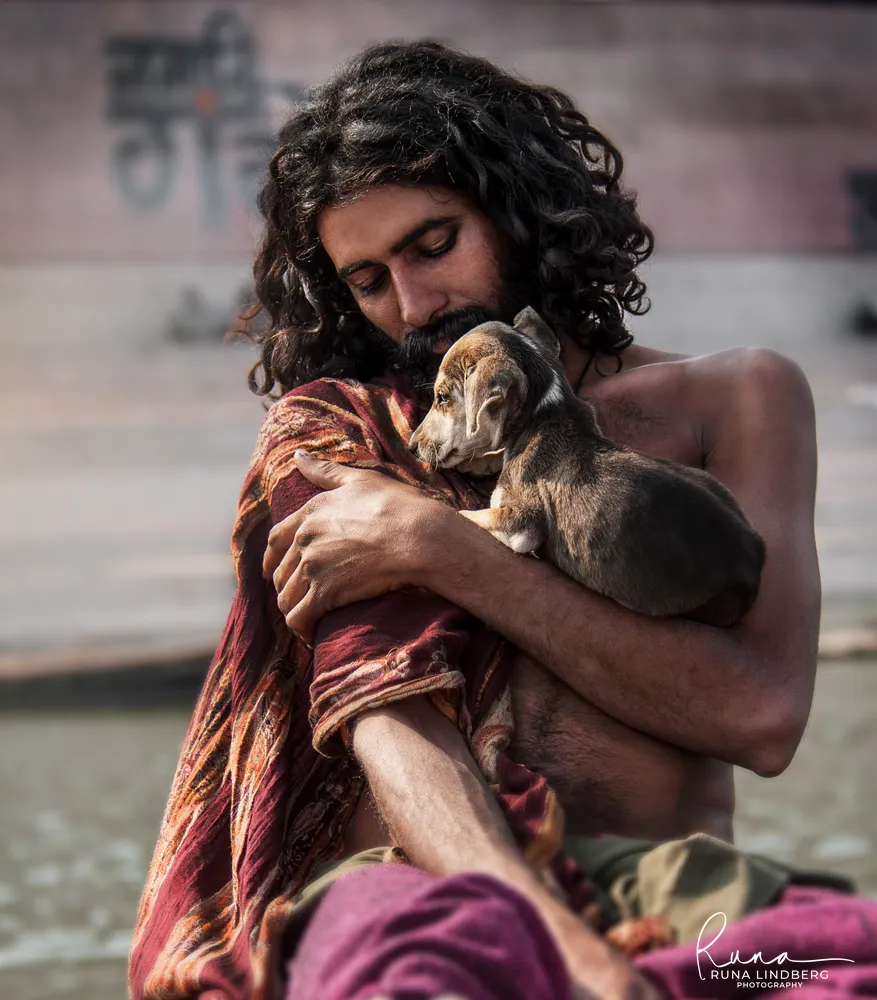
Know before you go. Photography at the cremation ghats is officially not permitted. What happens in practice depends on who you are with. A local guide who knows the people working there can tell you where a camera is tolerated and when to put it away. Without one, don't shoot.
If you travel to Braj for Holi, the Yamuna ghats in Mathura and Vrindavan carry a good deal of the same feel. I describe them in the Braj Holi guide.
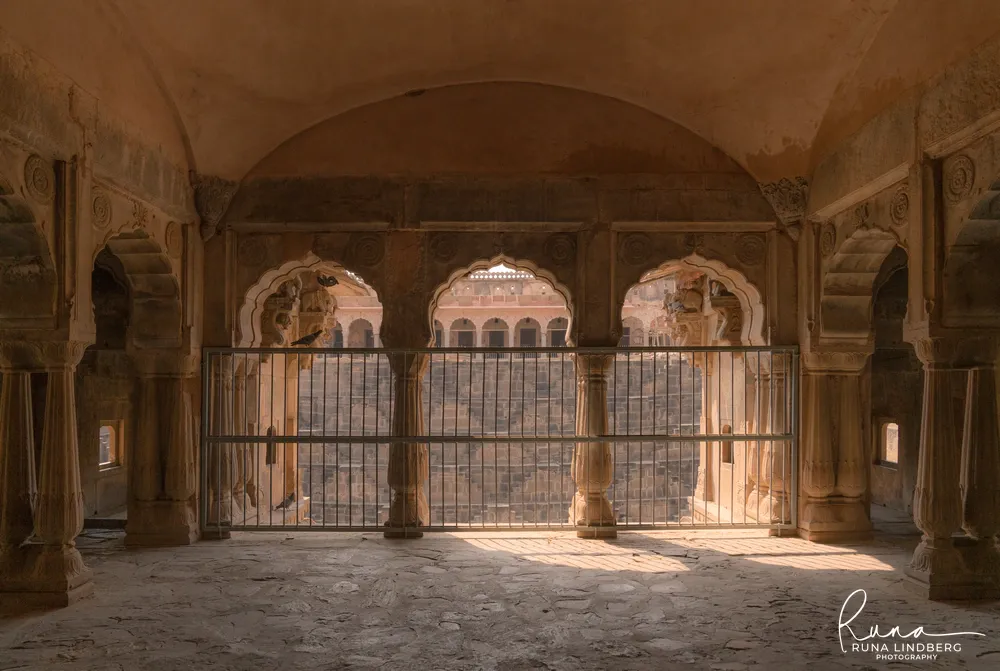
Chand Baori in Abhaneri, seen from the pavilion behind the barrier.
What it is. Stepwells, called baori or kund, are wells built as architecture: flights of steps descending to the water in repeating geometric patterns. Rajasthan has them in cities and in villages. These four are the ones I recommend.
How to shoot it. Bring a wide-angle lens for the geometry.
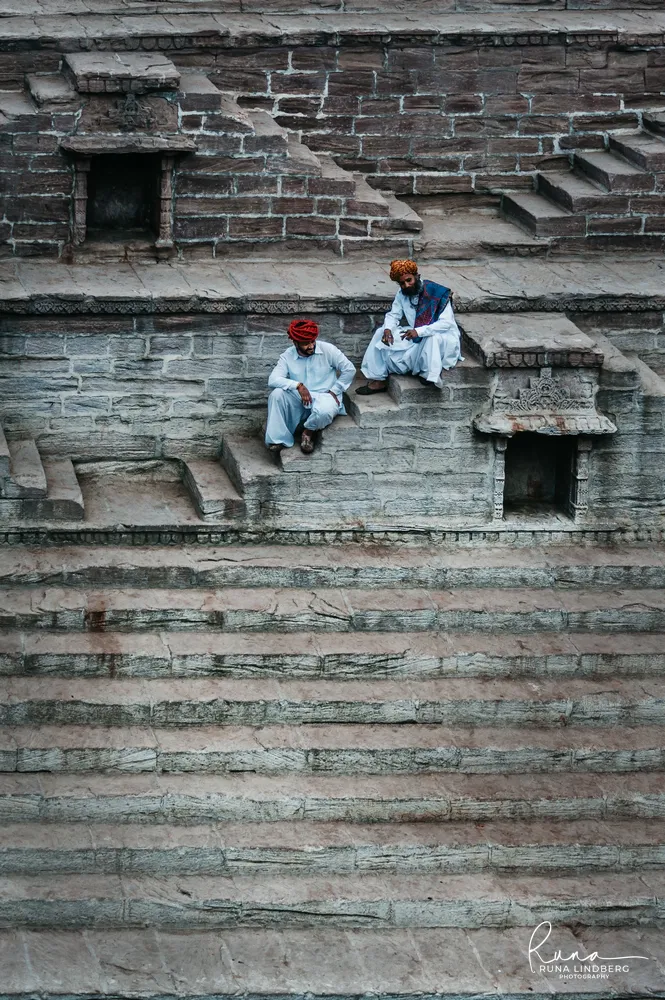
On the steps of Toorji ka Jhalra in Jodhpur's old city.
Know before you go. Bundi is the difficult one. On a three-day visit with two friends and my dog I faced unwanted attention every day. Go in a group or with a guide, and do not plan on wandering the streets alone.
Read more: Bundi: All You Need to Know Before You Go
It depends on the festival. The five festivals on this list fall in two windows, February to April and September to November. The five places work in any month.
All five festivals follow lunar or regional calendars and move every year. Check the dates before you book flights.
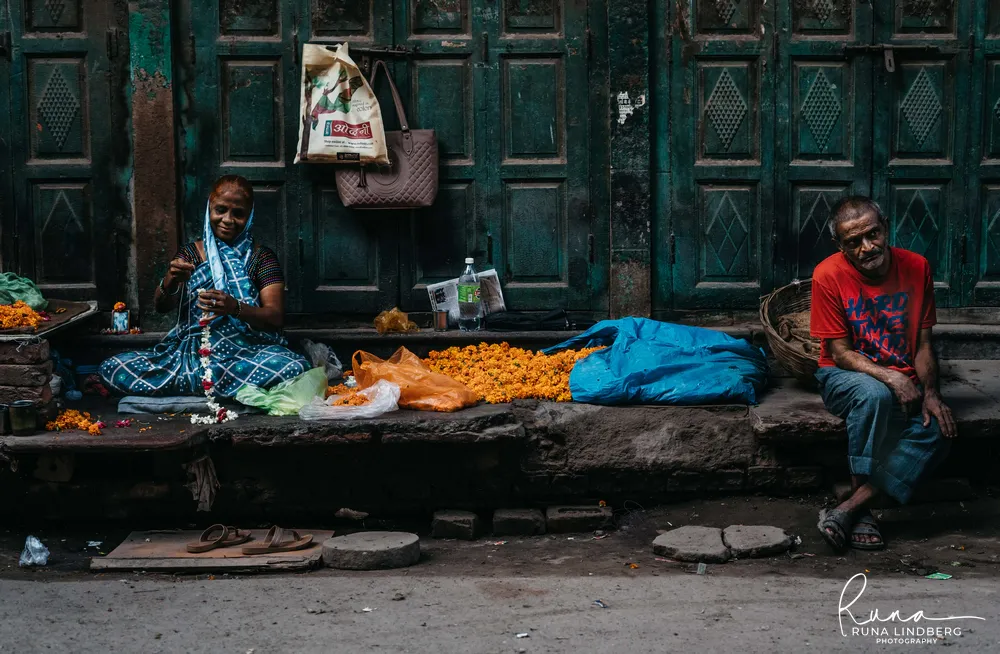
Threading garlands in front of old shop doors, Old Delhi.
What are the most unique photo opportunities in India?
Festivals and lived-in places where ritual and daily life are the subject. On this list: Holi in Braj, Hola Mohalla, Gajan, Durga Puja in West Bengal and the Pushkar Mela, plus Jodhpur's blue lanes, Udaipur City Palace, Chandni Chowk, the ghats of Varanasi and the stepwells of Rajasthan.
Which Indian festival is best for photography?
For range, Holi in Braj: a week of different rituals in different towns. For access without crowds, Gajan in Murshidabad or Durga Puja in the villages of Purulia. The Pushkar Mela is the easiest of the five to reach and to get around on foot.
When is the best time to visit India for photography?
February to April and September to November for the festivals on this list. The cities and stepwells work all year. October to the end of March is the main travel season in Rajasthan.
Is it safe for a woman to photograph festivals in India alone?
It depends on the festival. I would not go to Lathmar Holi in Barsana or the main Holi day in Braj alone as a woman. The villages of Purulia and the Gajan route in Murshidabad were safe and welcoming in my experience. Bundi, on the stepwell list, is a place for a group or a guide.
Do you need a permit to photograph temples and stepwells in India?
Sometimes. Photography inside the Banke Bihari temple in Vrindavan needs a permit arranged in advance. Inside the temples of Pushkar it is usually not permitted. At Panna Meena ka Kund you need a permit to shoot on the steps. Where no rule is posted, ask at the entrance.
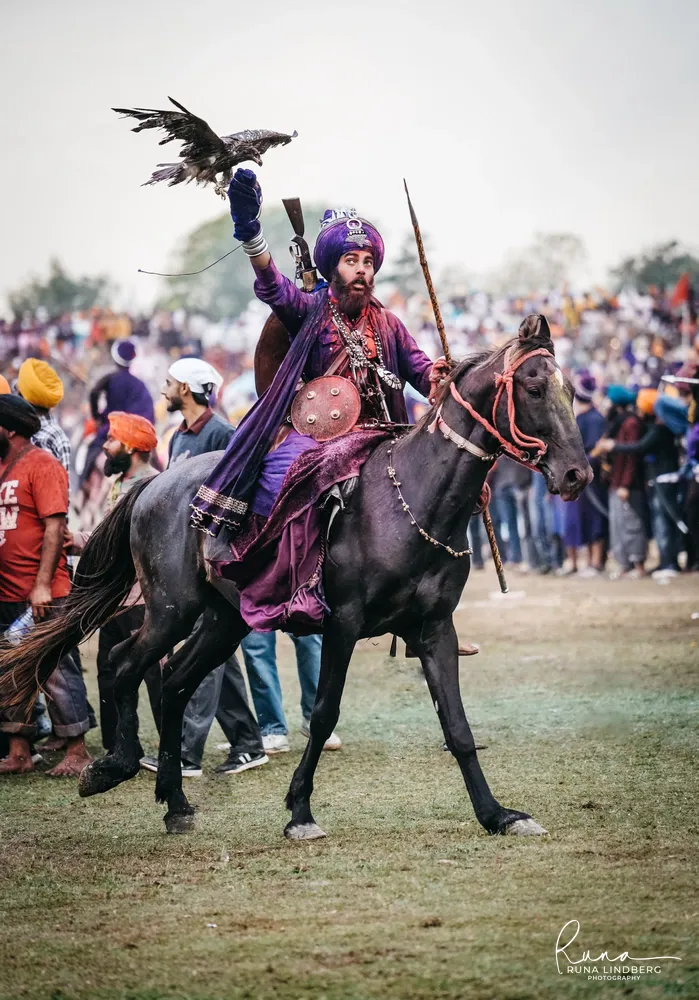
A Nihang rider with a bird of prey at Hola Mohalla.
Several of these subjects are the focus of photo journeys designed by Beyond Taj Tours, with itineraries curated by photographers who know the regions first-hand. That covers the parts that are hard to arrange alone: temple access in Braj, village contacts in Bengal, and permits such as the one for the steps at Panna Meena ka Kund. All bookings, payments and travel logistics are handled by our travel partner.
Planning a wider trip? Pair this with our field guides to Theyyam in Kerala and the Gomira masks of Bengal.
Runa Isabel Lindberg is a writer and photographer whose work has been exhibited internationally. She has been travelling through India, Nepal, Sri Lanka and Indo-China since 2008, and photography has been the thread through all of it. This blog is her personal editorial project: first-hand field notes, honest reviews of the heritage hotels she has stayed in, and photographs taken through her own lens over many return visits.
Follow her personal photography on Instagram: @runa_lindberg
Tours & bookings: The photo tours featured on this site are designed by Beyond Taj Tours, with itineraries curated by photographers. All bookings, payments and travel arrangements are handled by our travel partner, Orange DMC, a licensed destination management company based in India. Follow Beyond Taj Tours on Instagram: @beyondtaj.tours
© 2026 Runa Isabel Lindberg. Text and photography by the author, all rights reserved. Site and brand development by Credio Digital Media.
09 Oct 2026
28 Sep 2026
17 Sep 2026

05 Sep 2026
31 Aug 2026
15 Aug 2026
15 Jul 2026
19 Mar 2026
12 Feb 2026
15 Jan 2026
28 Dec 2025
01 Dec 2025
13 Nov 2025