The Pushkar Mela has long since become a name known far beyond India's borders. Every winter, photographers from around the world travel to Pushkar, a small desert town in Rajasthan, to photograph camels and nomadic herders in golden light. This guide tells you everything you need to know to come home with great camel images, and how to catch the other highlights Pushkar has to offer, which around 90% of the photographers who come here miss.
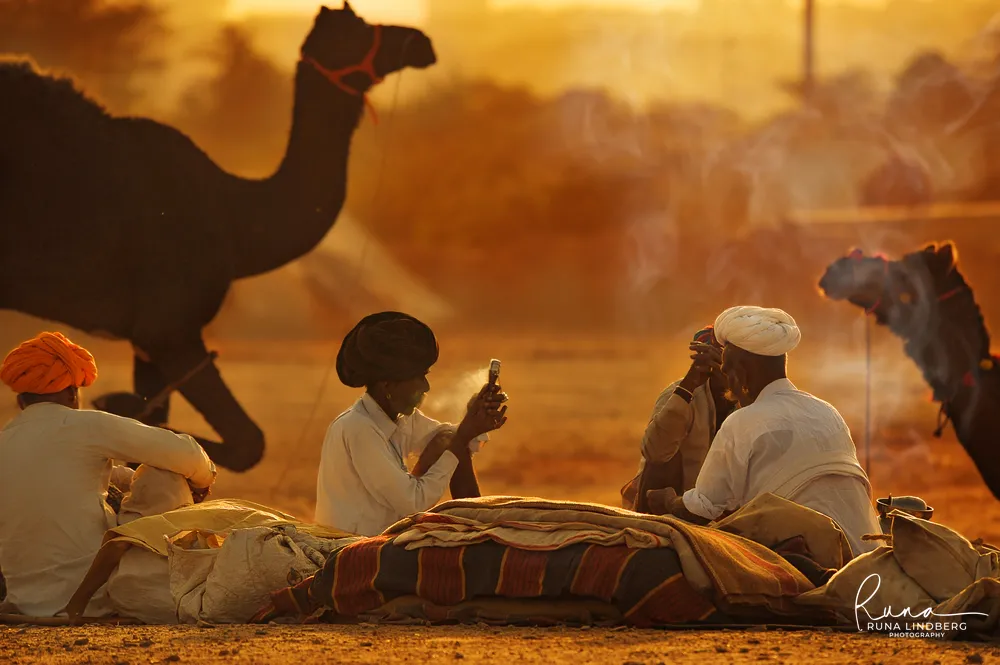
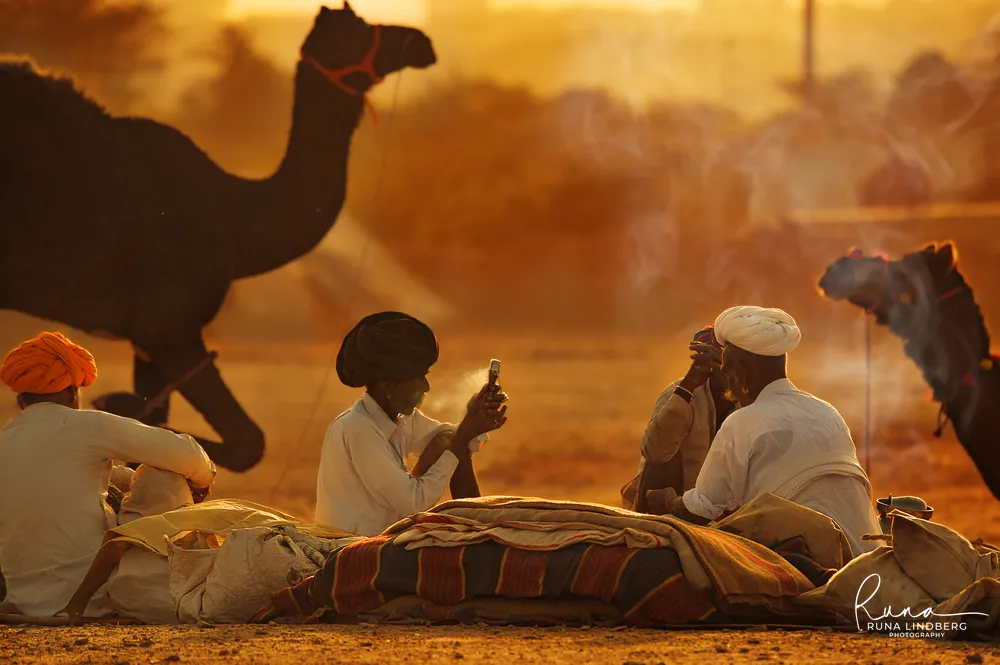
Camel herders share a chillum in their camp, surrounded by their animals. This golden evening light made the Pushkar Mela famous worldwide, and in winter you can see it all over Rajasthan.
Jump to:
The Pushkar Mela is really three events in one, each with its own timing.
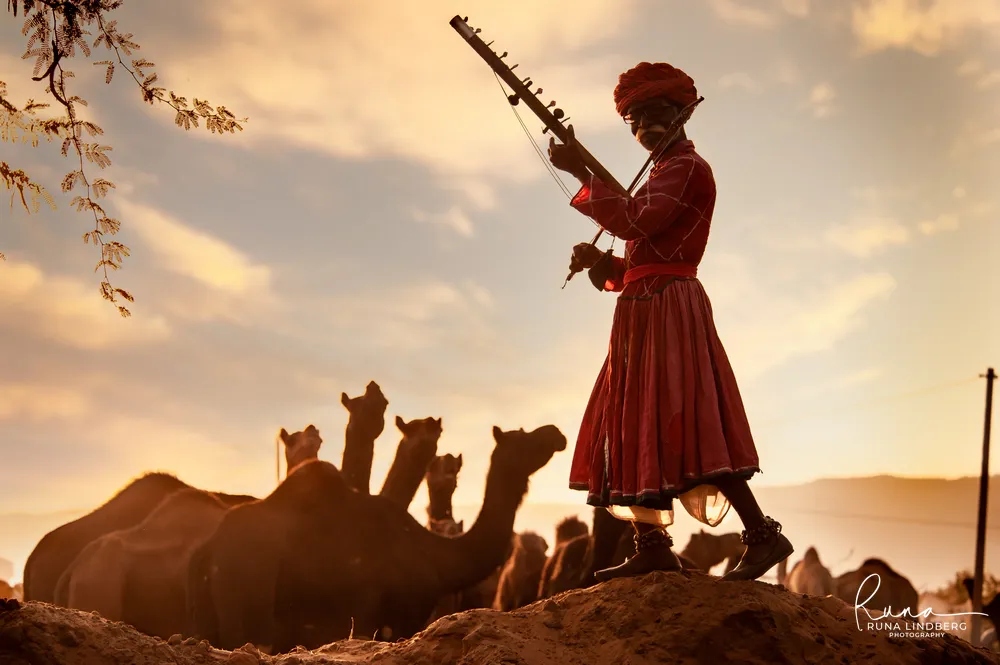
Evening on the dunes, when the light turns golden.
The livestock fair: A few days before the official programme, herders from across Rajasthan start arriving on the dunes with their camels, horses and cattle, many of them on foot. Horse breeders travel even further, from Punjab, Haryana and Gujarat. Trading begins as soon as they arrive, and by the time the tourist crowds peak, many herders have already sold their animals and set off home. For photographers, it is best to arrive about a week before the official mela begins.
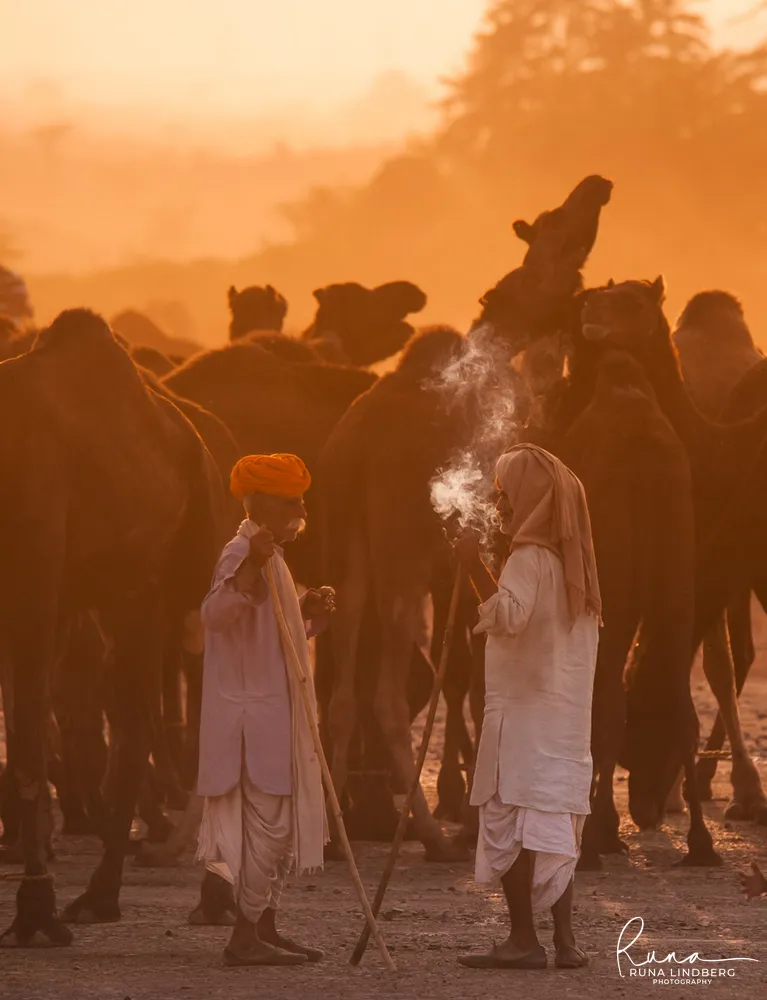
The first hour of light on the camel ground.
The official programme: Run by Rajasthan Tourism, this is the showground side of the fair, and not all of it is serious. In the Mela Ground arena, men compete for the longest moustache and owners parade their water buffaloes for the title of the most magnificent animal at the fair. Alongside the fun come horse races and horse dancing competitions, where Marwari horses step to the beat of the drums. The programme opens with a Maha Aarti on the lake, a large version of the aarti, the Hindu ritual in which priests wave burning oil lamps in circles as an offering, accompanied by bells, chanting and devotional songs.
The religious fair: The pilgrimage follows the Hindu lunar calendar and peaks in the last five days before the November full moon (Kartik Purnima). In 2026 that is roughly 20 to 24 November. During these days pilgrims come to bathe in the lake and visit the Brahma Temple. The night of the full moon is the high point: bathing starts right after midnight and carries on through the next day.
When it happens: The official programme for 2026 is listed for 17 to 24 November
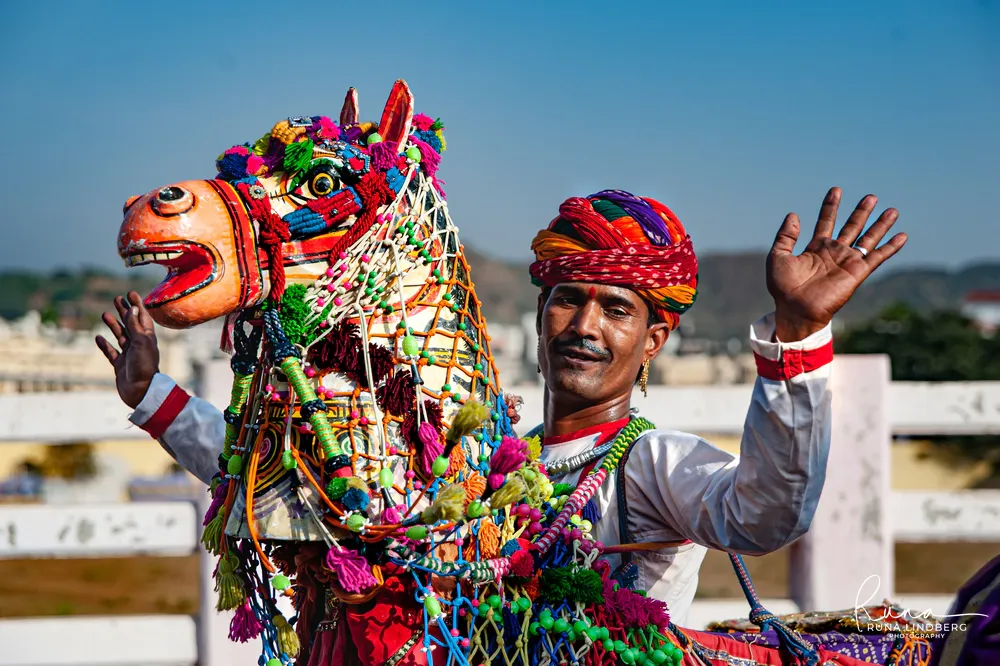
A kachhi ghodi dancer and his "horse".
Where the camel ground is: The trading happens on the open ground and dunes to the northwest and west of town, a short walk from the main bazaar. At its centre sits the Mela Ground, an oval, dusty arena with low concrete steps, where the official competitions take place. The herders' tents and fires spread out around it on the sand. To find your way around, search for "Pushkar Mela Ground" in Google Maps or use these coordinates:
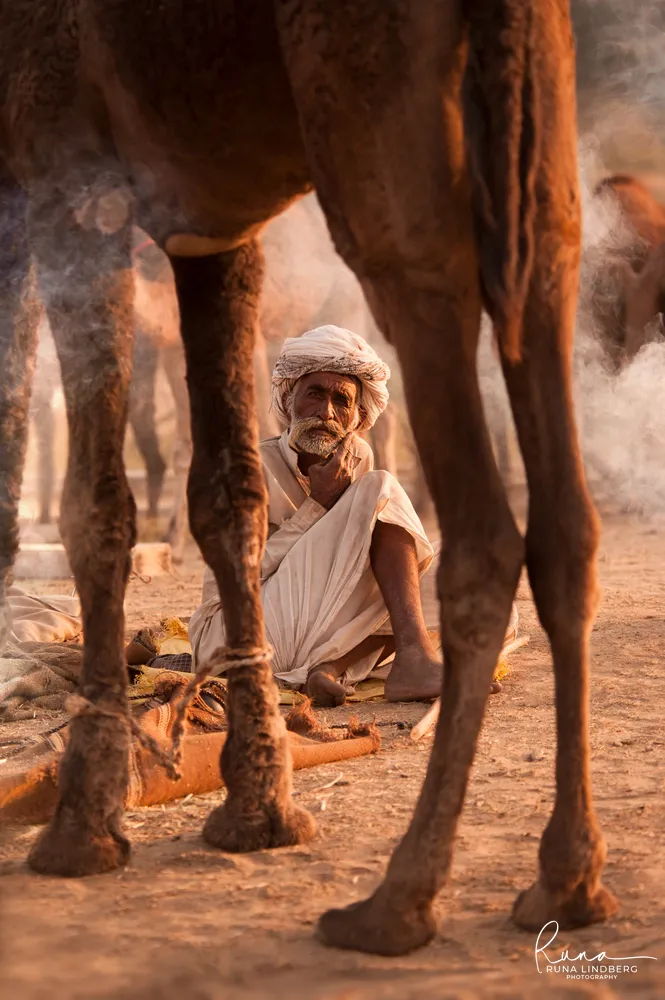
A camel herder sits between the campfires, framed by the legs of his camel, as smoke drifts through the scene. Early mornings on the dunes are the best time for shots like this.
What happens there: Herders arrive with their animals a few days before the official mela begins, set up camp on the sand and spend the days trading, grooming and decorating. Buyers inspect teeth, humps and gait, and deals are closed over chai. The number of camels has fallen over the past decade, but life in the camps is still fascinating to watch and photograph.
When to shoot: Be on the dunes before sunrise, when herders are making chai over small fires, and again in the last hour of light, when the animals are driven in and the dust hangs low. At midday the light is flat and the ground is at its busiest with camel-cart rides and touts; use that time for the town.
How to shoot: Ask before photographing people at their camps, and expect to be asked for money by some of them; decide in advance how you will handle it. Dust gets into everything, so keep lens changes to a minimum out on the sand.
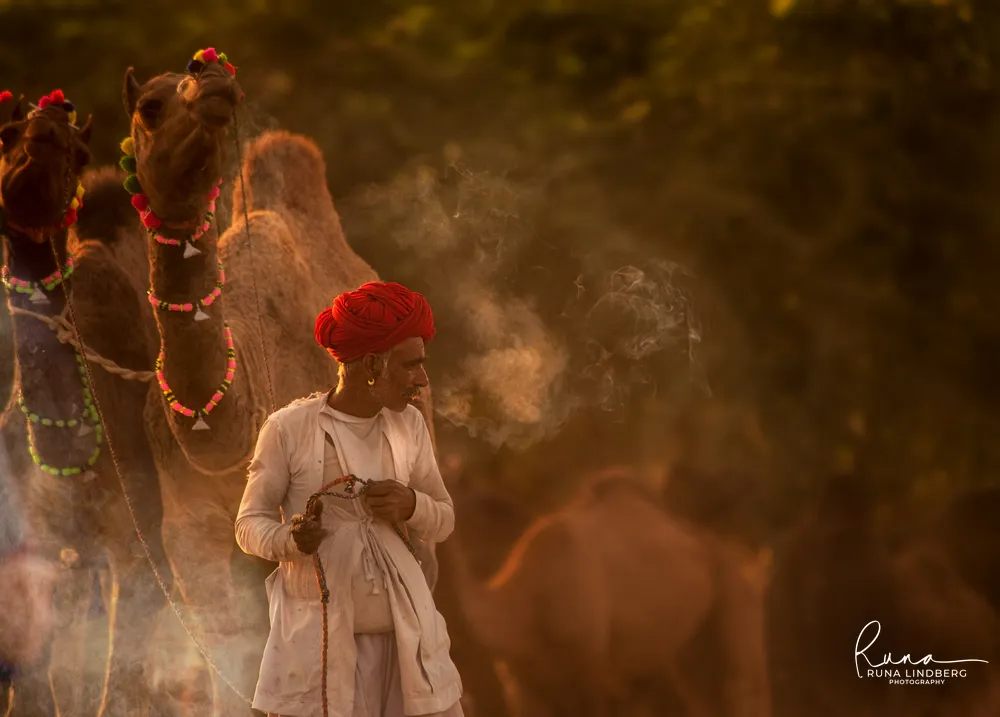
A camel herder leads his decorated animals through the dunes in the early morning, smoking a bidi. Drifting smoke from the campfires gives the scene its depth.
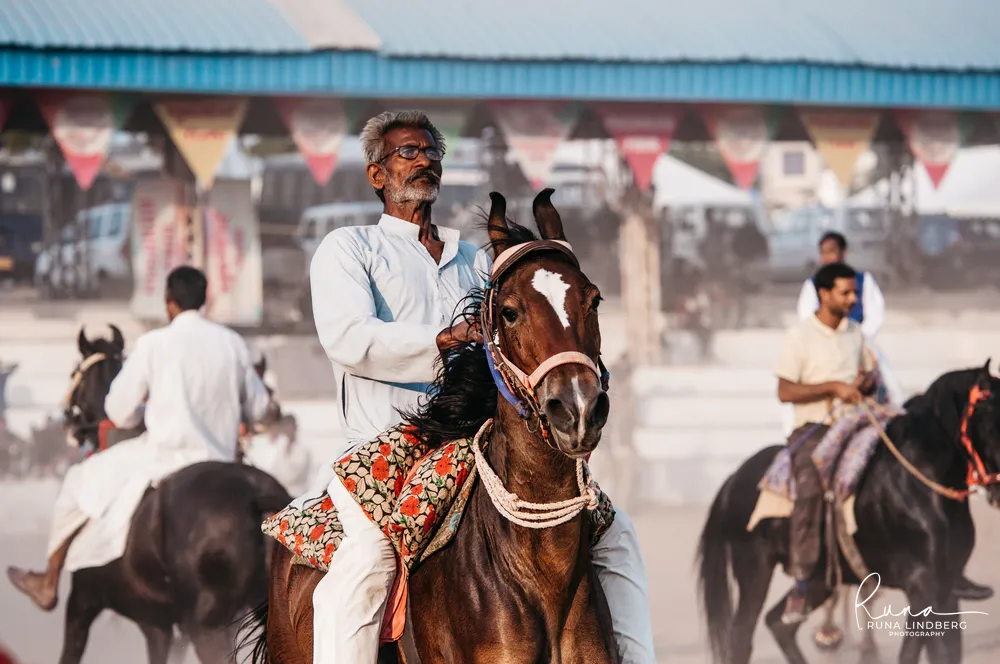
Marwari horses warming up in the Mela Ground arena.
Pushkar is one of the most important horse markets in Rajasthan, and for many Indian buyers the horses matter as much as the camels. In 2025, horses even outnumbered camels among the animals registered for the fair by more than two to one: 3,028 horses against 1,306 camels, according to The Tribune. The breed you will see most is the Marwari, recognisable by its ears, which curve inward until the tips almost touch. Sindhi horses are traded here too, a hardy desert breed with its roots in the Sindh region (today in Pakistan), also bred in western Rajasthan and close in type to the Marwari.
Where to find them: The horse traders usually set up right where the dunes begin, in their own section apart from the camels. The horses also appear in the Mela Ground arena during the competitions.
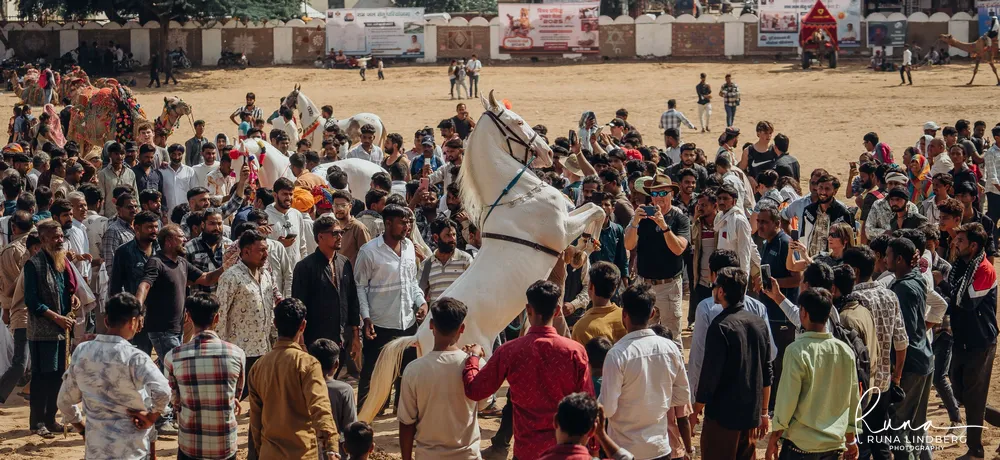
Horse dancing competion at the Mela Ground draws the biggest crowds.
How to shoot: Look for the preparation as well as the show. Grooming, decorating, tacking up and the test rides in front of buyers give you portraits of animals and handlers that most visitors never see. For the arena events, including the displays where horses are made to dance to drums, get to the steps early for a spot at the rail. Keep a respectful distance and ask before stepping into a handler's space.
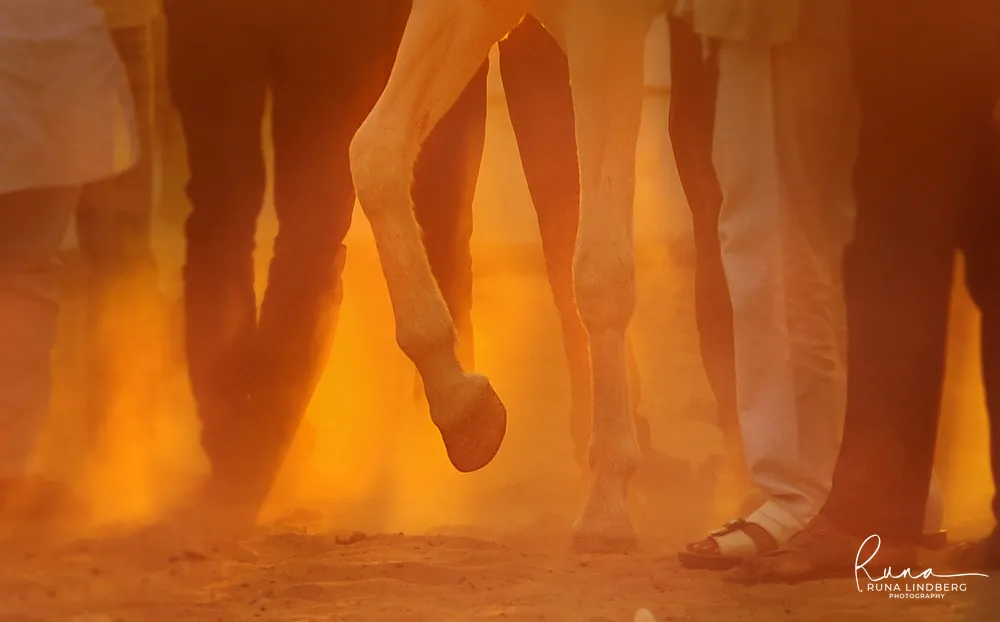
A group walks their white Marwari horse through the dunes, the evening sun shining through their legs and bathing the scene in a glowing orange. With all its dust, sand and light, the Pushkar Mela is ideal for layered detail shots like this one.
Watch before you go: The documentary Im Bann der Pferde: Indien (Under the Spell of Horses: India, 2009) by Ilka Franzmann follows the horse world of Rajasthan, and the Pushkar Mela is one of its main settings, including the Marwari riding and dancing competitions in the arena.
The old town around the lake is a tight grid of lanes with small shops, old havelis with carved balconies and doorways, temples tucked between houses, and cows everywhere. During the mela it fills with villagers in their best clothes who have come for the fair and the pilgrimage.
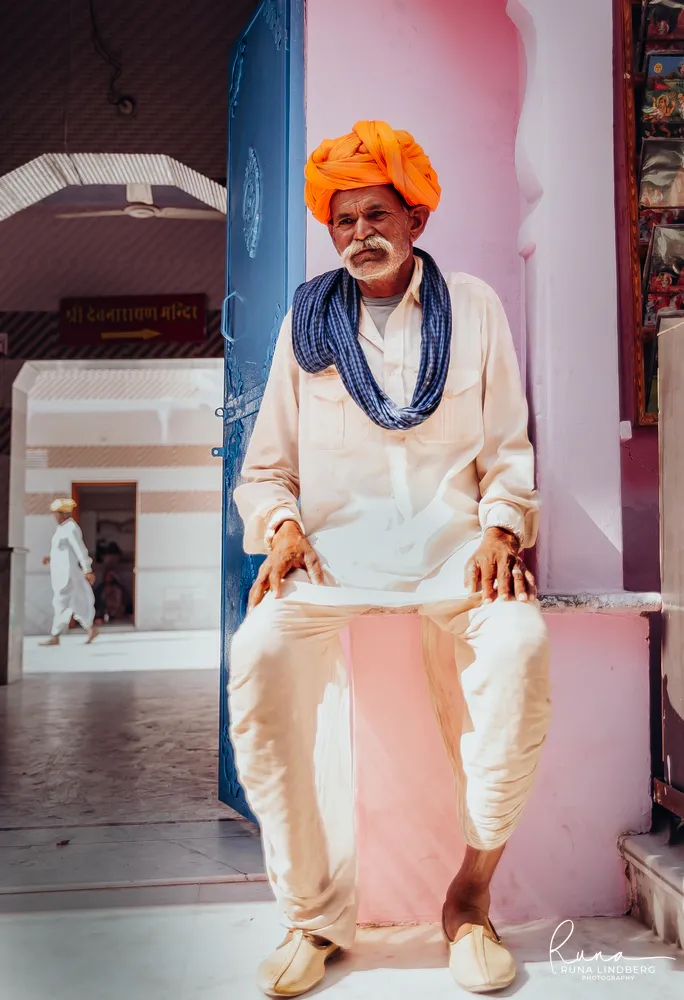
Two camel herders in the historic lanes of Pushkar's old town, one taking a rest while the other walks past.
Where to go: The main bazaar parallel to the lake is the obvious start, but also the most commercial stretch. The better frames are in the side lanes branching off it, where the havelis are, where people sit on doorsteps, and where light falls in narrow shafts in the morning and late afternoon. Wherever you start around the lake, you will find life in the small lanes, and as long as you use the lake as your reference point, you cannot really get lost.
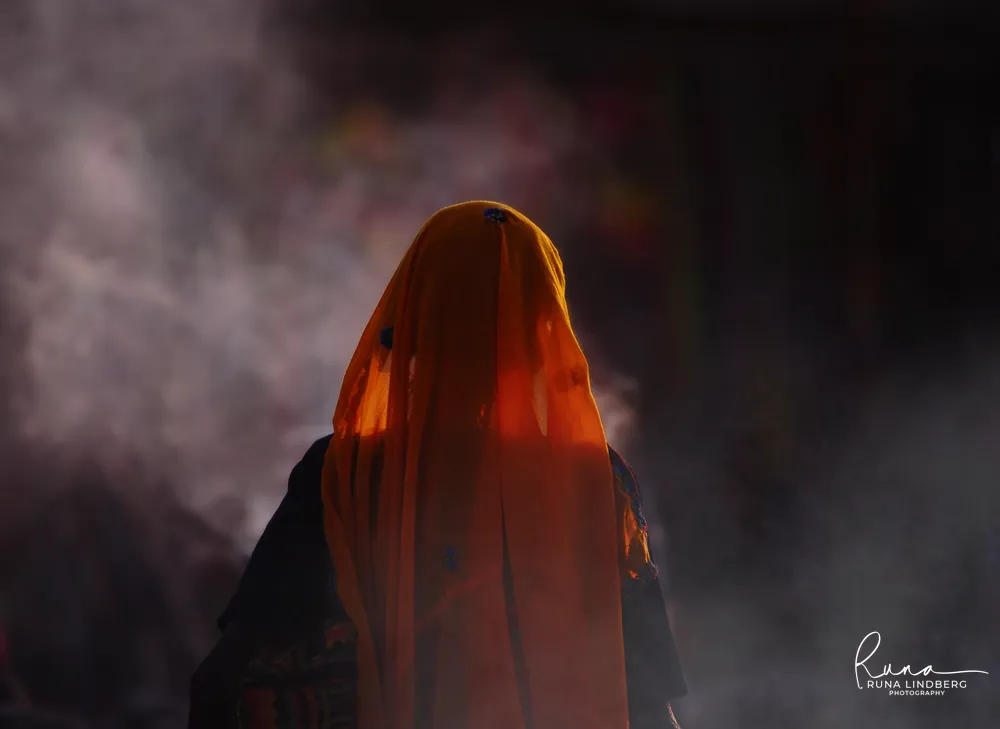
A veiled woman walks past the steaming chai and snack stalls on the market street, wrapped in their smoke, which gives the picture its mysterious atmosphere.
One walk worth taking on purpose is from the lake towards the Mela Ground. It is the main footpath between the lake, the temples and the markets on one side and the Mela Ground and the tent city on the other, so you will pass a steady stream of pilgrims and traders along the way.
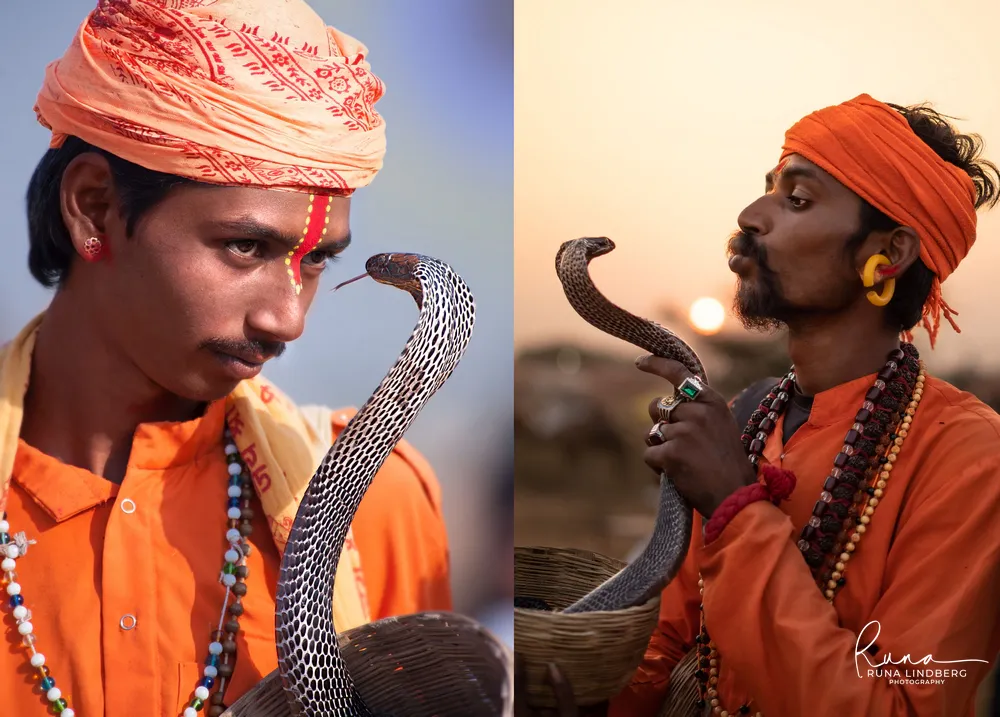
During the fair, you will find snake During the fair, you will find snake charmers everywhere, in the side lanes of town as well as out on the dunes.
How to shoot: Work slowly and stay in one lane for a while instead of walking through. A greeting before raising the camera changes the reaction. A small, quiet camera with a short prime is less intrusive here than a long zoom.
The lake is ringed by ghats, the stepped platforms leading down to the water, and during the mela they carry the religious side of the festival.
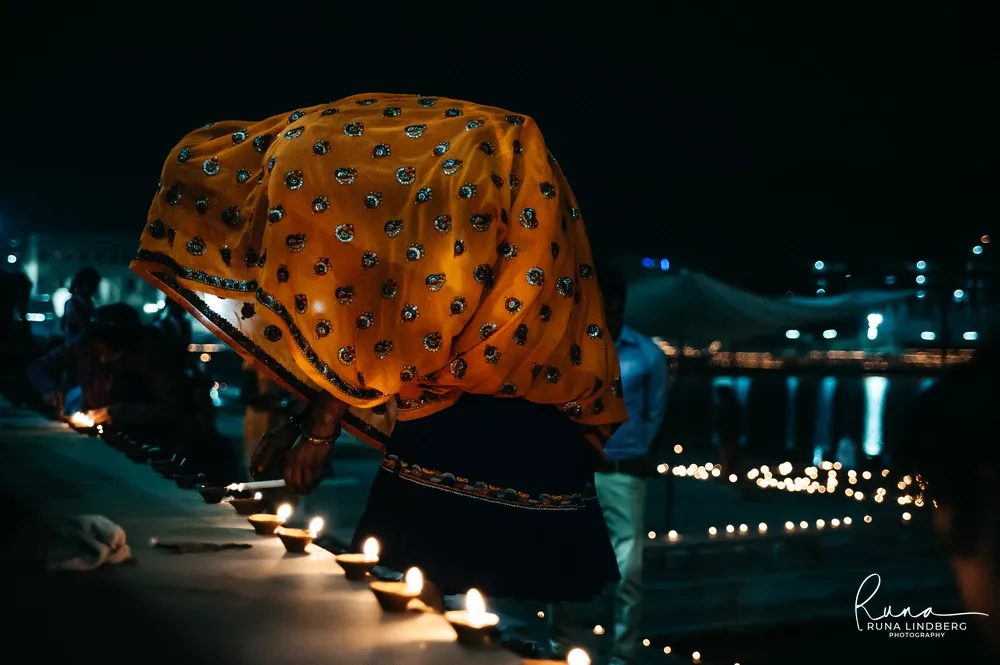
Oil lamps along the ghats after dark.
The evening aarti: At sunset, lamps are waved over the water with bells and chanting, and the steps fill with people. The main ghats for it are Varaha Ghat and Brahma Ghat.
The morning round: The scene almost nobody photographs happens before the tourists are up. In the first hour of light, women from Pushkar and the surrounding villages walk their round of the lake, stopping to pray and leave offerings at the small shrines along the ghats. Be there at first light, stay at the edge, and let it pass you rather than following people.
The rules: Photographing people while they bathe is not allowed, and some ghat priests enforce this firmly. Take off your shoes before stepping onto a ghat. You will also meet men offering flowers for a blessing at the water, followed by a request for a large donation; a polite refusal before accepting anything saves an argument later.
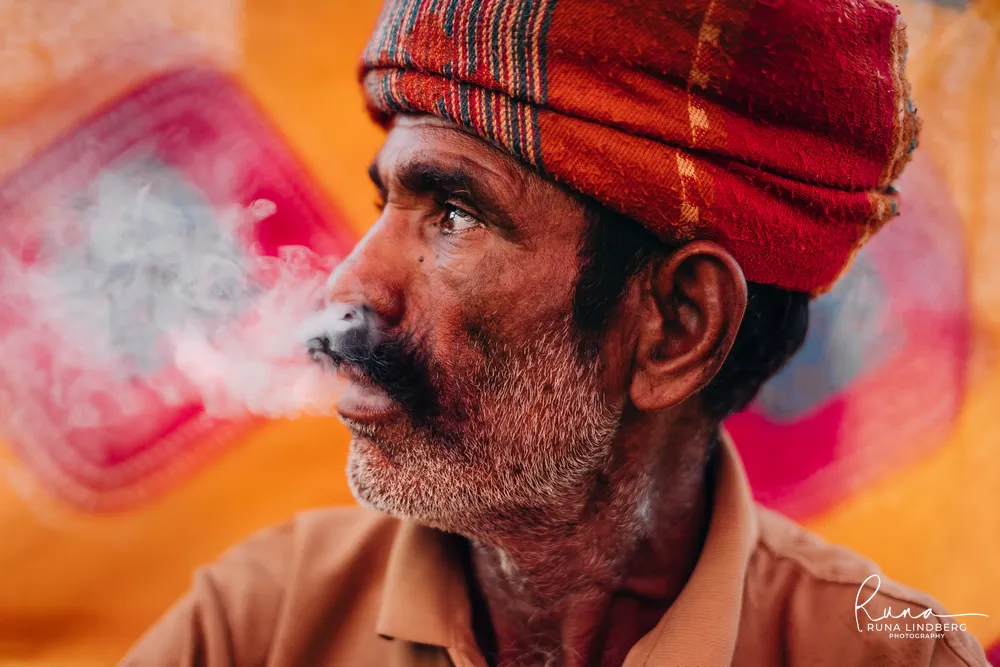
Interesting portrait opportunities are everywhere in Pushkar, from the ghats and the lanes to the dunes.
Pushkar has one of the very few temples in India dedicated to Brahma, and hundreds of others around the lake and on the hills. Photography inside is usually not permitted, but that is no great loss: all of them make strong subjects from the outside.
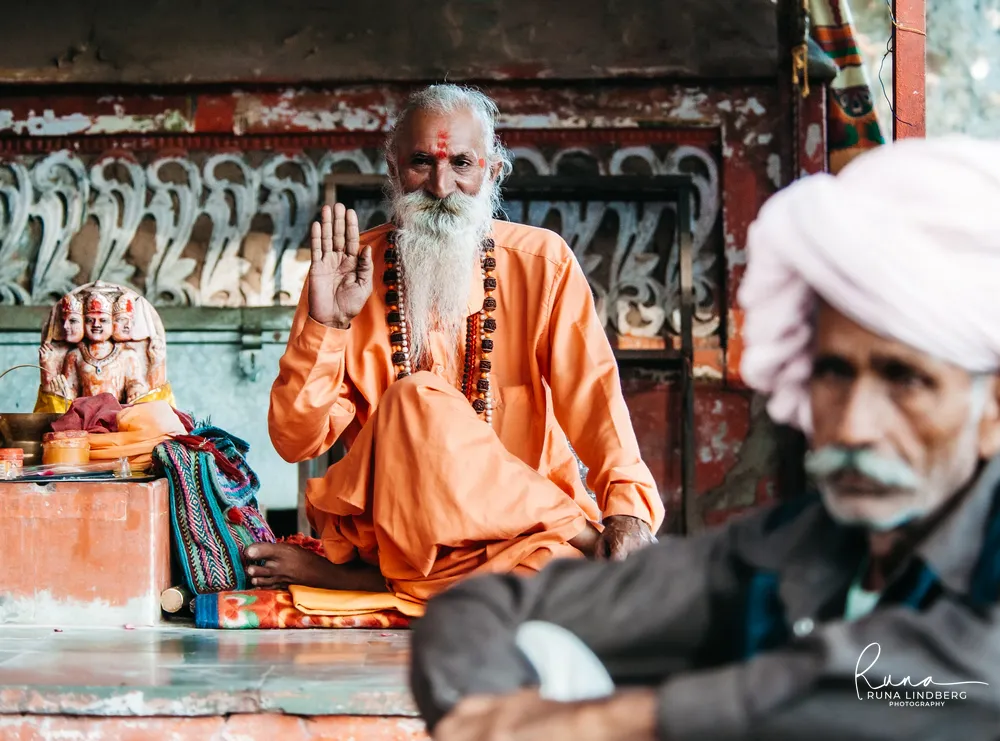
Small Brahma shrine near the lake.
Brahma Temple: Near the western end of the lake, with its red spire, and busy at all times during the mela. The approach and the street life at the entrance are the images to go for.
Savitri Mata Temple: On the hill behind the Brahma Temple, reached by a long flight of steps or a ropeway. At sunrise you look over the town, the lake and, during the fair, the camps on the dunes. Start the climb in the dark.
Pap Mochani (Gayatri) Temple: On the hill on the other side of town, a shorter climb with a view back over Pushkar and the lake.
Rangji Temple: In the bazaar, built in South Indian style, an unexpected sight in a Rajasthani town.
If in doubt, ask at the entrance.
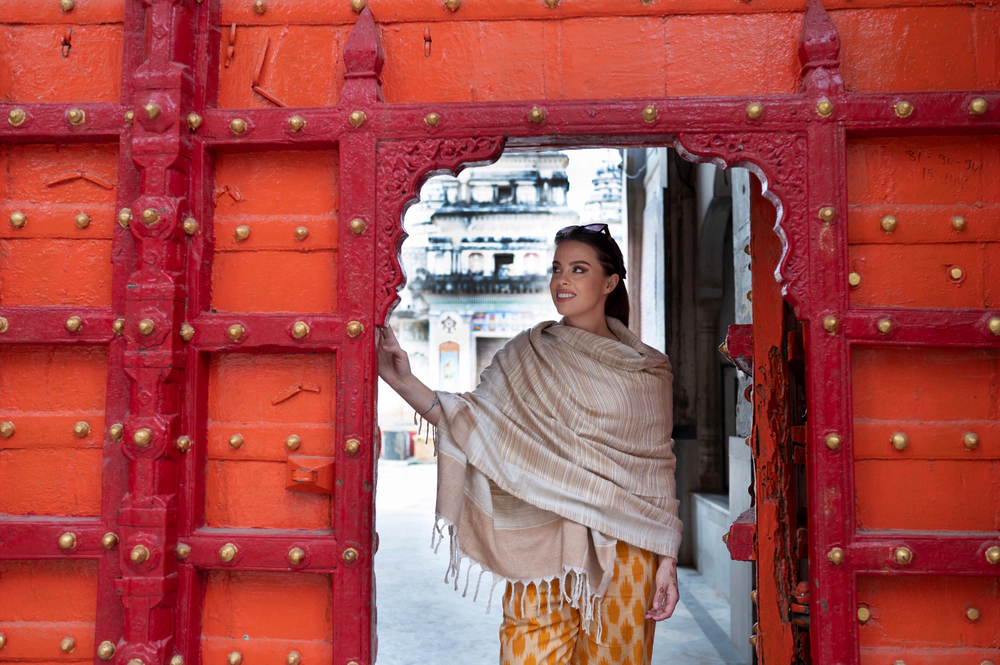
Author Runa Isabel Lindberg in front of the great gate leading to the Rangji Temple.
Plan to arrive about a week before the official programme.
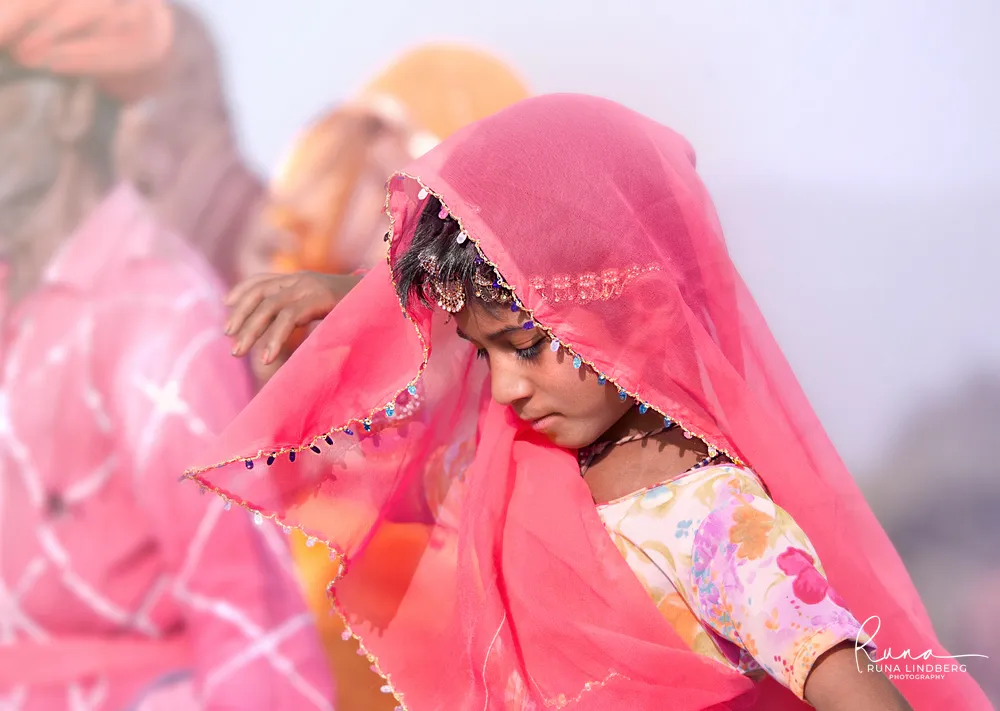
A little girl dances to the drums in the camel traders' camp.
Getting there: Pushkar is about 15 km by road from Ajmer, the nearest major railway station. From Delhi, for example, you can take the train via Jaipur to Ajmer, then an auto-rickshaw (tuk-tuk) to Pushkar for around 500 rupees (about 5 euros).
Where to stay: Book several months in advance. During the mela, the good places are fully booked early.
Where to eat:
Getting around: Two days before Kartik Purnima, vehicles are usually kept out of the town centre. Everything in this guide is within walking distance.
Local customs: Pushkar is a holy town. Officially, meat, eggs and alcohol are not permitted in the old town, especially around the sacred lake. Don't bring them in and don't ask for them in restaurants; it saves you a lot of trouble. In hotels outside town and in the desert camps, this is usually less of an issue.
Gear: Dust is constant on the dunes. Bring a blower, lens cloths and something to cover the camera.
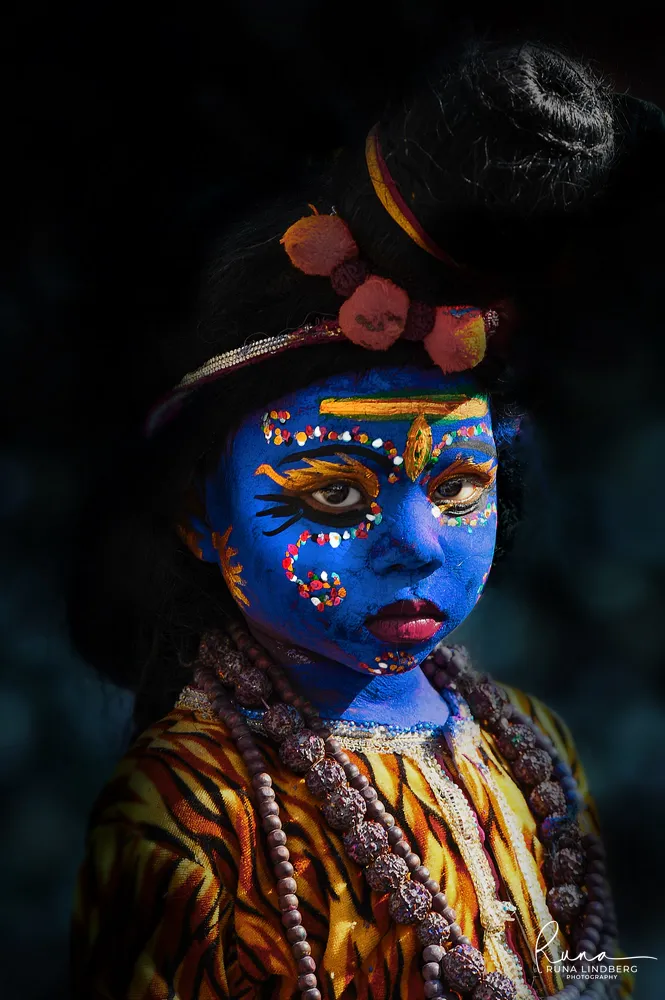
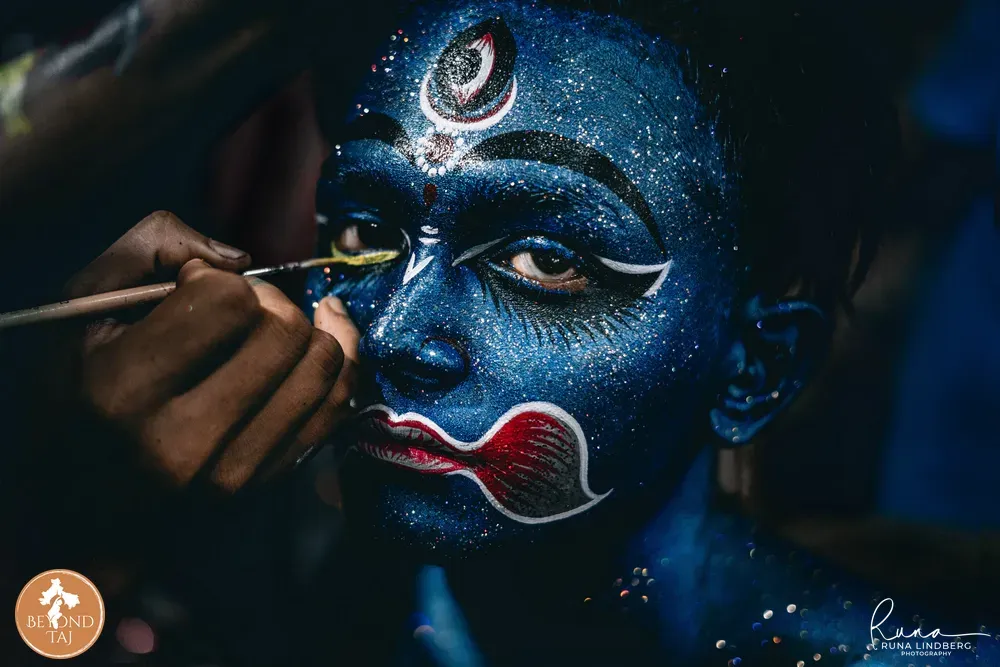
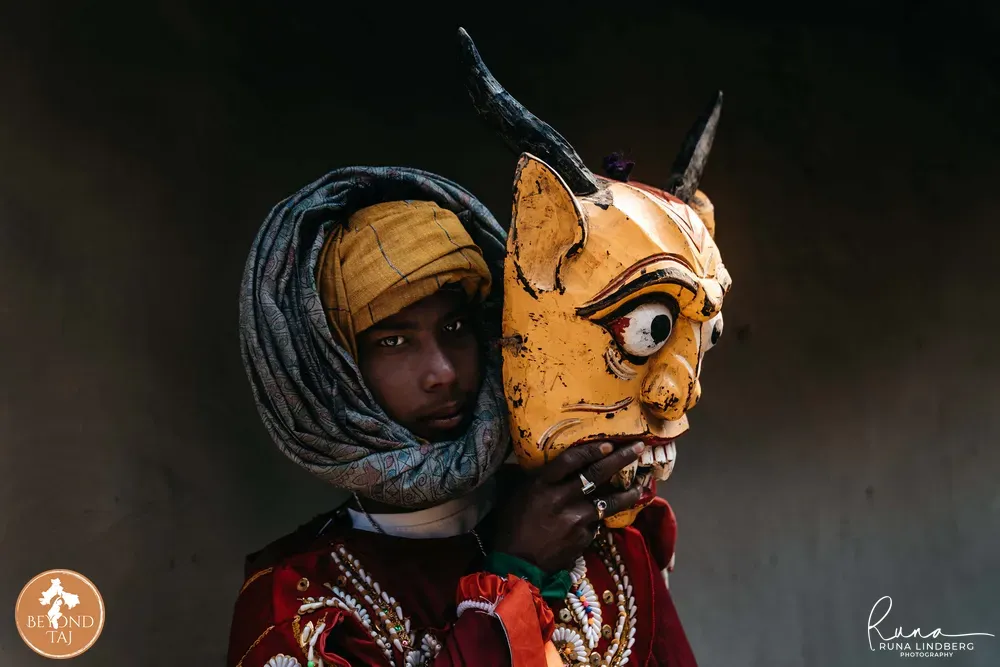
A little boy dressed as Lord Shiva. During the mela, you will often come across children and teenagers dressed as gods and demons.
If you want to photograph the Pushkar Mela as part of a longer journey, our Rajasthan and Pushkar Mela photo tour starts in Delhi and travels to the camel fair in Pushkar, then on to the white salt flats and flamingos of Sambhar Salt Lake and pre-dawn shoots in Jaipur's Pink City and at Amber Fort. From there it flies east to Varanasi for Dev Deepawali, when oil lamps light up the ghats along the Ganges, and ends with a sunrise shoot at the Taj Mahal in Agra. Groups are limited to six participants with two mentors. The tour is designed by Beyond Taj Tours and booked through our travel partner.
10 days, 6 to 15 November 2027. View the Rajasthan & Pushkar Mela 2027 tour
Want to know more about the Pushkar Mela? Read When It Rains at Pushkar Camel Fair: Portrait Photography Beyond Golden Hour.
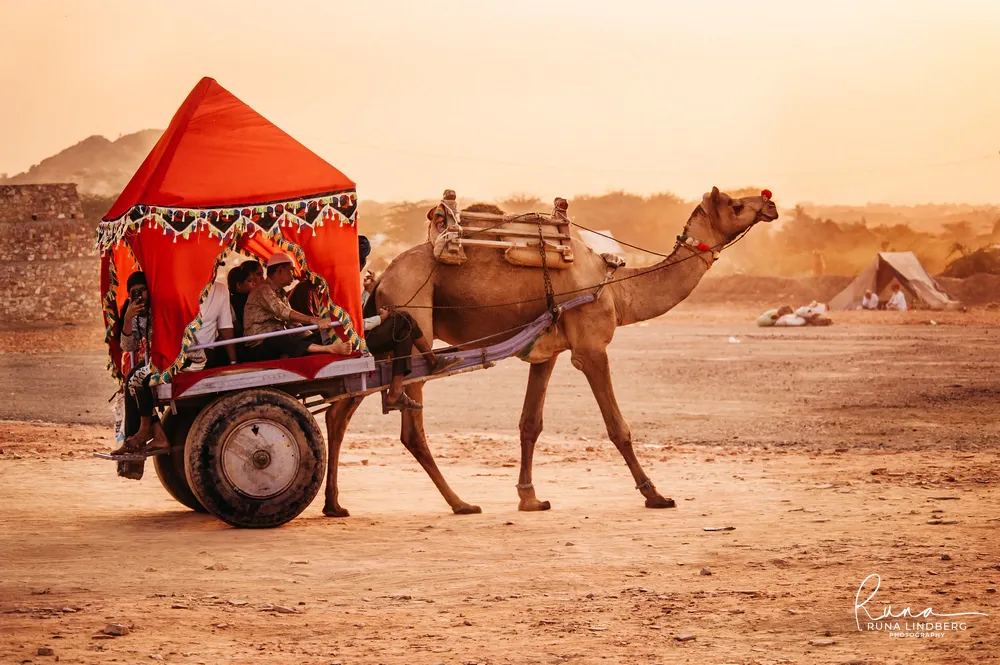
Camel-carts criss-cross the fairground all day.
When is the Pushkar Mela 2026? The official programme is listed for 17 to 24 November 2026, ending on Kartik Purnima. The herders and their animals arrive a few days earlier.
Where is the camel ground in Pushkar? On the open ground and dunes to the northwest and west of the town, around the Mela Ground arena, within walking distance of the main bazaar. Search for "Pushkar Mela Ground" in Google Maps or use the coordinates 26.4916, 74.5485.
Are there horses at the Pushkar Mela? Yes. Pushkar is one of Rajasthan's main horse markets, known especially for Marwari horses, which are usually traded right where the dunes begin and shown in the arena.
Can you take photos at the Pushkar ghats? You can photograph the ghats and ceremonies such as the evening aarti, but photographing people while they bathe is not allowed.
Can you photograph inside the Brahma Temple? No. Photography inside is not permitted, but the entrance and surrounding street are good subjects.
When should you arrive at the Pushkar Mela? Ideally arrive about a week before the official programme begins, when the herders are arriving and trading is underway.
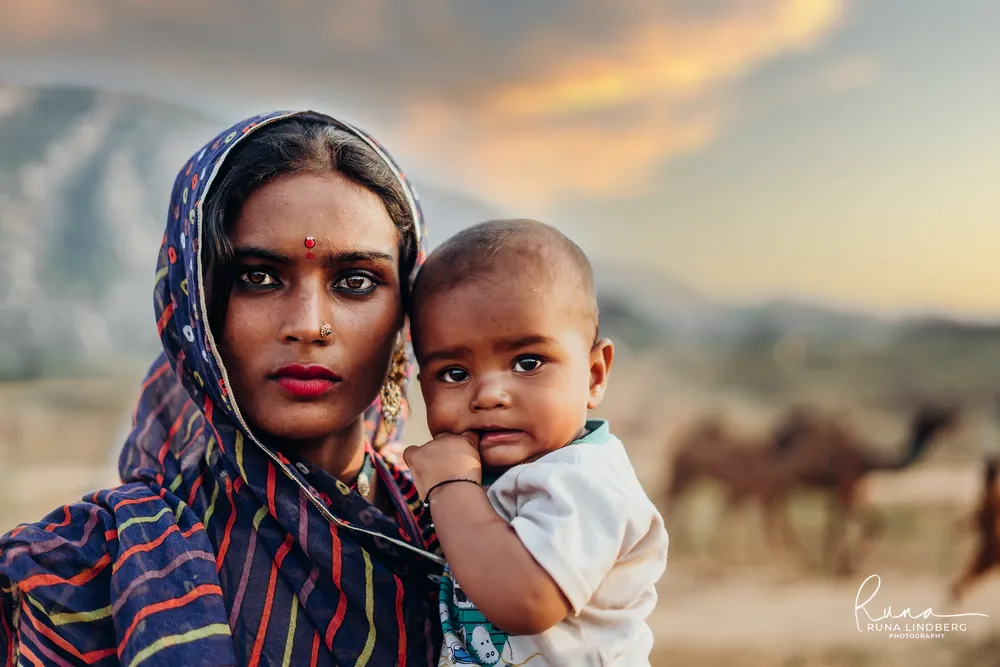
Whole families travel to the fair with their herds.
Runa Isabel Lindberg is a writer and photographer whose work has been exhibited internationally. She has been travelling through India, Nepal, Sri Lanka and Indo-China since 2008, and photography has been the thread through all of it. This blog is her personal editorial project: first-hand field notes, honest reviews of the heritage hotels she has stayed in, and photographs taken through her own lens over many return visits.
Follow her personal photography on Instagram: @runa_lindberg
Tours & bookings: The photo tours featured on this site are designed by Beyond Taj Tours, with itineraries curated by photographers. All bookings, payments and travel arrangements are handled by our travel partner, Orange DMC, a licensed destination management company based in India. Follow Beyond Taj Tours on Instagram: @beyondtaj.tours
© 2026 Runa Isabel Lindberg. Text and photography by the author, all rights reserved. Site and brand development by Credio Digital Media.
28 Sep 2026
17 Sep 2026

05 Sep 2026
31 Aug 2026
15 Aug 2026
15 Jul 2026
19 Mar 2026
12 Feb 2026
15 Jan 2026
28 Dec 2025
01 Dec 2025
13 Nov 2025